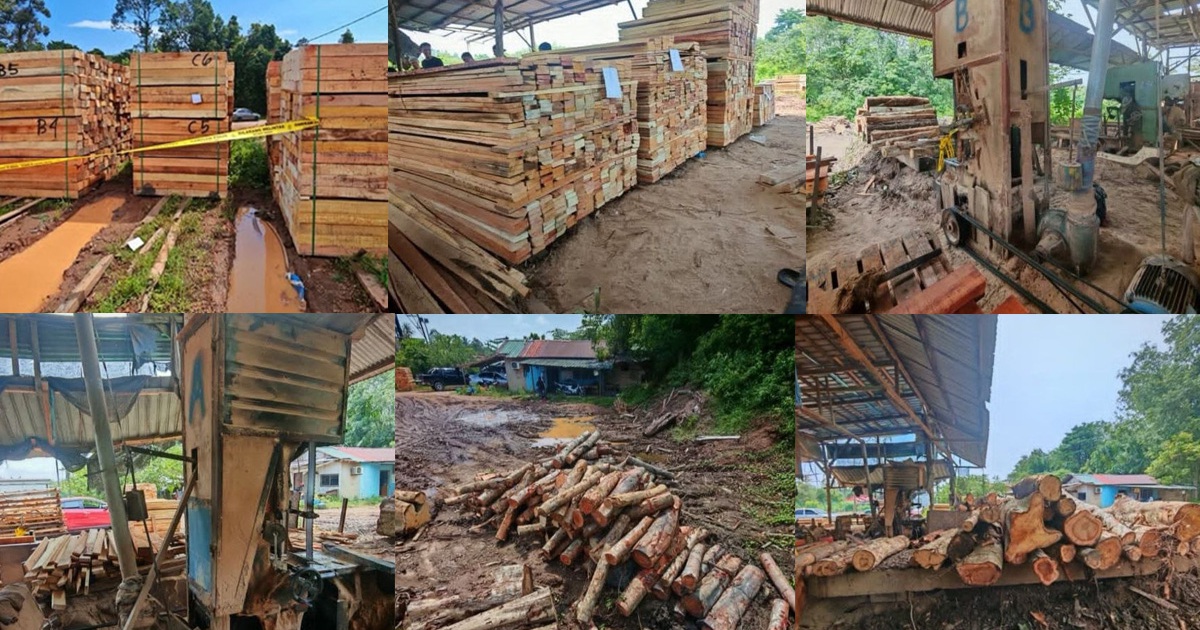
In a significant enforcement action against illegal timber operations, authorities in Kelantan have apprehended four individuals at an unlicensed sawmill facility in Kampung Bukit Kechik, Tanah Merah. The raid, which resulted in the seizure of timber stocks and processing machinery valued at RM600,000, underscores the continuing challenge of unregulated timber processing activities across the state's rural areas. The arrested group includes the facility's operator along with three workers found on the premises at the time of the operation.
The illegal sawmill represents one of numerous operations that continue to circumvent Malaysia's timber regulations despite increased enforcement efforts. These unlicensed facilities often operate in remote locations, enabling them to evade regulatory oversight for extended periods. The RM600,000 seizure indicates the substantial capital investment many operators maintain in attempting to sustain profitable ventures outside the formal licensing framework. Such operations typically bypass mandatory environmental impact assessments, forestry department permits, and tax obligations that legitimate timber processors must satisfy.
Kelantan's vulnerability to unlicensed timber processing stems partly from its geography and established logging heritage. The state's forested regions and proximity to transportation routes facilitate both the extraction and movement of timber through illicit channels. Operators are often attracted by the cost savings achieved by avoiding licensing fees, compliance requirements, and proper harvesting documentation. This creates significant competitive disadvantages for legitimate sawmill operators who maintain compliance with all regulatory provisions.
The enforcement action reflects coordinated efforts by state authorities to monitor and disrupt the underground timber economy. Such operations not only represent direct losses to government revenue through unpaid licensing and processing fees, but also undermine legitimate market competition and enable the processing of potentially illegally harvested timber. The presence of substantial machinery and stocks suggests the facility had been operating for a meaningful duration before detection, raising questions about the effectiveness of regular monitoring in the surrounding area.
For Southeast Asia, the prevalence of illegal timber operations carries regional implications. Forest resources face cumulative pressure from both legitimate and illicit harvesting across national borders. Southeast Asian nations, including Malaysia, have committed to forest sustainability targets under international agreements, making domestic enforcement against illegal timber processing a critical component of demonstrating genuine conservation commitment. The regional timber trade, valued at multiple billions of dollars annually, remains vulnerable to infiltration by operators lacking proper certification and traceability documentation.
The broader Malaysian context reveals timber regulation as a persistent implementation challenge. While federal and state forestry authorities possess comprehensive legal frameworks governing timber harvesting, transportation, and processing, compliance monitoring in remote areas remains resource-intensive. The RM600,000 seizure demonstrates that confiscation efforts yield meaningful economic impacts on offending operators, yet deterrent effects depend on consistent enforcement patterns and meaningful prosecutorial follow-through against arrested individuals.
For legitimate timber processors operating throughout Malaysia, illegal competition from unlicensed facilities represents a structural disadvantage. Compliant operators must absorb licensing costs, environmental compliance expenses, and proper labour standards, placing them at a price disadvantage against facilities ignoring these obligations. This distortion disadvantages responsible businesses and potentially encourages otherwise legitimate enterprises to consider marginal legal shortcuts. Consumer awareness of certified, legally sourced timber remains limited in regional markets, further reducing competitive advantages for compliant operators.
The prosecution pathway for the four arrested individuals will significantly influence deterrence effects across Kelantan's timber sector. Conviction rates and sentencing patterns in timber-related prosecutions have varied, with some observers noting that penalties sometimes fail to match the economic gains achievable through sustained illegal operations. Enhanced penalties and expedited prosecution procedures could strengthen enforcement credibility. Simultaneously, providing pathways for small-scale operators to achieve legal compliance through reduced licensing barriers might prove more effective than enforcement alone in drawing marginal operations into the formal economy.
The seizure also highlights the importance of intelligence sharing between enforcement agencies. Unlicensed facilities typically require electrical connections, transportation access, and market linkages that create detectable patterns for coordinated agencies. Kelantan authorities' success in locating this particular operation may reflect improved information flows between forestry, environmental, and local government departments. Expanding such coordination across state boundaries and to federal agencies handling timber exports could amplify detection rates significantly.
Looking forward, the sustainability of Malaysia's forest resources depends substantially on reducing illegal timber processing throughput. The RM600,000 seizure represents meaningful regulatory impact, yet represents merely one facility among potentially dozens operating across Kelantan and adjacent states. Expanding enforcement capacity, improving equipment detection technology, and implementing supply-chain transparency mechanisms throughout the timber sector remain critical priorities. Regional cooperation through ASEAN mechanisms addressing cross-border timber trafficking could further strengthen operational effectiveness across Southeast Asia's timber-producing nations.

