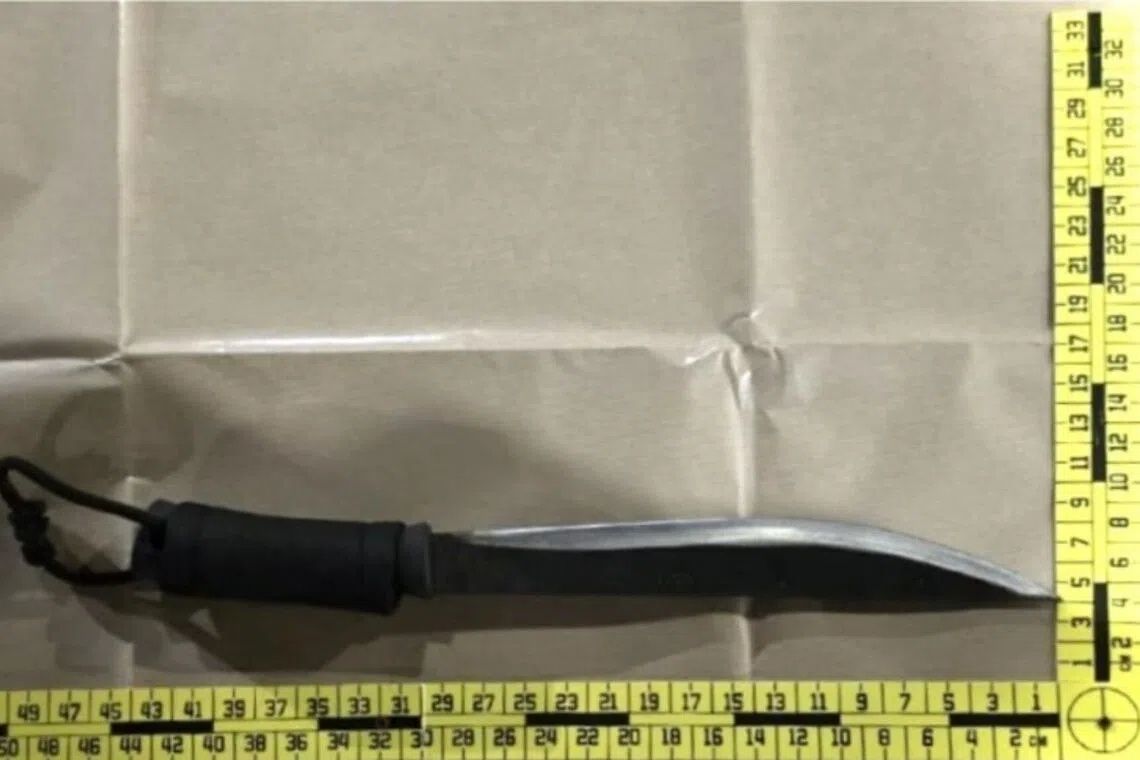
Singapore authorities have arrested four individuals in connection with an abduction and weapons case that unfolded in the early hours of Wednesday, with charges expected to be filed against the main suspect. The incident originated from a confrontation at a carpark on Canberra Street around 1:55am on August 4, where a victim was accosted by a group wielding a parang, a large curved blade commonly associated with Southeast Asian cultures. Police statements indicate the threatening encounter stemmed from an underlying disagreement concerning a car rental contract between the parties involved.
According to preliminary police findings, a 38-year-old man from the group served as the primary aggressor, brandishing the parang to intimidate the victim before compelling him into his own vehicle. The suspect then drove the victim to an undisclosed second location, with a 36-year-old accomplice remaining in the rear passenger seat during the initial phase of the abduction. This coordinated movement suggests a degree of premeditation and planning among the group, elevating concerns about the nature of their intentions beyond the immediate confrontation.
The situation escalated when officers from Woodlands Police Division located the victim's vehicle during routine patrol operations. Upon spotting the police presence, the 38-year-old driver made the decision to flee the scene with both passengers still in the car, triggering a high-speed pursuit through residential streets. The chase concluded dramatically when the vehicle struck a lamp post at the intersection of Woodlands Avenue 7 and Woodlands Avenue 10, causing sufficient damage to immobilize the car and prevent further escape.
Following the collision, the 36-year-old passenger abandoned the vehicle and fled on foot into the surrounding neighbourhood, evading immediate capture. However, the 38-year-old driver, unable to distance himself from the crash site, was apprehended at the scene with the parang recovered in his possession. The recovery of the weapon provided crucial physical evidence linking him directly to the armed threat component of the case.
Subsequent investigative work by police led to the separate apprehension of the 36-year-old man through follow-up inquiries and surveillance activities. Additionally, two women aged 30 and 38 were brought into custody as part of the expanding investigation, suggesting their involvement in either planning or facilitating the incident. The identification and arrest of these additional suspects indicates that the abduction operation may have involved a broader conspiracy rather than a spontaneous altercation that spiralled into criminality.
The 38-year-old man now faces formal charges scheduled for August 5, with prosecutors pursuing convictions on dual counts: abduction and possession of a scheduled weapon. Singapore's legal framework treats parangs as controlled weapons under the Corrosive and Explosive Substances and Offensive Weapons Act, making their unauthorized possession a serious criminal matter. The severity of potential penalties reflects judicial concern about armed crime and the escalation of disputes into violence.
Conviction on these charges carries substantial consequences under Singapore law. The defendant faces potential incarceration, monetary fines, caning, or a combination thereof for each offence—a sentencing structure designed to deter individuals from engaging in armed confrontations and abductions. Caning, in particular, remains a distinctive aspect of Singapore's penal system, rarely employed in modern Western jurisdictions but retained here as a mandatory punishment option for certain violent crimes.
The investigations concerning the 36-year-old man and the two female suspects remain ongoing, with police continuing to determine the precise roles each individual played in the conspiracy. Prosecutors must establish whether they were integral participants in the planning and execution of the abduction or whether they provided assistance, encouragement, or logistical support. The distinction carries significant implications for their respective charges and potential sentencing outcomes.
This incident underscores a broader concern about how contractual or commercial disputes can escalate into violent criminality in urban environments. The transformation of a car rental disagreement into an armed abduction illustrates the volatility that can arise when disputes lack proper resolution mechanisms or mediation. For Malaysian observers, the case highlights the importance of formal dispute resolution procedures and the serious legal consequences that accompany armed confrontations, even when rooted in seemingly routine commercial matters.
The carpark location where the initial confrontation occurred reflects the prevalence of such incidents in urban spaces where informal resolution might have been attempted. The subsequent pursuit and vehicle collision added public safety dimensions to what began as an interpersonal conflict, demonstrating how individual criminal acts can create broader risks. Law enforcement's effective response in locating the vehicle and apprehending the primary suspect prevented potential further harm to the victim and members of the public.

