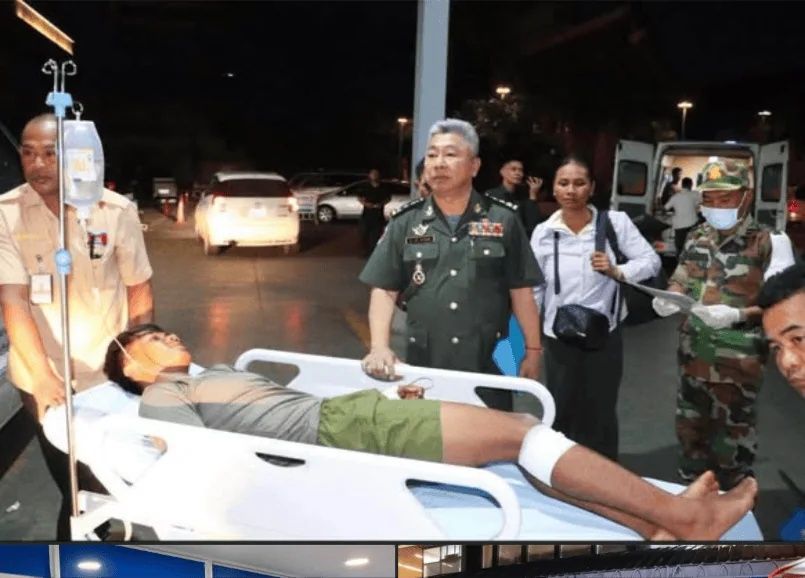
Cambodia's Ministry of National Defence confirmed on Monday that an explosive device detonated near the Thai border on Sunday afternoon, leaving four soldiers wounded during a routine patrol operation. The blast took place at 12:35 p.m. in the cashew plantation zones around Chouk Kruos and Thma Don villages in Oddar Meanchey province, a region that has occasionally witnessed cross-border tensions between the two neighbouring nations.
Lieutenant General Maly Socheata, undersecretary of state and official spokeswoman for Cambodia's Ministry of National Defence, provided the initial assessment of the incident to regional media. She confirmed that the injured servicemen were receiving comprehensive medical treatment from military medical personnel and associated health staff. The statement did not specify the severity of the injuries or the condition of the affected soldiers, leaving questions about the nature and extent of their wounds unanswered at that stage.
The incident underscores the persistent risks faced by border patrol units across Southeast Asia, where undetonated ordnance from past conflicts and unauthorised explosive devices continue to pose hazards to military and civilian personnel alike. The Cambodian-Thai border region, which stretches hundreds of kilometres through difficult terrain, has historically been complicated by disputes over maritime boundaries and occasional military confrontations, making routine patrols a necessity but also a potential flashpoint.
Thailand's military quickly issued its own account of events, with Army spokesperson Winthai Suvaree stating that Thai forces were simultaneously conducting standard patrol operations on their side of the frontier. According to the Thai statement released on Sunday, Thai troops heard the explosion emanating from the Cambodian side of the border but were not engaged in any offensive activities at the time.
The Royal Thai Army moved swiftly to emphasize that its personnel had not discharged any weapons or deployed grenades during the incident. This clarification was significant given the sensitivity surrounding cross-border military operations in the region, where even minor incidents can escalate tensions between nations. Thai military authorities initiated an immediate investigation involving the units responsible for the area, which concluded that the blast occurred on Cambodian territory and resulted from causes unrelated to Thai military action.
The prompt joint clarification from both nations suggests an attempt to contain the incident diplomatically and avoid misunderstandings that could strain bilateral relations. Cambodia and Thailand, despite periodic tensions over border demarcation and historical grievances, have in recent years sought to maintain relative stability along their shared frontier through military-to-military dialogue and cooperative arrangements.
The blast itself could stem from several possible sources. Unexploded ordnance left over from Cambodia's decades of conflict, including the civil war and the subsequent decades of instability, remains scattered across rural areas despite extensive demining efforts. Additionally, improvised explosive devices sometimes appear in border zones due to smuggling operations or territorial disputes involving non-state actors. The investigation into the specific cause would likely involve forensic analysis and examination of the blast site by Cambodian military engineers.
For Malaysia and other Southeast Asian nations observing regional security dynamics, such incidents highlight the ongoing challenges faced by governments attempting to manage porous borders and inherit legacies of conflict. The Cambodian-Thai situation reflects broader patterns across the region, where cross-border issues demand careful diplomatic handling and coordinated security responses to prevent escalation.
Oddar Meanchey province, located in northwestern Cambodia bordering Thailand's Udon Thani and Nakhon Ratchasima provinces, sits in a relatively underdeveloped region with limited infrastructure. The cashew plantation areas where the blast occurred represent important agricultural zones that provide livelihoods for local communities, making military operations in the area a delicate balance between maintaining national security and protecting economic activities.
The injured soldiers were presumably evacuated to military medical facilities for treatment, though the specific hospitals involved were not mentioned in official statements. Cambodia's military healthcare system, while improving, continues to face resource constraints, particularly in border regions far from the capital Phnom Penh.
This incident serves as a reminder of the human costs of maintaining border security in regions affected by past conflicts and ongoing instability. The four wounded soldiers represent the tangible consequences of patrol operations that, while routine in nature, carry inherent risks in areas where the remnants of war continue to threaten lives and where tensions between nations occasionally flare.

