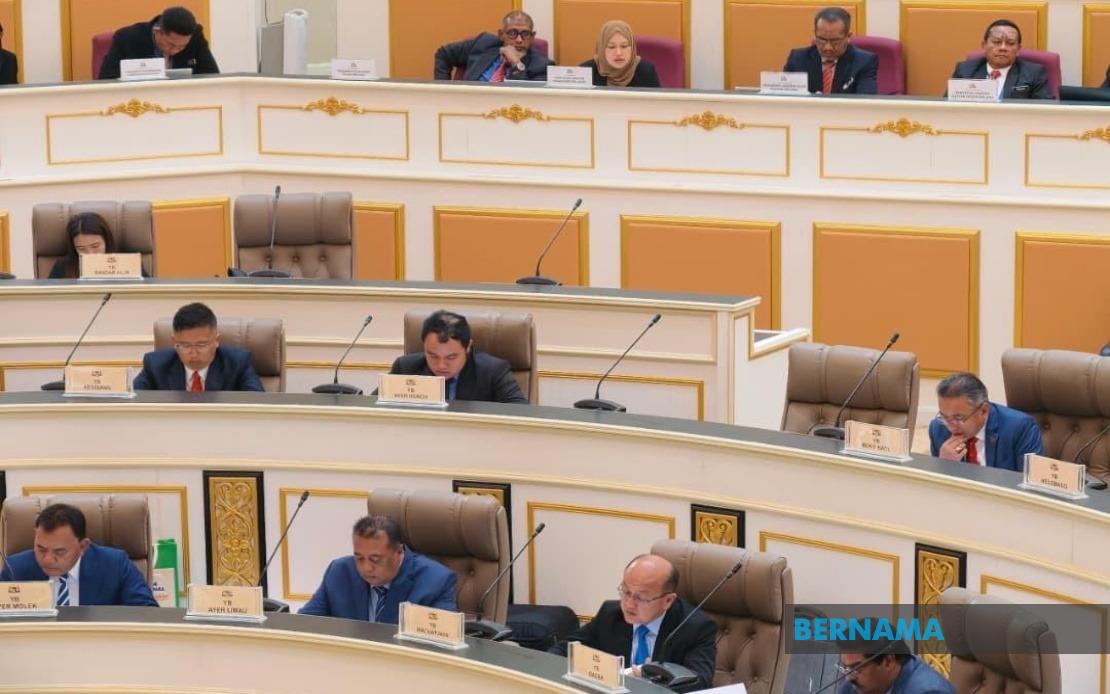
The political landscape in Melaka shifted sharply on July 15 when four Democratic Action Party assemblymen relocated to the opposition benches in the State Legislative Assembly, marking a decisive break from the Barisan Nasional-led administration. Allex Seah Shoo Chin, Low Chee Leong, Leng Chau Yen and Kerk Chee Yee announced their repositioning on the final day of the assembly's sitting, now sitting alongside members from Perikatan Nasional and independent representatives. The move came after DAP's dramatic announcement the previous day that it would immediately terminate its support for the state government, a decision that fundamentally alters the balance of power in Melaka's legislature.
The withdrawal represents a significant rupture in the Pakatan Harapan coalition, which has held sway in Melaka's politics for several years. What distinguishes this realignment is that while four DAP assemblymen made the crossing, the sole representative from Parti Amanah Negara, Adly Zahari, chose to remain seated alongside government members. Zahari, who chairs the Melaka branch of Pakatan Harapan, maintained his position in the government bloc, effectively fracturing the opposition alliance and creating an unusual three-way split in the chamber. This divergence between the two coalition partners reflects deeper disagreements over strategy and principle, with the Amanah assemblyman taking a different political calculation than his former allies.
The catalyst for DAP's decision centres on a constitutional amendment that the Melaka State Legislative Assembly had just passed, permitting the appointment of nominated assemblymen rather than exclusively elected representatives. Khoo Poay Tiong, who chairs the Melaka DAP division, characterised the amendment as fundamentally antithetical to democratic principles and electoral integrity. The party viewed the move as undermining the foundational concept of representative democracy, where legislative seats should be contested and won through electoral competition rather than appointed through political patronage or executive discretion. This principled objection, according to party leadership, left no viable option but withdrawal from an administration implementing policies they considered democratically objectionable.
The timing and nature of this constitutional manoeuvre carries particular significance for Malaysian politics. Nominated seats represent a longstanding mechanism by which state and federal governments can consolidate legislative control without requiring additional electoral victories, effectively circumventing the democratic process. For a party like DAP, which has historically positioned itself as a champion of democratic reform and electoral accountability, participating in a government that institutionalises nominated representation would constitute a fundamental betrayal of its core ideological commitments. The four assemblymen's relocation to opposition benches therefore reflects not merely tactical repositioning but a principled stand against what they perceive as creeping authoritarianism.
Prime Minister Datuk Seri Anwar Ibrahim intervened to urge DAP to reconsider its withdrawal decision, requesting that the party postpone action so that focus could be maintained on developmental initiatives and public welfare concerns. His appeal underscores the complications that arise when coalition partners disagree on fundamental governance questions. For the Prime Minister, the loss of DAP's parliamentary support in Melaka, while not immediately threatening the federal government, represents a weakening of the broader Pakatan Harapan coalition at state level. The intervention suggests that federal leadership viewed the constitutional amendment as insufficiently important to warrant coalition rupture, positioning administrative continuity and development outcomes above constitutional principle.
Assembly Speaker Datuk Ibrahim Durum's remarks requesting that all members conduct themselves with discipline, decorum and compliance with house rules take on added weight given the unusually fractious dynamics now present in the chamber. With government members now facing a splintered opposition that includes both DAP and independent voices alongside Perikatan Nasional representatives, maintaining parliamentary order becomes more challenging. The speaker's appeal to adherence to standing orders reflects a recognition that the assembly faces a period of heightened political tension, where traditional government-opposition dynamics have become considerably more complex.
The practical implications of this realignment depend substantially on the precise mathematics of Melaka's legislative composition. While the relocation of four DAP assemblymen to opposition benches strengthens that bloc numerically, the retention of Adly Zahari within the government coalition complicates straightforward arithmetic. The state government's continuing viability hinges on whether it maintains sufficient numerical support to pass legislation and maintain confidence votes, a calculation that has become considerably more precarious. Any further defections from either DAP's remaining allies or from the ranks of independent assemblymen could fundamentally alter the state administration's stability.
For broader Southeast Asian political observers, the Melaka situation exemplifies the internal tensions within multi-ethnic, multi-party democratic systems attempting to balance coalition governance with principled opposition to specific policies. Malaysia's complex federal structure, where significant power devolves to state governments, creates space for such localised political realignments that would not necessarily cascade immediately to national politics. The DAP's withdrawal from Melaka state government does not automatically imply any weakening of its participation in the federal Pakatan Harapan administration under Prime Minister Anwar Ibrahim.
The constitutional amendment regarding nominated assemblymen itself warrants scrutiny within Malaysia's evolving democratic standards. While such provisions exist in various state constitutions, their expansion or invocation remains contested among reform-minded parties and civil society organisations. DAP's opposition reflects a broader conversation within Malaysian politics about the appropriate balance between executive prerogative and electoral accountability. The party's willingness to sacrifice governmental participation to resist this specific constitutional development signals that it regards democratic principle as superseding administrative convenience.
The role of Parti Amanah Negara in choosing to remain within the government structure creates an intriguing dynamic for future coalition politics in Melaka. Amanah's decision to split from DAP on this matter suggests either a different assessment of the constitutional amendment's significance or a calculation that withdrawal would be strategically counterproductive. This divergence may portend future tensions within Pakatan Harapan at state level, where coalition partners may increasingly find themselves at odds over governance priorities and constitutional questions. The Melaka experience demonstrates that even within progressive coalitions, disagreements over fundamental principles can lead to dramatic political ruptures.
Looking forward, the Melaka assembly situation will likely influence how other state governments approach constitutional amendments and the scope of executive prerogative. The DAP's principled stand, even at the cost of relinquishing state-level power, may embolden other opposition figures and civil society critics questioning similar measures elsewhere. Simultaneously, the configuration of forces now present in Melaka's assembly—with government, opposition, and nominally non-aligned members creating a three-way split—may demonstrate the practical difficulties that arise when traditional two-sided legislative dynamics fragment. The coming months will reveal whether the state administration can function effectively with this newly restructured alignment, and whether other state governments take note of the political costs associated with constitutional measures that DAP and others view as democratically problematic.

