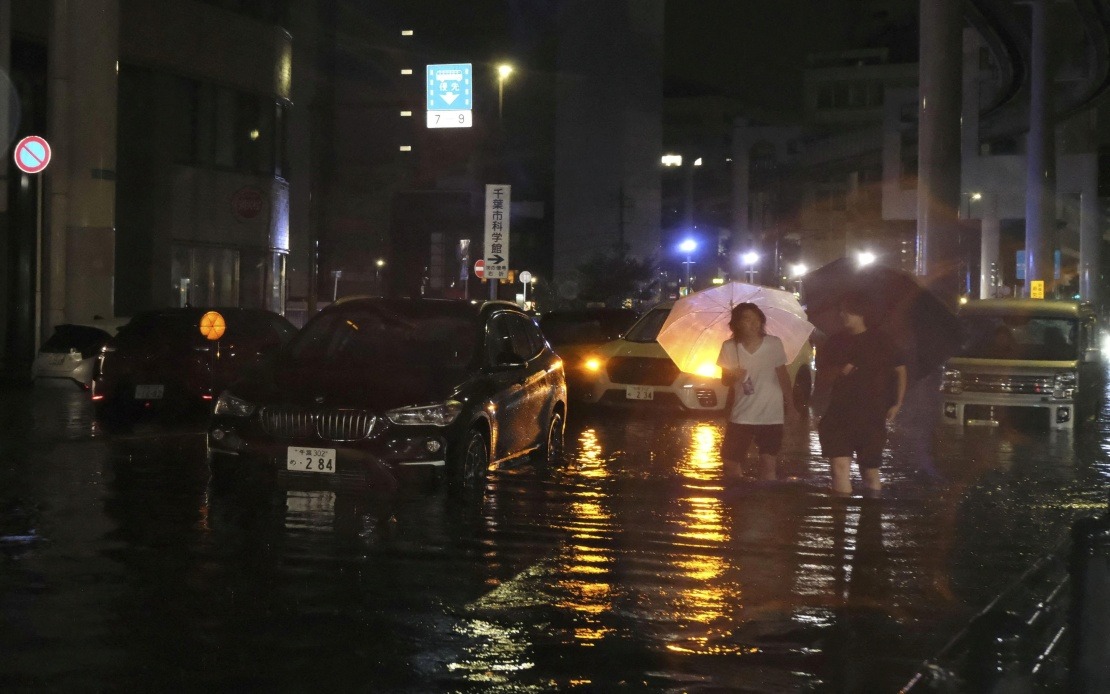
Eastern Japan faced a catastrophic weather event Thursday and into Friday as relentless downpours inundated Chiba Prefecture, resulting in at least four confirmed deaths and leaving another person unresponsive. The Japan Meteorological Agency responded by issuing a Level 5 warning—the most severe on its alert scale—for exceptionally heavy precipitation across more than one-third of municipalities in the prefecture situated near Tokyo, while simultaneously activating the highest landslide alert for several areas including Chiba and Ichihara.
The meteorological conditions that produced this deluge emerged from a volatile atmospheric setup: warm, moisture-laden air masses flowing from lower latitudes collided with cold air aloft, creating profoundly unstable conditions primed for extreme precipitation. This collision pattern generated the kind of concentrated rainfall events that periodically affect Japan's densely populated regions, though the intensity this time overwhelmed local drainage and flood management infrastructure across the prefecture.
The human cost became immediately apparent as floodwaters transformed roads and urban spaces into waterways. In central Chiba, hourly precipitation reached 115 millimetres during Thursday night—equivalent to the entire typical August monthly rainfall in a normal year compressed into a single hour. Residents waded through knee-deep water as they attempted to navigate streets turned into rivers, while water fountained upward from underground utility access points. The city authorities of Chiba and Ichikawa, alongside other municipalities, urgently broadcast evacuation advisories compelling residents to seek immediate shelter.
The scale of displacement proved staggering. The Fire and Disaster Management Agency documented that evacuation orders ultimately encompassed more than 400,000 individuals across Chiba and neighbouring Ibaraki prefectures at the peak of the crisis. Though conditions began improving Friday morning, approximately 126,000 people remained under mandatory evacuation orders as of 7 am, reflecting the lingering danger from elevated water levels and unstable ground conditions. Over 200 evacuation centres hastily opened across Chiba, Ibaraki, Saitama, and Gunma prefectures to accommodate displaced residents.
Urban infrastructure struggled to cope with the precipitation volume. Power disruptions affected roughly 45,000 households in Chiba Prefecture, according to a Tokyo Electric Power Company subsidiary, leaving residents without electricity during a crisis situation. The prefectural government building transformed into an emergency shelter, accommodating approximately 1,800 stranded commuters who found themselves unable to reach their homes as transportation networks deteriorated.
While the Level 5 rain and landslide warnings were downgraded by Friday morning as conditions began stabilizing, meteorologists cautioned that significant precipitation would likely persist through Friday across Chiba and surrounding regions. This extended weather outlook meant that while the most acute danger phase was passing, communities faced continued vulnerability to secondary flooding and potential fresh landslide incidents as ground became increasingly saturated.
For Malaysian readers and regional observers, this event illustrates the extreme weather challenges confronting densely urbanized areas in East and Southeast Asia. Japan's advanced meteorological forecasting, early warning systems, and evacuation protocols—while substantially effective—nonetheless resulted in significant casualties and mass displacement. The incident underscores how even highly developed nations with sophisticated infrastructure and emergency response capabilities face genuine limits when confronted with weather phenomena of unusual intensity or concentration. Similar rainfall patterns could pose even more severe consequences in less-developed regional contexts where warning systems, evacuation logistics, and disaster response coordination may be less comprehensive.

