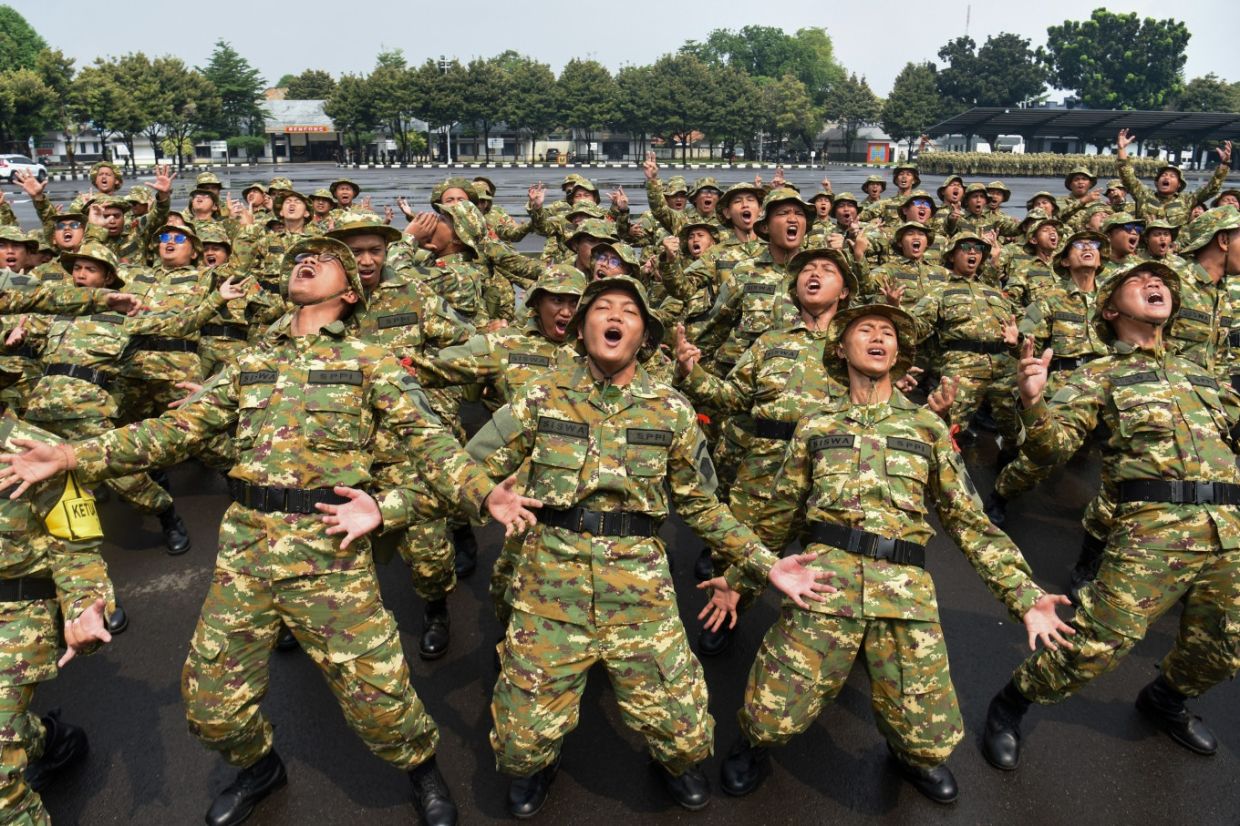
Indonesia's Defence Ministry is conducting an urgent review of its military-style training programme for managers of President Prabowo Subianto's Red and White Rural Cooperatives and fishing villages initiatives following four deaths among more than 35,000 participants in just days. The fatalities have intensified scrutiny of a civilian-oriented scheme that has become entangled with military discipline protocols, raising fundamental questions about the appropriateness of such methods for cooperative leadership development.
The training deaths occurred across multiple locations within days of the 30-day basic military course commencing. Anisa Muyassaroh succumbed to heat stroke during training in Balikpapan, East Kalimantan, while Yonanda Muhammad Taufiq died of cardiac arrest following introductory activities at a facility in Baturaja, South Sumatra. In Jakarta, Novia Rahmadhani Sihotang experienced a fatal illness that authorities linked to tuberculosis complications. Most recently, Muhammad Rifqi Renaldi Gunawan died after suffering severe breathing difficulties during training at an Air Force facility in the capital, despite receiving intensive hospital care.
The Defence Ministry's response indicates acknowledgment of systemic vulnerabilities requiring immediate correction. Brigadier General Rico Ricardo Sirait outlined a comprehensive review encompassing enhanced health screening procedures, improved early detection of medical conditions, real-time participant monitoring, and upgraded emergency response protocols. This admission suggests the initial programme design may have underestimated the physiological demands and health risks inherent in military-style conditioning for a civilian population that may include individuals with pre-existing conditions or age-related vulnerabilities.
Civil society opposition has crystallised around fundamental philosophical objections to militarising civilian cooperative management. Amnesty International Indonesia's executive director Usman Hamid characterised the training as "a fatal mistake that must be stopped immediately," arguing the government should replace military instruction with education centred purely on cooperative management and business competencies. Hamid's position reflects wider concern that the initiative represents mission creep in the militarisation of civilian institutions—a pattern Indonesians associate with the New Order regime's controversial dual military function that blended security and administrative roles.
The incompatibility between military hierarchies and cooperative principles forms the substantive core of rights advocates' objections. Cooperatives historically embody democratic governance, collective decision-making, and consensus-building rather than command-and-control structures. Imposing military discipline protocols on individuals who will lead cooperative enterprises potentially corrupts the foundational values these organisations are designed to promote, creating tension between the training's authoritarian methodology and the participatory frameworks cooperative members expect. This structural contradiction undermines the coherence of the government's development strategy.
Parliamentary oversight bodies have initiated measured interventions without entirely rejecting the programme's underlying concept. Commission I deputy chair Dave Laksono of the Golkar Party acknowledged lawmakers' monitoring role while accepting the government's stated intention to cultivate discipline, leadership qualities, and nationalist sentiment. However, Laksono contended that implementation methods and emergency protocols required substantial refinement to safeguard participant wellbeing, suggesting evaluation and improvement rather than outright termination as the parliamentary preference.
Commission member Imas Aan Ubudiyah from the National Awakening Party articulated specific technical requirements for risk mitigation, emphasising that rigorous health screening should filter individuals unsuitable for physically demanding activities. Her recommendations encompassed integrated medical supervision, comprehensive assessments of physical capability, and curriculum revision to align intensity with safety standards. These interventions indicate parliamentary recognition that the programme's existing structure contains preventable hazards requiring systematic correction before resumption.
Presidential Chief of Staff Dudung Abdurachman's Friday statement suggested the executive maintains confidence in the programme's fundamental design despite acknowledging the tragic outcomes. Abdurachman claimed investigation had revealed no negligence evidence and characterised the training as "not particularly strenuous," attributing deaths to underlying health conditions or unidentified factors. This defensive positioning contrasts sharply with civil society's interpretation of systemic failure, indicating substantial disagreement between government and critics regarding responsibility attribution and necessary reform scope.
The broader context reveals competing visions for Indonesia's rural development and institutional capacity-building. The government targets establishing 80,000 cooperative units and 5,000 fishing villages by 2029—an ambitious infrastructure initiative requiring trained management cadres. However, the militarised approach to cultivating these leaders reflects governance preferences that regional observers should monitor closely. For Malaysia and other Southeast Asian nations, Indonesia's struggles with this programme offer instructive case studies regarding the risks of importing security-sector methodologies into civilian development initiatives, particularly when vulnerable populations lack adequate medical safeguards.
The training programme structure compounds these concerns through its sequential design: participants endure 30 days of military conditioning before receiving 15 days of cooperative management instruction. This sequencing prioritises military socialisation over technical skill development, potentially establishing inappropriate hierarchy as the framework within which participants subsequently approach cooperative governance. The emphasis ordering itself reflects institutional priorities that may misalign with effective rural cooperative development.
Longer-term implications extend beyond immediate programme implementation. The incident sequence has exposed gaps between the Defence Ministry's operational protocols and contemporary human rights and occupational safety standards applicable to civilian training programmes. Indonesia's experience demonstrates that military institutions conducting civilian training require substantially different safeguarding frameworks than those appropriate for uniformed personnel, who receive medical pre-screening and expect higher physical demands as occupation prerequisites. Expanding military training to civilian populations without equivalent safety architecture creates preventable vulnerabilities.
Moving forward, programme credibility hinges upon transparent implementation of promised safety reforms and genuine integration of parliamentary and civil society input. Any resumption without comprehensive health screening protocols, independent medical supervision, and demonstrated commitment to participant safety would likely face expanded opposition and potential legal challenges. The four deaths have fundamentally altered the political calculus surrounding the initiative, transforming it from technocratic policy into contested governance question requiring robust institutional accountability and transparent public acknowledgment of systemic shortcomings before restoration of public confidence becomes possible.

