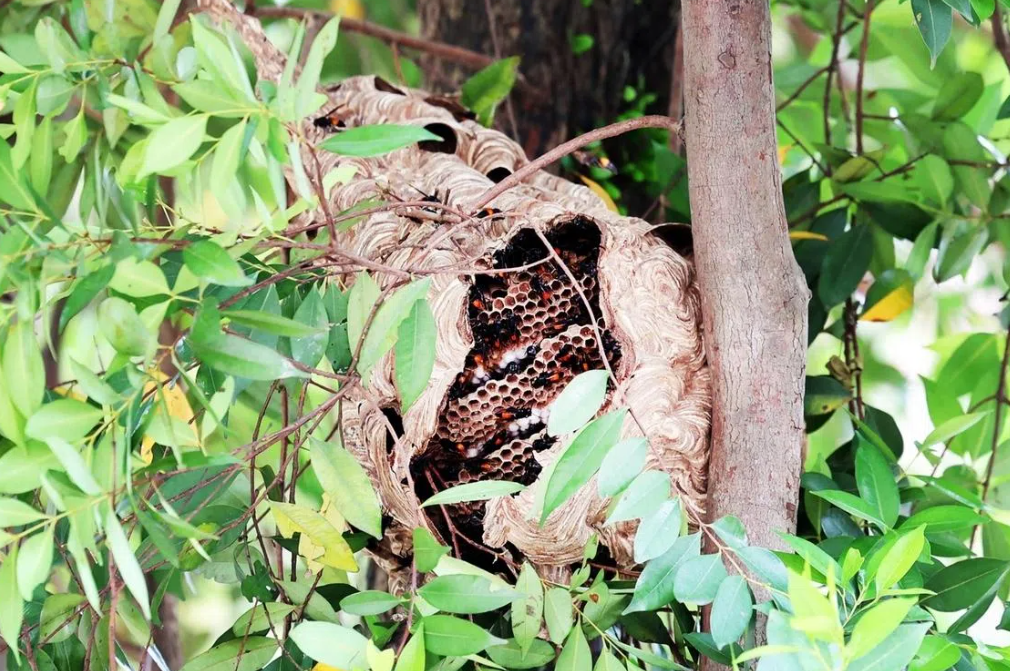
Four residents required hospital treatment following an aggressive hornet attack near Redhill Market in Singapore on the afternoon of July 10. Emergency services were summoned to Redhill Lane at approximately 1pm after the incident unfolded along a footpath between Block 78 and a nearby Shell petrol station, where a hornets' nest had been established on a tree. The Singapore Civil Defence Force and Tanjong Pagar Town Council responded swiftly, securing the perimeter and engaging pest control specialists to safely extract and dispose of the nest.
Eyewitness accounts paint a harrowing picture of the encounter. A man identified only as Chen, who was purchasing coffee at the market when the chaos erupted, reported hearing urgent shouts warning of hornets in a nearby tree and observing an elderly gentleman being pursued and stung by the insects. The situation escalated with multiple victims sustaining injuries as the swarm descended on those in the vicinity. Another witness, Mei Zhen, discovered a woman in her seventies at a public toilet facility nearby, visibly distressed and examining injuries to her head and ears.
The injuries inflicted on the elderly woman were particularly severe. Her ears exhibited pronounced swelling and bleeding, and she complained of throbbing headaches and sensations of dizziness—symptoms consistent with significant venom exposure. According to Mei Zhen's account to Shin Min Daily News, more than ten hornets had swarmed around the woman's head, with some insects becoming entangled in her hair whilst others descended to floor level and clustered around the toilet entrance. The intensity of the attack underscores how rapidly these insects can mobilise when their nest is threatened or disturbed.
The biological mechanisms behind hornet venom explain why such encounters pose substantial health risks. Unlike their smaller cousins, hornets deliver considerably larger quantities of venom with each sting, according to information from the National University Hospital. This venom contains multiple dangerous compounds: histamine triggers severe allergic responses in the body, whilst melittin directly causes acute pain at the sting site. Additional proteins including phospholipase and hyaluronidase add further toxicity, potentially damaging human tissue at the cellular level.
In serious cases, hornet stings can precipitate life-threatening complications. Victims may experience dangerous drops in blood pressure, reduced circulation to critical organs, or severe swelling of the airways that obstructs breathing. These systemic reactions can rapidly become fatal without prompt medical intervention, which explains why all four victims from the Redhill Lane incident required Singapore General Hospital admission and professional medical assessment.
The incident follows an emerging pattern of hornet-related emergencies across Singapore in recent years. In 2024 alone, authorities documented at least two serious incidents involving these insects. A separate attack at Sungei Buloh resulted in five people being hospitalised, whilst another tragedy claimed a cyclist's life when he was attacked whilst riding along Sembawang Park Connector. These recurring incidents suggest that hornet populations may be increasing or becoming more aggressive, posing a mounting public health concern for residents and visitors to parks and public spaces throughout the island.
The Tanjong Pagar Town Council has issued clear guidance to residents on managing encounters with hornets. The primary recommendation emphasises remaining composed and creating distance from the affected area immediately upon spotting either a nest or aggressive insects. Rather than attempting removal or disturbance, individuals should retreat indoors to a secured building, using this as a protective barrier whilst authorities are contacted. Professional pest control teams possess the equipment, training, and protective gear necessary to handle such situations safely.
For those already stung, immediate action is critical. Victims should leave the vicinity as soon as possible and contact emergency services at 995 if experiencing severe reactions or requiring urgent treatment. This prompt response can make the difference between a manageable injury and a life-threatening medical emergency. The rapid mobilisation by SCDF and the town council's pest control contractor in this instance demonstrates how coordinated emergency responses can prevent further casualties.
The successful removal and safe disposal of the Redhill Lane nest has restored the area to public use, though lingering concerns remain about future incidents. The proximity of the nest to a busy market frequented by shoppers, many of whom are elderly residents vulnerable to severe reactions, highlighted how urban hornet presence threatens daily public activities. As Singapore continues to experience hornet incidents, residents should remain vigilant when visiting parks, markets, and outdoor spaces, whilst authorities may need to implement more proactive monitoring and preventive measures to identify and manage hornet nests before they become hazardous. The National Parks Board has been approached for additional information on how such incidents might be anticipated and prevented.

