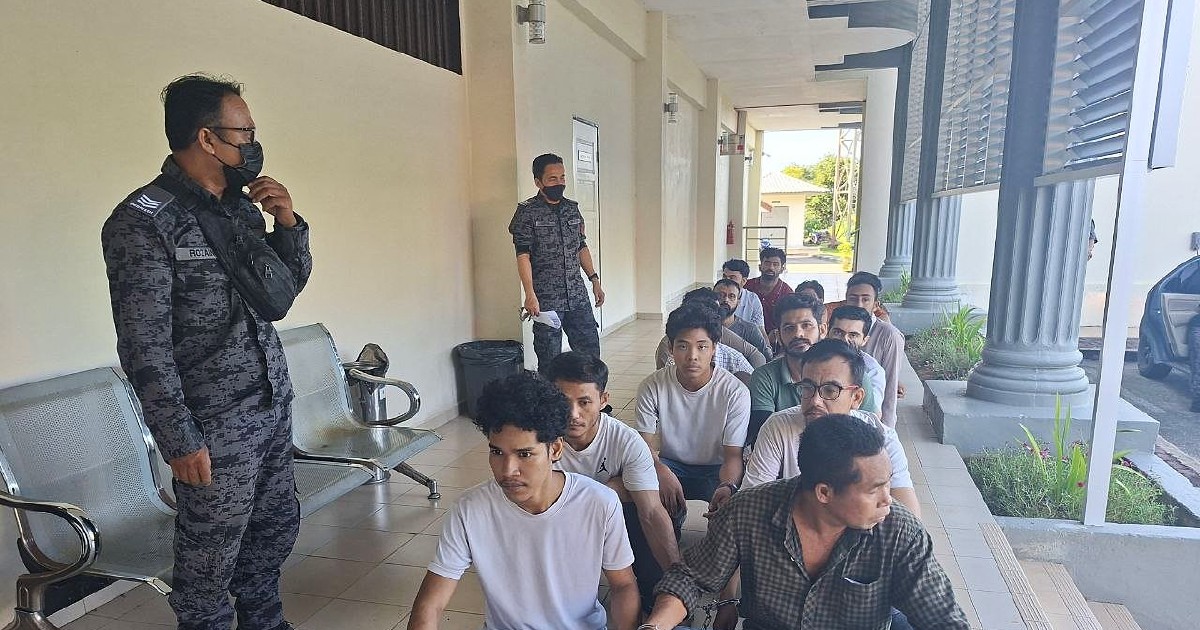
Fourteen foreign men made appearances in Pasir Mas Sessions Court to face charges connected with illegal entry into Malaysia, remaining in the country beyond their authorised stay periods, and improper use of their travel documentation. The coordinated prosecution reflects ongoing enforcement efforts by immigration authorities across Malaysia's northern states, where monitoring of undocumented and illegally residing foreign workers remains a priority.
The charging of these individuals in Kelantan, a state that borders Thailand and experiences significant cross-border movement, highlights the continued challenge authorities face in managing irregular migration flows. Pasir Mas, situated along major transit routes in the northern part of Peninsular Malaysia, has historically been an entry point for unauthorised cross-border movement. Immigration operations in the state have intensified in recent years to curb employment of undocumented migrants and enforce compliance with visa and work permit requirements.
Illegal entry offences typically constitute one of the more serious immigration violations in Malaysia's legal framework. Individuals found guilty of entering the country through unauthorised means face potential imprisonment and substantial fines. The compound penalties serve as a deterrent and underscore the government's commitment to maintaining secure borders and controlled entry processes. For foreign nationals engaged in illicit border crossing activities, conviction can result in deportation and bans from future re-entry spanning multiple years.
The overstaying component of these charges addresses a widespread phenomenon across Southeast Asia. Many foreign workers, particularly from neighbouring countries and beyond, inadvertently or deliberately exceed their permitted duration of stay. Beyond legal consequences, overstaying complicates a person's immigration status and can lead to detention pending deportation proceedings. Employers who knowingly retain such workers face their own penalties under Malaysia's employment and immigration statutes, creating a shared liability structure intended to discourage non-compliance.
Misuse of travel documents and passes represents the third dimension of these prosecutions. This offence encompasses scenarios where individuals alter their documents, use documents belonging to another person, or otherwise present false or modified travel credentials to immigration authorities. Such conduct undermines the integrity of Malaysia's immigration control systems and complicates efforts to track individuals who may pose security or public order concerns. The seriousness with which these offences are treated reflects their potential to facilitate human trafficking, transnational crime, and security threats.
The concentration of such charges in a state like Kelantan reflects demographic and geographic factors. The state's proximity to Thailand makes it a natural corridor for cross-border movement, both legal and clandestine. The composition of foreign workers in Kelantan, which includes substantial numbers from Thailand, Myanmar, and South Asia, means that immigration enforcement agencies must maintain regular operations to detect and prosecute violations. Seasonal fluctuations in labour demand, particularly in agriculture and construction, can create temporary spikes in irregular labour migration.
Malaysia has intensified immigration enforcement in response to public and political pressure regarding undocumented migrants. The presence of large irregular populations strains public services, creates workplace safety concerns, and poses challenges for social cohesion. Previous national registration programmes have documented millions of undocumented migrants residing in Malaysia, underscoring the scale of the challenge. Prosecutions such as those in Pasir Mas signal that authorities are maintaining active enforcement despite the logistical complexity of managing such operations.
The legal procedures involved in these cases typically follow established patterns. Offenders appear before Sessions Court judges who assess evidence presented by immigration prosecutors. Depending on the specific circumstances and any prior violations, sentences may range from fines alone to imprisonment combined with fines and deportation orders. The courts balance deterrent purposes with considerations of individual circumstances, though immigration violations generally receive stern treatment reflecting state interests in border control.
For regional observers and policymakers, these prosecutions illustrate broader Southeast Asian patterns of migration and enforcement. Thailand, Myanmar, and other neighbouring countries face similar challenges in managing citizens who migrate irregularly to Malaysia seeking employment opportunities. Bilateral discussions on labour migration, worker documentation, and information-sharing between Malaysia and origin countries aim to address root causes, though implementation remains inconsistent. Enhanced cooperation frameworks could potentially reduce irregular migration flows through legalised pathways and worker protection mechanisms.
The impact of these charges extends beyond the individuals prosecuted. Media reporting of immigration enforcement actions serves an informational function, signalling to potential migrants that risks and penalties exist. Employers considering hiring foreign workers without proper documentation receive similar messaging. However, the persistence of illegal entry and overstaying despite decades of enforcement suggests that economic incentives for irregular migration remain powerful, particularly given income disparities between Malaysia and neighbouring countries.
For Malaysian citizens and employers, these prosecutions underscore the importance of verifying worker documentation and maintaining compliance with immigration regulations. Businesses found to employ undocumented migrants face penalties including substantial fines and potential criminal prosecution of management personnel. The enforcement environment continues to shift toward stricter compliance, with immigration officials increasingly conducting workplace raids and document checks. Malaysian employers operating in sectors reliant on foreign labour must maintain heightened diligence regarding worker status verification and permit validity.
Looking forward, Malaysia's approach to managing illegal immigration likely involves continued enforcement operations alongside potential policy initiatives addressing root causes. Regional cooperation mechanisms, legalisation windows for eligible workers, and bilateral labour agreements represent complementary strategies to reduce irregular migration pressure. The charges filed in Pasir Mas represent incremental enforcement progress, but sustainable solutions require addressing the underlying economic drivers that motivate individuals to risk legal consequences through clandestine border crossing and unauthorised employment.

