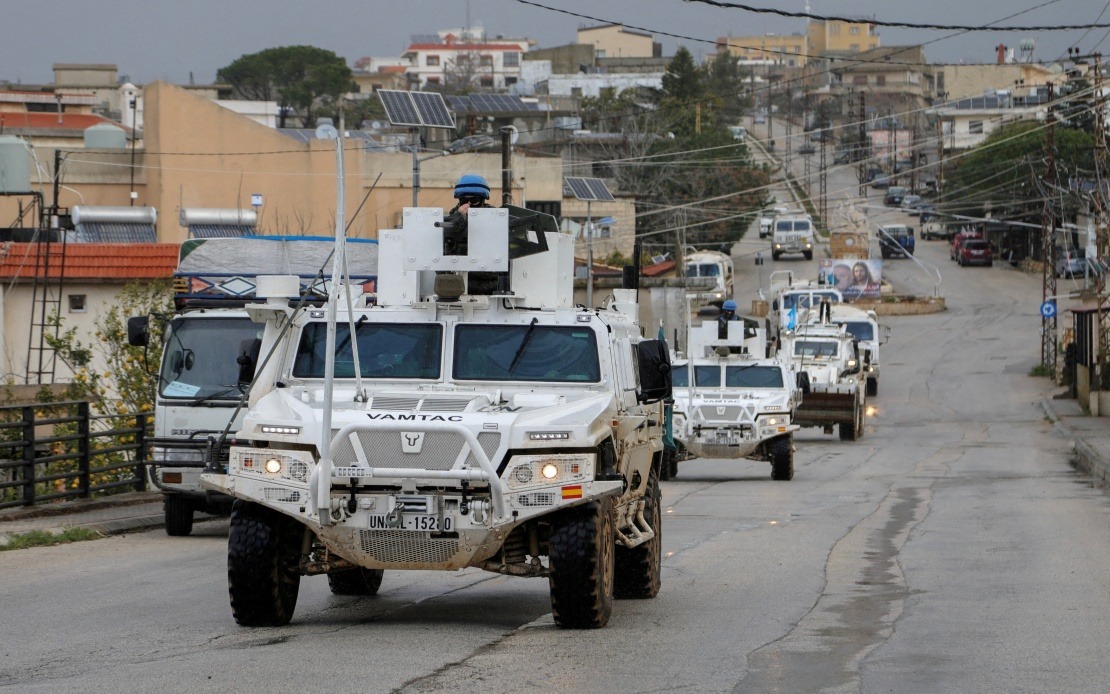
France and Italy have committed to creating a multinational coalition aimed at stabilizing Lebanon following the scheduled departure of the United Nations Interim Force in Lebanon (UNIFIL) at the end of December, French President Emmanuel Macron announced during an official visit by Italian Prime Minister Giorgia Meloni to Antibes on the French Riviera. The two European powers view the transition as a critical moment requiring coordinated international engagement to ensure the continued security and territorial integrity of the country, which has faced recurring cycles of conflict and regional proxy tensions.
Macron outlined the coalition's primary objectives with emphasis on strengthening Lebanese state capacity. The initiative, he explained, would operate in close coordination with both the European Union and the United Nations, reflecting a commitment to multilateral approaches rather than unilateral intervention. The coalition framework is designed to build the institutional and operational capabilities of Lebanon's armed forces, a cornerstone of the government's ability to assert sovereignty over its entire territory and prevent rival armed groups from operating with impunity. This capacity-building dimension addresses a longstanding challenge that has allowed non-state actors to flourish in security vacuums.
Meloni reinforced the French position by stressing the imperative of maintaining an international military presence in Lebanon to avert what she characterized as an "extremely dangerous" security vacuum. Her language reflected concerns shared across European capitals that a sudden withdrawal without adequate transition arrangements could destabilize the broader region. The Italian position carries weight given Rome's significant naval and military assets in the Mediterranean and its longstanding diplomatic ties within the Middle East. For Italy, Lebanon represents both a humanitarian concern and a potential flashpoint with implications for European security and migration patterns.
The timing of this announcement reflects Security Council Resolution 2790, which mandates UNIFIL's cessation of operations on December 31. This resolution imposes a structured timeline requiring the force to complete its full drawdown and personnel withdrawal within twelve months following the operational conclusion date. Unlike some previous UN peacekeeping transitions, this hard deadline leaves no ambiguity about the calendar for transition planning, though it also compresses the window for arranging successor security arrangements. The resolution signals a shift in the international community's approach toward Lebanon, moving from open-ended peacekeeping to time-limited coalition-based support.
For regional observers, particularly those monitoring developments in the Levant, this Franco-Italian initiative represents a significant diplomatic investment in Lebanon's stability. France has maintained substantial historical and cultural ties to Lebanon dating from its League of Nations mandate period, while Italy's involvement signals broader European concern about Mediterranean security. The coalition concept differs from traditional peacekeeping in that it emphasizes partner-nation capacity development rather than interposition between conflicting parties, suggesting a belief that Lebanese state institutions require external assistance to function effectively.
The initiative carries implications beyond Lebanon's borders. Hezbollah and other armed actors have long operated from Lebanese territory with tacit or explicit support from regional powers, particularly Iran. A strengthened Lebanese state and armed forces theoretically could constrain such activities, though success depends heavily on Lebanese political will and the balance of power within Beirut's fractious governing system. The announcement suggests European powers are betting that sustained international engagement and resource provision can shift incentive structures enough to alter Lebanon's trajectory toward greater state centralization.
From a Southeast Asian perspective, this development illustrates broader patterns of how developed nations manage transitions in UN peacekeeping operations. Malaysia and other regional contributors to UN missions elsewhere observe how permanent Security Council members shape post-peacekeeping arrangements in strategically important locations. The European approach—creating successor coalitions rather than abruptly withdrawing—contrasts with approaches in other contexts and may influence discussions about UN presence in Myanmar, the Sahel, and elsewhere where withdrawal deadlines approach.
The coalition model also reflects constraints on traditional UN peacekeeping. Financial costs, troop availability from Western nations, and political fatigue with open-ended commitments have prompted alternatives that distribute responsibility among coalitions of willing partners. This approach may become more common as the international system struggles to maintain adequate peacekeeping presence across multiple concurrent crises. For nations contributing troops globally, understanding how coalitions operate and what resources they command becomes strategically relevant.
Lebanese officials have historically sought international engagement to counterbalance domestic power imbalances and external pressures from neighboring countries. The Franco-Italian coalition offers potential benefits including military training, equipment provision, and international legitimacy for state authority. However, the coalition's effectiveness ultimately depends on Lebanese political elites' commitment to state-building and whether they prioritize institutional development over factional advantage. External support cannot substitute for domestic political consensus on core state functions.
The announcement also reflects European concern about broader Middle Eastern instability potentially spreading northward. Lebanon's deteriorating economic situation, ongoing Palestinian-Israeli tensions, and Syria's continued instability create a volatile environment. Europeans recognize that state collapse in Lebanon could trigger humanitarian crises, refugee flows toward Europe, and opportunities for non-state actors deemed threatening to European security interests. This calculus explains the willingness to commit resources and diplomatic capital to the initiative.
The coalition framework provides flexibility that traditional UN structures may lack. Partner nations can contribute according to capabilities and interests, adjusting participation levels based on developments. This contrasts with UN Security Council decision-making, which sometimes becomes gridlocked when permanent members pursue contradictory objectives. A coalition of committed nations theoretically can act with greater coherence, though coordination challenges inevitably emerge when multiple governments pursue interests that diverge on specifics despite agreeing on broad objectives.
Sucking in international actors through multilateral coalitions rather than bilateral arrangements also creates accountability mechanisms and burden-sharing arrangements that might prove more durable than alternatives. France and Italy bringing in other European partners and working through EU institutions creates institutional continuity that individual national programs might lack. This institutional approach suggests planning for multi-year engagement, potentially extending well beyond the initial UNIFIL withdrawal period.
As the December deadline approaches, other international actors will likely clarify their positions regarding post-UNIFIL arrangements. The Franco-Italian initiative may catalyze broader discussions about how various powers envision Lebanon's future security architecture, potentially including contributions from Arab League states, Gulf Cooperation Council members, and other stakeholders with interests in Lebanese stability and regional balance.

