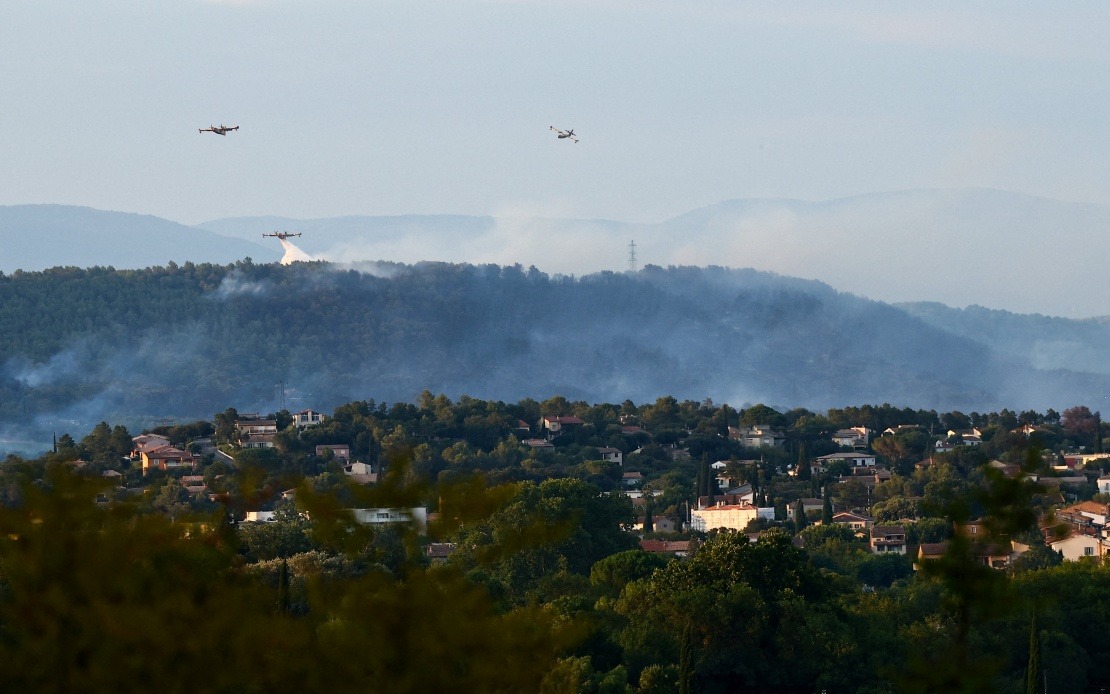
France is grappling with an unprecedented environmental catastrophe as wildfires consume vast tracts of woodland and vegetation across the nation. French Interior Minister Laurent Nunez confirmed on Monday that almost 40,000 hectares of forests and vegetation have been devastated by flames since the beginning of 2026—a figure that starkly illustrates the severity of the crisis unfolding across the country.
The scale of destruction represents a dramatic deterioration compared to previous years. Nunez emphasized that the current figures substantially exceed those recorded during the same period last year, signalling a troubling acceleration in wildfire activity. What makes the situation particularly grave is the relentless nature of the crisis; rather than isolated incidents, new fires ignite daily across different regions, stretching emergency response capacity to its limits and creating a cascading emergency that authorities struggle to contain.
The underlying cause of this catastrophic fire season is rooted in exceptional climatic conditions affecting the nation. An extraordinary heat wave has gripped France, with temperatures climbing to approximately 40 degrees Celsius in many areas, and exceeding this threshold in several regions. This extreme atmospheric phenomenon has created ideal conditions for fires to ignite, spread rapidly, and consume vegetation with alarming efficiency. The drought conditions accompanying such intense heat have left forests and vegetation critically dry, transforming much of the landscape into tinderbox conditions where even minor ignition sources can trigger massive blazes.
The meteorological stress indicator was particularly alarming at the end of June, when France's national meteorological service issued weather warnings spanning 72 of the nation's 96 departments. This represented an unprecedented occurrence—the highest number of departments ever simultaneously placed under such alerts. This blanket coverage underscored the exceptional nature of the heat event and signalled the urgency with which meteorologists and government officials viewed the threat to public safety and environmental integrity.
President Emmanuel Macron has framed the current wildfire crisis in historical terms, characterizing 2026 as a year of record wildfire activity for France stretching back to the conclusion of World War II. This perspective provides crucial context for understanding the magnitude of the challenge: France has not faced a wildfire season of comparable severity for more than eight decades. The comparison to the post-1945 period underscores that modern climate patterns and environmental conditions are now producing extreme phenomena that rival or exceed anything documented in the contemporary historical record.
For Malaysian and Southeast Asian observers, this European crisis carries important implications. France's experience demonstrates how climate change is intensifying heat waves and creating conditions that trigger cascading environmental disasters. Southeast Asia, already vulnerable to extreme weather patterns, faces similar risks as global temperatures continue to rise. The region's tropical forests and agricultural lands could face comparable threats if atmospheric warming accelerates further.
The economic ramifications of France's wildfire crisis extend beyond immediate environmental damage. Infrastructure destruction, evacuation costs, emergency response expenditures, and long-term reforestation efforts represent substantial financial burdens. Tourism and agriculture—sectors vital to regional economies—face disruption. For a European Union member state, the disaster strains national resources and may require coordinated international assistance, setting precedents for how developed nations respond to climate-driven emergencies.
The psychological and social impact on affected French communities cannot be understated. Residents face evacuation, displacement, loss of property, and trauma associated with living under threat of advancing flames. The daily emergence of new fire fronts creates an atmosphere of anxiety and uncertainty. Emergency personnel operate under extreme physical and mental stress as they attempt to protect lives and property against overwhelming odds.
From a policy perspective, France's current crisis raises urgent questions about wildfire prevention, early warning systems, and emergency preparedness. The concentration of dangerous conditions across 72 departments suggests that distributed regional responses may prove insufficient; instead, coordinated national and potentially European Union–level strategies may be necessary. Investment in fire prevention infrastructure, vegetation management, and early detection technologies becomes not merely prudent but essential.
The situation also highlights the interconnection between climate policy and immediate public safety. France's long-standing commitment to renewable energy and emissions reduction becomes more clearly justified when contemporary citizens experience the consequences of unchecked climate change manifesting as record-breaking heat waves and unprecedented wildfire seasons. The abstract threat of global warming becomes viscerally real when communities face evacuation and landscapes transform into scorched terrain.
Looking forward, the trajectory of this crisis will depend on meteorological conditions in coming weeks. If temperatures moderate and precipitation arrives, fire activity may decline. However, if the heat wave persists, the accumulated damage could exceed current projections. For other nations, including those in Southeast Asia, France's experience serves as a cautionary demonstration of how rapidly climate change can escalate environmental risks and overwhelm emergency response capabilities. Preparing for such scenarios now—through investment in prevention, early warning systems, and regional cooperation—offers a more effective strategy than reactive responses after disasters strike.

