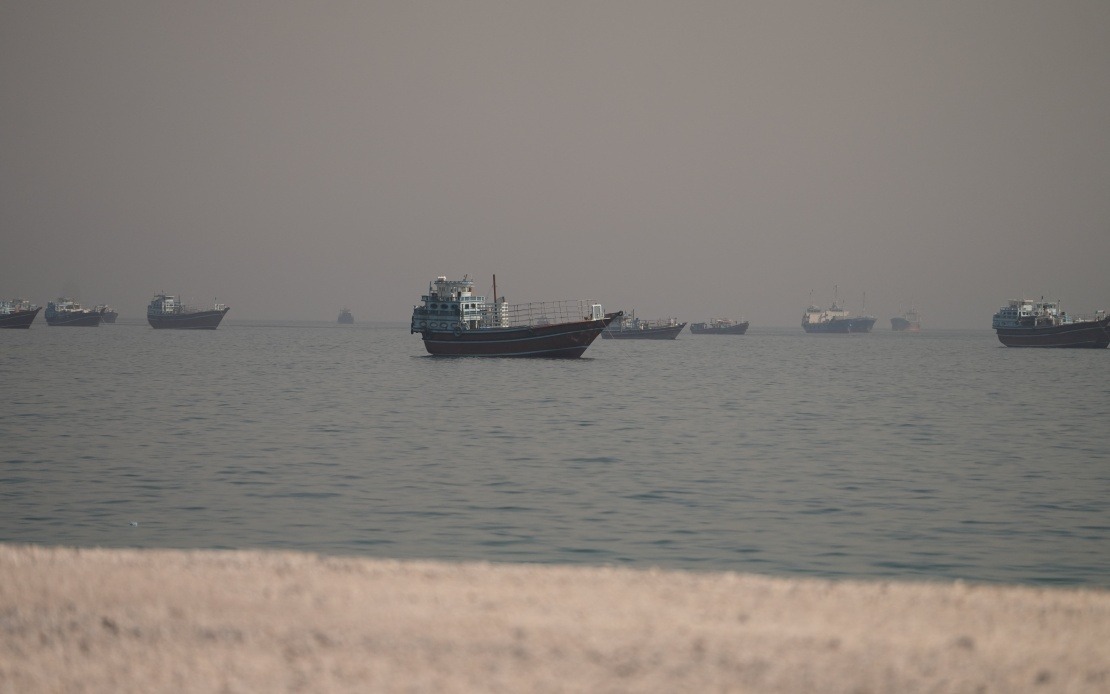
France is banking on Syria's resurgence as a geopolitical and economic hub that could reshape energy flows across the Middle East and reduce global dependence on the volatile Strait of Hormuz. Foreign Minister Jean-Noel Barrot made the assertion during a Thursday interview with French broadcaster TF1, signalling Paris's strategic interest in positioning the newly transformed Syrian state as a critical node in international energy infrastructure. The timing of these remarks reflects mounting anxiety in Western capitals over repeated disruptions to one of the world's most vital shipping lanes, where roughly one-third of seaborne oil passes annually.
Barrot's comments underscore a broader French diplomatic pivot toward Syria following the dramatic political transformation that swept away Bashar al-Assad's regime approximately eighteen months ago. The overthrow represented a seismic shift in regional stability, and Paris now views the country's trajectory toward reconstruction and normalisation as an opportunity to establish lasting economic partnerships. By framing Syria within the context of energy security, the French government is attempting to integrate the nation's recovery into a pragmatic framework that appeals to multiple stakeholders—Western energy consumers, emerging regional powers, and Syria itself as it seeks international rehabilitation and investment.
The emphasis on alternative corridors reflects genuine anxiety among energy-dependent nations regarding the sustainability of current supply chains. Tensions between the United States and Iran have periodically threatened shipping in the Strait of Hormuz, a chokepoint so critical to global energy markets that disruptions there immediately ripple across economies worldwide. For Southeast Asian economies including Malaysia, which import substantial quantities of crude oil and refined products, securing diversified supply routes directly impacts domestic fuel prices, industrial competitiveness, and currency stability. A functioning Syrian energy corridor could theoretically reduce the geopolitical leverage wielded by Gulf powers and diminish the risk premium embedded in crude prices.
Barrot's visit to Damascus alongside President Emmanuel Macron on Tuesday constituted a high-profile endorsement of Syria's new trajectory and a declaration of France's commitment to supporting its stabilisation and international reintegration. The presidential journey signals that Paris intends to move beyond diplomatic recognition toward substantive engagement encompassing economic cooperation, trade expansion, and possibly infrastructure development. France historically maintained significant influence in the Levantine region through colonial ties and subsequent diplomatic presence, and renewed engagement offers an opportunity to restore French strategic positioning in an area increasingly contested by Gulf states, Turkey, and regional powers.
The proposal to develop Syria as an energy hub rests on practical geographic considerations. Syria occupies a strategically valuable location bridging Mediterranean shipping lanes and overland routes connecting the Persian Gulf, Turkey, Iraq, and European markets. Should Syria stabilise sufficiently to accommodate international investment in energy infrastructure—refineries, pipelines, and port facilities—it could genuinely serve as an alternative node for oil and gas movement. However, such ambitions depend entirely on Syria maintaining political stability, attracting substantial foreign capital, and securing international consensus for reconstruction assistance.
For Malaysia and other Southeast Asian economies, the implications warrant careful attention. First, diversified oil supply routes could moderate price volatility and reduce the leverage of Gulf monopolies over Asian consumer nations. Second, Syria's emergence as a functional state and trading partner could eventually open new export markets for Malaysian goods and services as the country rebuilds infrastructure and consumer capacity. Third, broader Middle Eastern stability benefits regional commerce and security, particularly given Southeast Asia's extensive maritime trade networks and exposure to supply chain disruptions.
Barrot's assertions also reflect France's broader strategic ambition to position itself as a bridge between Western interests and newly emergent Middle Eastern actors. By framing engagement with post-Assad Syria in terms of mutual benefit—European energy security and Syrian economic reconstruction—Paris attempts to establish cooperative frameworks that transcend purely geopolitical competition. This approach contrasts with more explicitly confrontational stances some Western powers have adopted toward regional actors, potentially offering Syria an avenue toward international legitimacy and material assistance.
However, significant obstacles remain before Syria can function as a credible energy corridor. Decades of civil war inflicted severe damage on infrastructure, technical capacity requires rebuilding, and foreign investors will demand political guarantees and security assurances before committing capital. The new Syrian administration must demonstrate genuine commitment to governance standards that international actors find acceptable, including transparency, rule of law, and minority protections. Premature Western investment or infrastructure development could prove counterproductive if underlying political instability resurfaces.
The strategic calculus also extends to competition with alternative energy solutions. Renewable energy expansion, liquefied natural gas suppliers in Australia and the United States, and potential production increases in other regions could diminish Syria's eventual importance as an energy hub. Nevertheless, diversification itself represents a fundamental security principle, and France's willingness to articulate Syria's potential role signals confidence that the country's transformation is enduring enough to merit long-term planning.
For Malaysia specifically, France's diplomatic initiative offers subtle benefits. Enhanced international engagement with Syria and broader Middle Eastern stability could indirectly stabilise energy markets and reduce price spikes affecting Asian consumers. Additionally, should Syrian reconstruction proceed successfully, Malaysian companies could participate in infrastructure development or trade opportunities. The geopolitical message also matters—a Syria integrated into legitimate international commerce and cooperative frameworks poses fewer risks to global stability than one isolated and potentially vulnerable to extremist influence or external interference.
Barrot's remarks represent more than rhetorical positioning; they signal serious French policy interest in reshaping Middle Eastern energy architecture. Whether Syria ultimately develops as an oil corridor depends on factors beyond French influence—internal stability, investor confidence, regional cooperation, and international consensus. Yet France's explicit endorsement establishes a template for engagement that other nations may follow, gradually transforming Syria from pariah state into functional participant in global commerce and energy markets. For energy-dependent nations watching from Asia, this shift carries tangible implications for supply security and price stability that justify sustained attention to Syria's evolving role.

