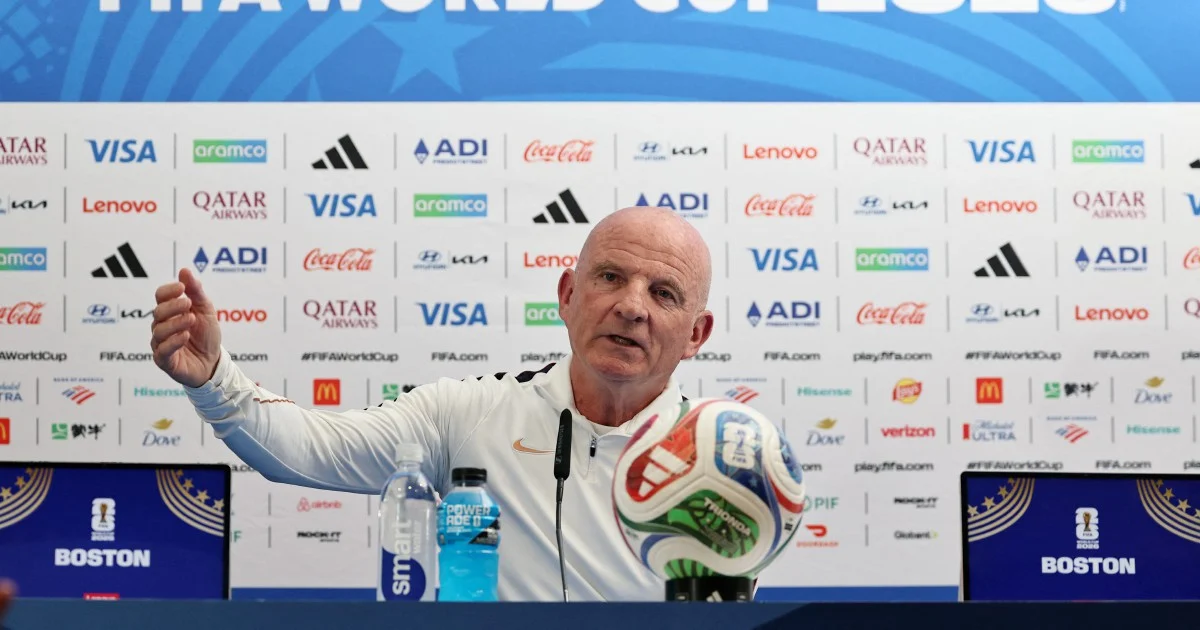
France's pursuit of first place in World Cup Group I against Norway on Friday carries implications extending well beyond the pitch, with logistics and operational efficiency playing as crucial a role as tactical preparation. Assistant coach Guy Stephan outlined the French federation's strategic thinking on Thursday, explaining that topping the group would fundamentally reshape the team's tournament experience by keeping them based in the northeastern United States for the quarter-finals, rather than forcing multiple relocations across the American continent.
The two-time World Cup champions have already secured qualification with maximum points from their opening two matches, a distinction Stephan noted does not arrive frequently this early in group stage competition. Yet the coaching staff recognises that merely advancing masks a deeper tactical consideration: the enormous geographical distances separating venues in the knockout phase would impose significant burdens on player recovery, travel fatigue, and fixture preparation. By clinching Group I, France can maintain their established base near Boston, where the New England Patriots stadium serves as their primary training facility, until reaching the quarter-finals.
Conversely, should France finish as runners-up, the team would face exhausting journeys to Dallas, Miami, and Atlanta for successive knockout matches. Stephan pointed out that these extended distances carry consequences beyond mere inconvenience. The physical toll of repeated cross-continental travel during an intense tournament period, combined with the adjustment to different climatic conditions—particularly the oppressive heat and humidity of southern destinations during this stage of the competition—could compromise player fitness and mental freshness at the competition's most demanding juncture.
Norway represents a formidable opponent in this crucial encounter, having also maintained an unbeaten record through their first two fixtures. The Scandinavian side brings considerable momentum into the match, yet France's superior goal difference provides a pathway to the summit that requires only a draw. This mathematical advantage affords Stephan's squad flexibility in their tactical approach, though the coaching staff clearly recognises that taking unnecessary risks could backfire against an in-form opponent.
France's preparations have been complicated by personnel difficulties. Central defender William Saliba has been ruled out of the Norway fixture, disrupting the team's defensive organisation at a pivotal moment. Additionally, striker Marcus Thuram has been troubled by a calf injury that requires careful management. These absences force France to make tactical adjustments while maintaining sufficient attacking threat to either secure victory or navigate a closely contested draw.
The backdrop to these considerations is the temporary absence of manager Didier Deschamps, who returned to France to attend his mother's funeral. Stephan has assumed primary media and tactical responsibilities in his manager's absence, maintaining continuity in the squad's preparation while acknowledging the extraordinary personal circumstances affecting the coaching hierarchy. The assistant coach confirmed he maintains regular telephone contact with Deschamps but anticipated minimal communication on Friday, the day of the funeral service, reflecting appropriate sensitivity to the manager's family obligations.
This situation underscores the human dimension underlying international football management at the highest level. While the sporting objective remains paramount, the federation has prioritised Deschamps's personal circumstances, trusting Stephan to guide the team through a critical fixture without the manager's physical presence. Such trust reflects the depth of the coaching structure and the clarity of tactical instruction already established within the squad.
For Malaysian and Southeast Asian observers, the France-Norway encounter carries relevance beyond European football politics. The tournament's logistics and fixture distribution directly influence how teams manage their resources and which squads enter knockout stages at optimal physical condition. The experience France gains navigating these considerations—the strategic importance of group positioning, the operational planning required for continental travel during tournament play—mirrors challenges that Asian confederation tournaments regularly present. The concentration of venues across expansive territories demands similar logistical problem-solving.
France's situation also reflects broader tournament dynamics where fixture scheduling, venue selection, and geographical distribution create competitive advantages independent of pure footballing merit. Teams that successfully manage these logistical variables often possess subtle but measurable advantages in subsequent rounds. Stephan's explicit acknowledgment of these factors demonstrates how sophisticated tournament preparation extends well beyond training ground work and video analysis.
The psychological dimension should not be underestimated either. Maintaining a stable base throughout a tournament provides psychological and operational stability that rotating across multiple cities disrupts. Players benefit from consistent accommodation, familiar training facilities, and established routines that support mental focus precisely when competition intensifies. From this perspective, the mathematical possibility of drawing against Norway while securing group leadership becomes tactically significant rather than merely pragmatic.
France's approach reflects the mentality of an established football power that leverages every marginal advantage available within competition rules. The squad's unbeaten record through two matches represents only the beginning of their campaign; how effectively they navigate the organisational challenges of the knockout phase may prove equally influential on their title prospects.

