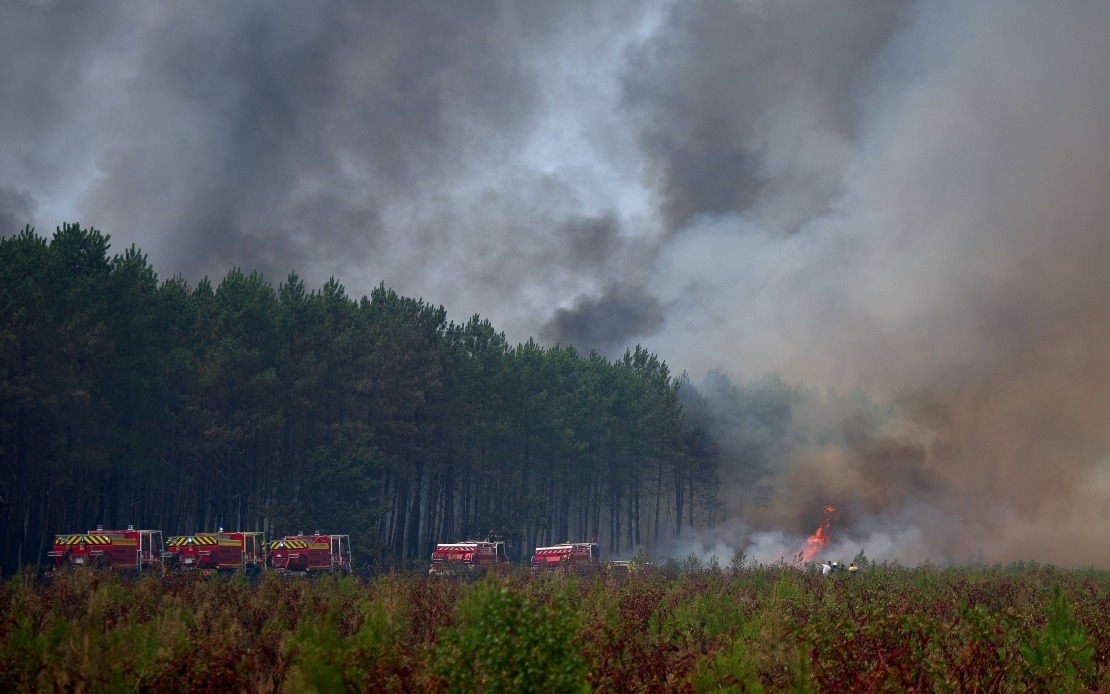
France is confronting one of its most severe wildfire seasons since World War II, with the casualty toll among emergency responders climbing to 89 injured firefighters as massive blazes continue ravaging the country's forests. The escalating crisis underscores the mounting challenge posed by extreme heat and drought conditions sweeping across Europe, raising concerns about climate resilience and disaster response capacity that hold implications for Mediterranean and Southeast Asian nations facing similar environmental pressures.
The casualty count among France's firefighting personnel has grown rapidly in recent days. According to reporting from French broadcaster BFMTV citing Gironde department authorities, the number of injured firefighters surged from 84 the previous week to 89 as additional personnel sustained injuries in the Hautes-Alpes department. These mounting injuries reflect both the ferocity of the ongoing blazes and the relentless physical demands placed on emergency crews working extended shifts under hazardous conditions across multiple frontlines.
The geographical scale of the disaster has become staggering. The Gironde department alone has experienced the destruction of 42,000 hectares of forest, with authorities indicating that this conflagration could persist for several additional months. Lieut. Col. David Annotel, representing the National Firefighters Federation, provided a sobering assessment when speaking to Franceinfo, cautioning that suppression efforts would likely extend through multiple seasons rather than weeks. This prolonged timeline reflects the unprecedented intensity of these particular fires and the resource constraints facing French emergency services.
In response to the escalating crisis, France's military has mobilized advanced assets previously uncommitted to domestic wildfire operations. The French air and space force deployed an Airbus A400M military transport aircraft for the first time to support firefighting efforts in Gironde, marking a significant escalation in operational response. This utilization of heavy military equipment demonstrates both the severity of the situation and France's willingness to redirect significant national resources toward disaster management, a strategy that developing nations often cannot replicate when facing comparable environmental emergencies.
The human toll extends far beyond the injured emergency responders. French Finance Minister Roland Lescure indicated that over 13,000 commercial enterprises were forced to evacuate from the Gironde department, disrupting economic activity across a major business district. The technology sector suffered directly when Lectra, a significant industrial manufacturer, announced temporary suspension of operations at its Bordeaux-Cestas facility. Such commercial interruptions ripple through regional supply chains and employment, creating secondary economic consequences that compound the immediate physical damage from the fires themselves.
Civilian displacement has reached unprecedented proportions. Prior reporting documented that more than 220,000 residents were evacuated from the Gironde department alone, representing a mass displacement comparable to emergency situations typically associated with major natural disasters or military conflicts. This extraordinarily large evacuation reflects both the geographical extent of the fire perimeter and authorities' precautionary approach to civilian safety given the unpredictability of wildfire behavior under extreme atmospheric conditions. For regions like Malaysia and other Southeast Asian nations with growing urban populations in fire-prone areas, France's evacuation experience offers cautionary lessons regarding preparedness planning and resource allocation.
French President Emmanuel Macron has characterized the current wildfire season as historically exceptional, noting that the nation has experienced a record number of summer fires since the conclusion of World War II. This presidential acknowledgement underscores the anomalous nature of the current crisis and distinguishes it from typical seasonal fire patterns. The unprecedented frequency and intensity reflect shifting climatic patterns, with abnormal heat waves creating atmospheric conditions that transform forests into tinderboxes with minimal moisture content. Such characterization by national leadership typically precedes policy discussions regarding climate adaptation funding and long-term disaster preparedness infrastructure.
The European context reveals that France's wildfire crisis, while severe, represents part of a broader continental phenomenon. Multiple European nations have reported elevated fire activity throughout the summer months, suggesting systemic climatic shifts affecting the entire Mediterranean region and beyond. For Malaysian policymakers and regional authorities, France's experience provides evidence that even wealthy industrialized nations with advanced emergency response infrastructure face significant challenges when confronting climate-driven environmental disasters at scale. The relative helplessness of military aircraft and thousands of trained firefighters against blazes spanning tens of thousands of hectares illustrates the limits of conventional response mechanisms when environmental conditions exceed historical parameters.
The injury rate among firefighting personnel warrants particular attention from occupational safety perspectives. With 89 personnel injured across multiple departments, the incident rate suggests both the extreme hazard environment these workers face and potential gaps in protective equipment or operational protocols. Heat stress, smoke inhalation, entrapment risks, and equipment failures all contribute to firefighter casualties during major conflagrations. Regional fire services across Southeast Asia, where monsoon seasons alternate with dry periods creating distinct fire seasons, can observe these casualty patterns and incorporate lessons learned into their own training protocols and equipment specifications.
Looking forward, the extended timeline predicted by the French National Firefighters Federation suggests this crisis will persist well into autumn, consuming resources throughout the critical summer-to-fall transition period. The combination of continued high temperatures, ongoing evacuation requirements, international mutual aid commitments, and economic disruption creates compounding stressors on government budgets and administrative capacity. For Malaysia's civil protection authorities and regional counterparts, the French experience demonstrates the importance of pre-positioned equipment reserves, international cooperation frameworks, and cross-sector coordination protocols that enable rapid escalation when localized fire response capability becomes insufficient against rapidly expanding incidents.

