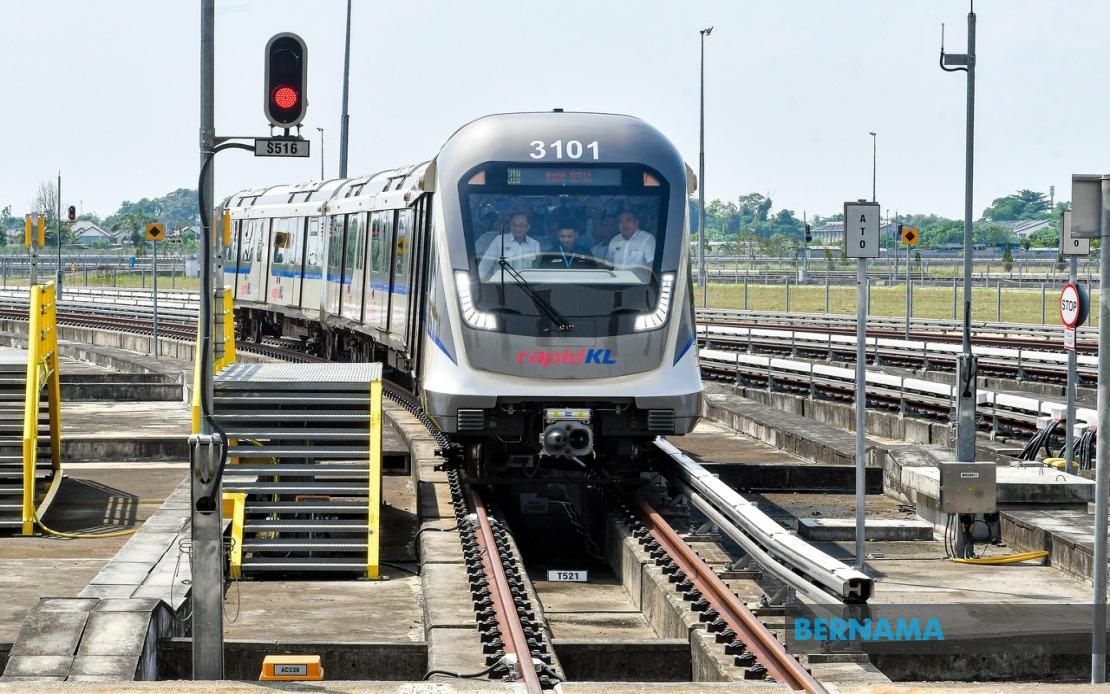
Prime Minister Datuk Seri Anwar Ibrahim has announced a month-long free-fare initiative for the Light Rail Transit 3 Shah Alam Line, effective from June 29 through July 31, marking a significant move to encourage public adoption of the newly opened transport corridor. The complimentary service extends not only to the LRT3 itself but also encompasses feeder bus services operated by Prasarana Malaysia Berhad that connect to the Shah Alam Line, creating an integrated transport experience across the Klang Valley region. This initiative has garnered considerable support from potential users, particularly among student populations and daily commuters who have long sought affordable transit alternatives.
The timing and scope of the scheme reflect broader policy objectives to shift travel behaviour toward public transport utilisation. For many Malaysian urban commuters, the financial burden of daily travel represents a significant expense, with private vehicles and e-hailing services consuming substantial portions of household budgets. The free-fare window provides a risk-free opportunity for cautious commuters to evaluate whether the new line offers genuine advantages before committing to regular patronage. This approach addresses a common barrier to public transport adoption: user uncertainty about service reliability, journey times, and comfort levels on unfamiliar routes.
Universiti Teknologi MARA students stand to benefit substantially from the initiative, given their geographic distribution across the Klang Valley. Of UiTM's approximately 42,000 students, only roughly 13,500 reside in on-campus residential colleges, leaving the remaining 28,500 to navigate commuting from off-campus locations in areas including Kuala Lumpur and Subang Jaya. The establishment of a dedicated UiTM station on the Shah Alam Line fundamentally alters transport accessibility for this cohort. Students previously dependent on expensive e-hailing services or parental transport now access a direct, affordable link to campus via the new rail corridor, potentially reducing daily commuting costs by up to 80 percent compared to ride-sharing alternatives.
Arissa Ahmad Khairul, a 22-year-old Bachelor of Journalism student at UiTM, articulated how the scheme addresses tangible financial pressures facing tertiary education students. Her specific situation—commuting from Kepong through Bandar Utama to Shah Alam—exemplifies routes previously requiring multiple transport mode transfers or costly point-to-point journeys. The LRT3 configuration now enables direct travel on a single modern service, combining cost savings with improved journey reliability. Enhanced comfort features on the new line, including air-conditioned coaches and modern facilities, represent indirect benefits beyond fare reduction, potentially boosting service uptake among students accustomed to private vehicle convenience standards.
Medias personnel and young professionals using the Klang Valley transport network have similarly recognised the strategic value of the free-fare period. Beyond immediate cost avoidance, the month-long window functions as an extended trial period enabling commuters to gather personalised data about comparative transport modes. Time savings from using rail versus private vehicles, when calculated across five to ten daily journeys over the promotional month, generate compelling evidence that may sustain behaviour change even after fares commence. The psychological impact of experiencing firsthand the congestion avoidance and predictability of rail-based commuting creates powerful incentives for continued patronage beyond the complimentary period.
Mohamad Adib Hazim Mohamad Razali, president of the UiTM Students' Representative Council, contextualised the initiative within campus accessibility challenges. The vast majority of the student body residing off-campus represents a constituency experiencing genuine transport disadvantage relative to residential college inhabitants. For students in peripheral locations, transport costs and journey duration frequently constrain academic participation and social engagement. The new LRT3 connection fundamentally democratises access to campus amenities and educational facilities by reducing both the financial and temporal barriers previously isolating off-campus populations.
The policy represents a calculated investment in behaviour modification and system legitimisation. Prasarana Malaysia Berhad and the broader Ministry of Transport strategy recognise that rail infrastructure alone generates insufficient usage without addressing consumer perceptions and financial barriers. The month-long promotional period creates a natural experiment wherein operational performance, capacity utilisation, and service reliability become measurable across high-demand scenarios. Data collected during the free-fare window informs future pricing structures, service frequency adjustments, and integrated ticketing policy development across the Klang Valley transport network.
From a regional Southeast Asian perspective, Malaysia's approach aligns with transit adoption strategies employed by regional peers. Singapore's MRT system employs targeted fare concessions for specific demographics, while Jakarta's Transjakarta bus system utilises subsidised entry periods to build ridership among lower-income populations. The LRT3 scheme demonstrates consistency with regional best practices while addressing distinctly Malaysian challenges: low baseline public transport usage relative to private vehicle ownership, dispersed suburban settlement patterns, and student population concentration in specific educational corridors.
The initiative's success metrics extend beyond promotional period ridership figures to encompass post-subsidy retention rates and fare revenue stability. If the free-fare month succeeds in converting casual users into regular commuters, the long-term revenue implications support continued network expansion despite short-term foregone income. Conversely, if passengers return to private vehicles after subsidy expiration, the scheme highlights deeper structural challenges regarding service frequency, route comprehensiveness, or convenience standards that pricing alone cannot rectify.
Planning horizons for Klang Valley mobility increasingly recognise the LRT3 Shah Alam Line as a foundation for integrated multi-modal transport architecture. Feeder bus connectivity through Prasarana services, future Last-Mile solutions via micro-mobility providers, and land-use coordination around transit nodes collectively determine whether the free-fare initiative translates into sustained patronage growth. The one-month trial period therefore represents not merely a promotional tactic but a transitional mechanism enabling commuters, operators, and planners to collectively reassess transport adequacy across a rapidly expanding metropolitan region facing mounting congestion and infrastructure strain.

