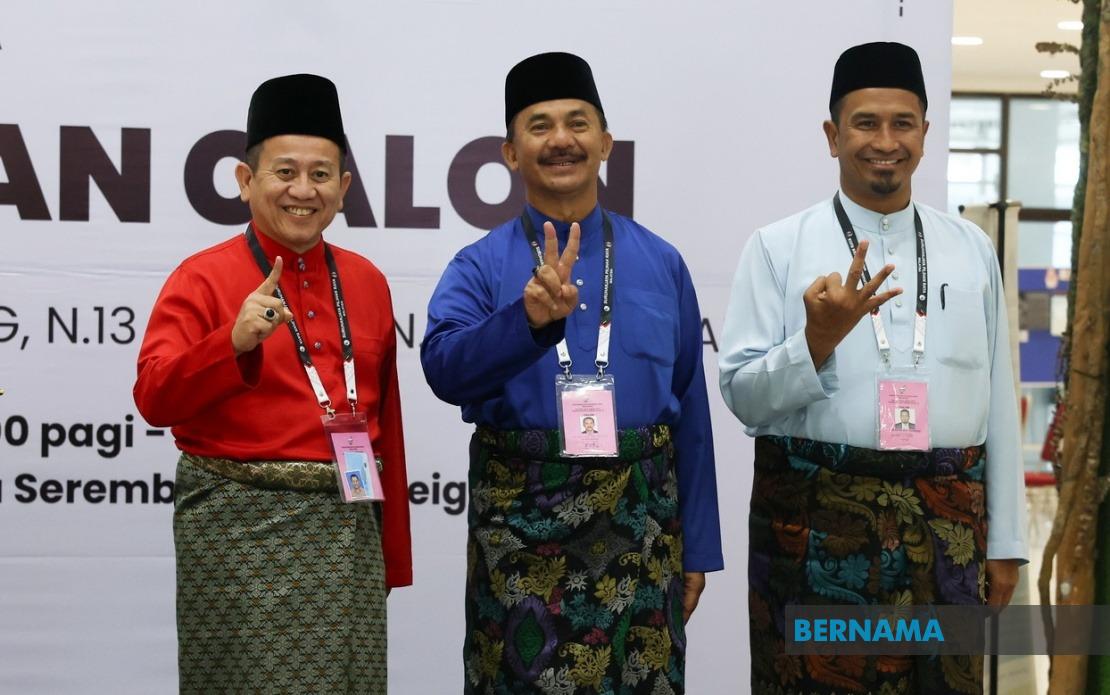
The 16th Negeri Sembilan State Election, set for August 1, marks a turning point in the state's electoral landscape as political coalitions pursue a calculated balance between experience and renewal. The influx of new candidates across competing parties suggests a deliberate strategy to reinvigorate campaigns and appeal to voters seeking alternatives beyond traditional power structures. With nomination deadlines now closed and 103 candidates confirmed to contest 36 State Legislative Assembly seats, the composition reflects broader tensions within Malaysian politics between maintaining continuity and embracing generational change.
Pakatan Harapan's approach to the contest underscores this duality with particular clarity. The coalition, fielding candidates in all 36 constituencies, has selected 24 newcomers while retaining key incumbents who anchor the campaign's credibility. Datuk Seri Aminuddin Harun, the PH chairman in Negeri Sembilan, exemplifies this calculated repositioning by vacating the Sekamat seat to contest Linggi, a strategic move suggesting internal assessment of electoral terrain and demographic shifts within the state. Simultaneously, DAP Secretary-General Anthony Loke maintains his foothold by defending the Chennah seat, preserving continuity for a party seeking to consolidate support in this strategically important state.
Barisan Nasional similarly navigates the generational calculus, though with a notably different ratio. Among its 25 candidates, just 13 are newcomers, indicating greater reliance on established networks and tested political machinery. Datuk Seri Mohamad Hasan, the Foreign Minister and UMNO's second-ranked leadership, anchors the coalition's efforts by defending Rantau, sending signals about the federal government's commitment to retaining control in Negeri Sembilan. Meanwhile, Datuk Ismail Lasim's move from Senaling to Juasseh and Datuk Seri Jalaluddin Alias's retention of Pertang demonstrate internal reshuffling intended to optimize BN's competitive positioning across different constituencies, each seat representing distinct socioeconomic and demographic profiles requiring tailored representation strategies.
Perikatan Nasional's role in this election, while nominally contesting 11 seats, masks greater complexity within its coalition architecture. The arrangement allows component parties—PAS, Gerakan, Wawasan, and MIPP—to operate with relative autonomy while maintaining the PN banner for federal coordination purposes. This structure enables each party to deploy candidates reflecting their distinct ideological positioning and support bases, creating apparent competition while avoiding direct three-way contests in winnable constituencies. The strategy acknowledges Malaysia's increasingly fragmented political environment where regional players must balance coalition loyalty with localized voter preferences.
Bersatu's participation merits particular attention given its recent trajectory within Malaysia's political firmament. Fielding 24 candidates under its own logo rather than the PN banner represents a symbolic reclamation of independence following years of complex coalition negotiations. Datuk Tun Faisal Ismail Aziz's candidacy as a new face introduces fresh energy to a party seeking to rebuild legitimacy, while allowing incumbents like Negeri Sembilan chairman Hanifah Abu Bakar to consolidate existing support bases. This bifurcation—new faces pursuing electoral expansion while veterans defend established territory—mirrors Bersatu's broader struggle to redefine its role within Malaysia's multi-party democracy.
The demographic composition of candidates reveals generational and ideological divergence within the electoral space. At 70 years old, PH's Datuk Abd Latiff A Tambi represents the elder statesman archetype still commanding significant parliamentary presence, embodying decades of accumulated political capital and institutional knowledge. Conversely, Bersatu's 23-year-old Leevineshwaraan Murugan for Sri Tanjung represents aspirational youth politics, symbolizing parties' attempts to capture younger voters increasingly disillusioned with traditional power structures. This 47-year age gap between the oldest and youngest candidates encapsulates the broader tensions animating contemporary Malaysian politics: between consolidating established networks and cultivating emerging talent pools potentially untainted by previous political arrangements.
Smaller parties and independent candidates contribute additional texture to an increasingly complex electoral landscape. Parti Berjasa, ASLI, and PSM each field single candidates, while four independents complete the roster of 103 contestants. These marginal participants, while unlikely to secure seats, represent broader voter sentiment: dissatisfaction with mainstream coalitions and desire for alternative political expressions. In Malaysian politics, such fringe participation often presages shifting voter alignments, as demonstrated by independent candidates' growing viability in recent federal and state elections. Their presence this cycle may indicate receptiveness among Negeri Sembilan voters to narratives beyond conventional political tribalism.
The electoral calendar itself—with early voting scheduled for July 28 and polling day August 1—compresses the campaign window considerably, potentially advantaging better-resourced coalitions capable of rapid mobilization. For new candidates, this shortened timeline presents dual challenges: insufficient time to build name recognition while simultaneously competing against established figures with proven electoral networks and institutional machinery. Conversely, the compressed schedule may benefit insurgent candidates unable to sustain lengthy campaigns, allowing focused messaging around grievances with incumbent administrations.
Negeri Sembilan occupies particular importance within Malaysia's federalist structure and coalition mathematics. As a state where no single party commands overwhelming dominance, electoral outcomes here frequently signal broader shifts in peninsular politics. The state's economic diversity—combining Kuala Lumpur's metropolitan influence, Seremban's administrative functions, and Port Dickson's industrial significance—ensures its electorate encompasses multiple social strata with divergent policy priorities. The presence of 24 new PH candidates, 13 new BN candidates, and various PN-aligned newcomers suggests each coalition recognizes Negeri Sembilan as genuinely competitive terrain rather than safely consolidated fiefdom.
For Malaysian voters observing these developments, the abundance of fresh candidates potentially addresses persistent criticisms about political stagnation and entrenched power structures. Whether new faces translate into substantively different governance remains uncertain; research on legislative performance internationally demonstrates that newcomer status correlates weakly with policy innovation absent structural incentives for alternative approaches. Nevertheless, the symbolic importance of candidate renewal cannot be dismissed in Malaysian electoral culture, where perceived responsiveness to voter demands for accountability often determines coalition viability across successive election cycles.
The broader implications of Negeri Sembilan's candidate composition extend beyond immediate state-level concerns. This election effectively serves as a testing ground for coalition strategies ahead of potential federal elections within Malaysia's constitutionally prescribed timeframe. Success or failure in deploying new candidates, balancing factional interests, and mobilizing support will inform subsequent campaign architecture for all major coalitions. Negeri Sembilan's outcomes may thus reverberate across peninsular Malaysian politics, establishing templates either validated or abandoned based on electoral results that crystallize broader voter sentiment regarding Malaysia's ongoing political realignment.

