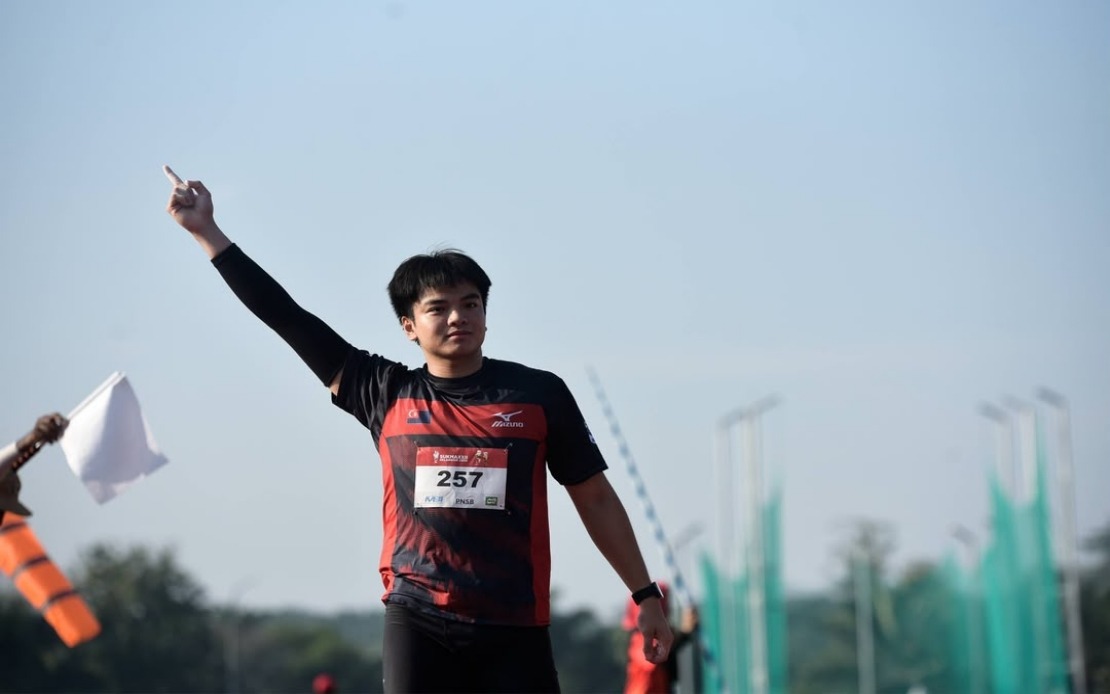
Chai Kai Le's ascent to becoming a record-breaking javelin champion at the Malaysia Games tells a story of fortunate intervention and sustained family backing. The 18-year-old from Johor achieved the breakthrough at the Universiti Putra Malaysia Sports Centre during the Selangor 2026 edition when he hurled the javelin 64.44 metres on his second attempt, decisively surpassing the previous Games record of 62.33 metres that had stood unchallenged for over two decades since Sarawak's Kho Mei Kuan set it at the 2000 edition in Penang.
The path that led Kai Le to this moment began unexpectedly in a school setting far removed from track and field. As a younger student, he was an accomplished badminton player, showing particular talent in the sport. However, a perceptive teacher observed something in his technique that suggested untapped potential in another discipline entirely. The instructor noticed the explosive quickness with which Kai Le released his badminton shuttle and recognised that such arm mechanics could translate powerfully into throwing events. This casual observation would prove pivotal in redirecting the teenager's athletic future.
When Kai Le was in Standard Six, he made the transition to javelin, taking his teacher's suggestion seriously. Initially, the switch represented an experiment, but as he progressed through the years, his commitment deepened. He began attending open competitions where he could observe experienced senior athletes competing at much higher levels. Watching these established throwers demonstrate the distances they could achieve sparked something fundamental in his ambition. He realised that the heights these athletes reached were not mythical but attainable through dedicated training and refinement of technique.
Beyond coaching and natural aptitude, however, lies an equally important dimension of Kai Le's success: unwavering parental support. His father, Chai Yin Huan, has consistently invested in his son's athletic development without hesitation, bearing the financial and logistical costs associated with elite sports participation. The investment extends across multiple areas essential to an athlete's performance—medical treatment following injuries, replacement equipment including specialised footwear, and all manner of additional resources needed to sustain competitive training. For Kai Le, this paternal commitment represented more than mere financial transaction; it embodied a message of unconditional backing regardless of outcomes.
What distinguishes this support is its foundation. Chai Yin Huan has never approached his son's athletics career as a pathway to creating a top-tier competitor or achieving fame by proxy. Instead, his motivation has centred on ensuring that Kai Le pursues endeavours to the best of his ability while maintaining physical health and wellbeing. This healthier parental mindset removed the burden of unrealistic expectations from the athlete's shoulders, allowing him to develop his abilities organically rather than under crushing pressure to produce results. Kai Le is the youngest of three siblings, and his parents' balanced approach appears to have created an environment conducive to both sporting excellence and personal development.
The pursuit of elite javelin performance has not been without significant obstacles. Over the past year particularly, Kai Le has contended with recurring injuries affecting his back, right shoulder, and elbow—the very body parts most critical to javelin throwing success. He acknowledges honestly that these injuries have not fully resolved, yet he has continued both training and competition despite the ongoing discomfort and limitations they impose. This persistence through physical adversity is noteworthy, especially considering that many young athletes would allow such persistent injuries to derail their commitment or cause them to withdraw from competition.
Kai Le's resilience was further demonstrated at the Indonesia Open earlier this year, where despite his injury struggles, he achieved a personal best performance of 65.65 metres. This throw additionally secured a national under-20 record, indicating that his progression was not merely incremental but represented substantial advancement within the competitive landscape. The fact that he surpassed this mark with the SUKMA record—though the exact throw was slightly lower at 64.44 metres—suggests that performance variability remains a factor, but the overall trajectory is unambiguously upward.
With the SUKMA record now secured, Kai Le's focus has shifted toward an even more ambitious target: achieving a 70-metre throw during the coming year. This threshold matters considerably because it falls within the qualifying benchmark for the 2027 SEA Games, a regional competition significantly more prestigious than the Malaysia Games. To pursue this objective systematically, he has planned a one-month intensive training stint in Japan early next year, indicating that he and his coaching team recognise the value of international training environments and expertise in advancing to the next performance level.
The trajectory from schoolboy badminton player to record-breaking javelin thrower, while spanning only a few years, encapsulates several lessons about athletic development in Malaysia. The initial role of observant coaching in identifying latent talent cannot be overstated; Kai Le's teacher provided the crucial intervention that set him on his current path. Equally important is the distinction between parental support that nurtures athletic potential versus parental pressure that corrupts it. Additionally, Kai Le's willingness to persist through injury and setback, combined with his ambition to continue improving rather than rest on SUKMA laurels, suggests a maturity and commitment uncommon in athletes so young.
Looking ahead, Kai Le's stated confidence in achieving the 70-metre milestone appears grounded in both his demonstrated ability and his practical approach to training and recovery. His philosophy—that sincere desire combined with sustained effort produces results—reflects a mentality increasingly recognised as essential in modern sports. For Malaysian athletics, his emergence as a record-breaker in javelin represents a significant brightening of prospects in a throwing event where the nation has historically produced few world-class performers. Whether he successfully qualifies for the 2027 SEA Games and progresses further internationally remains to be seen, but the foundation appears solidly established through a combination of lucky circumstance, parental backing, coaching intervention, and the teenager's own determination.

