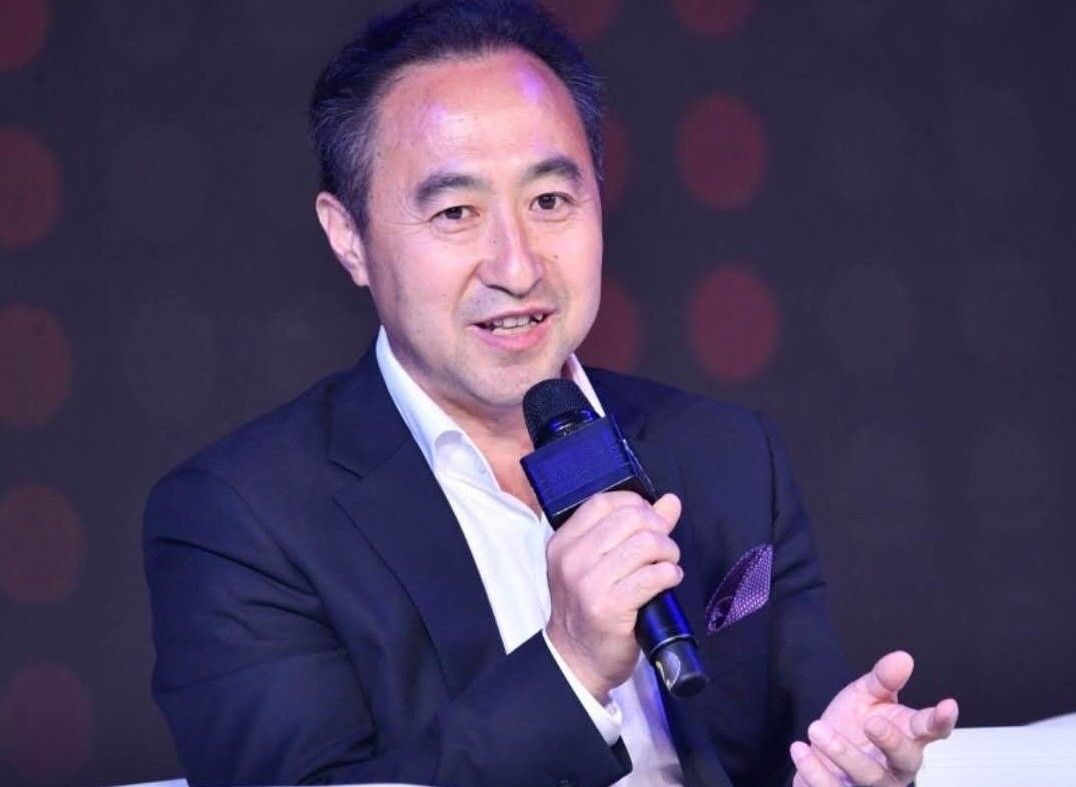
CJ Wang's journey from schoolroom to the billionaire's ranks reveals a distinctly modern entrepreneurial narrative: humble beginnings rooted in everyday frustration, the courage to abandon conventional career paths, and the vision to identify gaps in global consumer markets. The Shandong-born executive, now commanding a US$10.4 billion fortune, represents a new generation of Chinese business leaders navigating the intricate crossroads between domestic dominance and international expansion—a challenge increasingly relevant to Southeast Asian entrepreneurs seeking global reach.
Wang was born in 1969 in Yantai, a coastal city in eastern Shandong province where soy milk remained an integral part of traditional breakfasts. His childhood memories were shaped by the grinding labour of soymilk production: after school hours, he assisted his uncle in the tedious, physically demanding work of operating a large stone mill to create this staple beverage. These formative experiences implanted in him both an intimate knowledge of the product and an acute awareness of the inefficiency plaguing its production. Rather than viewing this chore as mere routine, Wang internalized it as a problem awaiting technological intervention.
Following family tradition, Wang pursued electrical engineering at Beijing Jiaotong University before gravitating toward the teaching profession his parents had established. He acknowledged to Time magazine during his inaugural international media interview that this choice reflected neither passion nor calculated ambition, but rather the gravitational pull of familial expectation. Yet beneath this conventional veneer stirred a restless hunger to transcend inherited pathways and construct something authentically his own, something substantial enough to bear his individual imprint.
In 1994, Wang made the decisive break. He resigned from his teaching position and channeled his engineering background toward solving the problem that had haunted his youth: the laborious preparation of soy milk. Betting that this breakfast staple would remain central to Chinese culinary culture for generations, he developed the world's first electric machine capable of automating the soy milk-making process. Though his prototype fell short of perfection, the conceptual breakthrough proved transformative. That same year marked the founding of Joyoung, a kitchen appliance brand that would eventually redefine affordable home technology across Asia.
The early success exceeded expectations. By 2004, Joyoung had sold more than one million soy milk makers, establishing itself as a household name throughout China. The company subsequently expanded its portfolio to encompass blenders, rice cookers, and other essential appliances, building a reputation for reliability and affordability that resonated with price-conscious consumers. After two decades of consolidating domestic dominance and securing a listing on the Shenzhen exchange, Wang recognized the limits of the Chinese market and began strategically contemplating international expansion as the 2010s progressed.
Rather than attempting to establish Joyoung's presence abroad from zero, Wang adopted an acquisition strategy that proved far more efficient. In 2017, his private equity firm acquired a controlling stake in SharkNinja, an American appliance manufacturer already commanding significant market share in the United States through its vacuum cleaners and blenders. Wang's attraction to SharkNinja extended beyond product quality and growth potential; he identified in CEO Mark Barrocas a capable leader worth retaining despite the ownership transition. This decision to preserve institutional continuity while implementing strategic improvements demonstrated sophisticated business acumen that transcended mere capital deployment.
Wang's assessment of SharkNinja revealed multiple structural vulnerabilities ripe for optimization. The product catalogue appeared restrictively narrow compared to Joyoung's diversified range. The sales machinery depended excessively on dated television infomercial channels, lacking both a coherent social media strategy and comprehensive distribution networks. Manufacturing remained dependent on a cramped supplier ecosystem concentrated in China, limiting operational flexibility and innovation velocity. These observations informed his reconstruction of SharkNinja's operational framework, expanding product offerings, modernizing distribution, and establishing stronger in-house research capabilities.
The strategic repositioning generated remarkable returns. Under Wang's stewardship and Barrocas' operational leadership, SharkNinja methodically released products engineered for maximum viral appeal, particularly on platforms like TikTok where younger demographic preferences determine purchasing patterns. The brand architecture evolved into a dual-track system: Shark concentrated on vacuums and personal care; Ninja dominated kitchen appliances. The transformation was so successful that when SharkNinja separated from Wang's holding company JS Global Lifestyle and commenced direct listing on the New York Stock Exchange in 2023, it immediately became a multibillion-dollar publicly traded enterprise.
Wang's wealth accumulation reflects this dual-track expansion strategy. As of May 2026, he maintained approximately thirty-five percent ownership in SharkNinja alongside a fifty-two percent stake in JS Global Lifestyle, the Hong Kong-listed holding company created in 2019. His compensation reflects his stakes' magnitude and managerial involvement: as chairman of SharkNinja and influential figure in JS Global, Wang received total remuneration exceeding HK$520 million (US$66.3 million) in 2024, positioning him among Hong Kong's highest-paid directors. The Bloomberg Billionaires Index valued his total fortune at US$10.4 billion as of August 21.
Despite his extraordinary financial success, Wang cultivates an image of deliberate privacy and reticence. Time magazine characterized him as soft-spoken and shy, traits seemingly incompatible with billionaire celebrity status yet increasingly common among ultrasuccessful entrepreneurs who view media exposure as distraction rather than validation. He revealed limited personal details during the Time interview, though he acknowledged appreciation for golf and premium whisky brands, particularly Macallan. These restrained self-disclosures stand in sharp contrast to the public bombast frequently associated with technology entrepreneurs in Western markets.
Wang's decision to grant his first comprehensive international media interview reflects calculated pragmatism rather than ego. He explicitly articulated his strategy: preemptively narrating his own biography to neutralize speculation and scrutiny regarding his background and business interests. This statement carries particular significance given the intensifying U.S.-China trade confrontations and heightened regulatory scrutiny of Chinese investment in American enterprises. Wang recognized that in an environment of geopolitical tension and investment nationalism, a transparent founder narrative offering context and humanization could protect his business interests more effectively than silence.
For Southeast Asian entrepreneurs and policymakers, Wang's trajectory offers instructive lessons extending beyond mere business mechanics. His approach demonstrates how technological innovation rooted in local consumer frustrations can scale globally when coupled with strategic acquisition and operational restructuring. Moreover, his emphasis on institutional preservation during ownership transitions—notably his retention of Mark Barrocas—contradicts the stereotype of acquisitive entrepreneurs who dismantle existing structures. Finally, his proactive media engagement amid geopolitical turbulence suggests that transparency and founder narrative may constitute strategic assets in increasingly nationalist economic environments, a consideration growing more relevant across Southeast Asia as regional governments balance Chinese investment with domestic sovereignty concerns.

