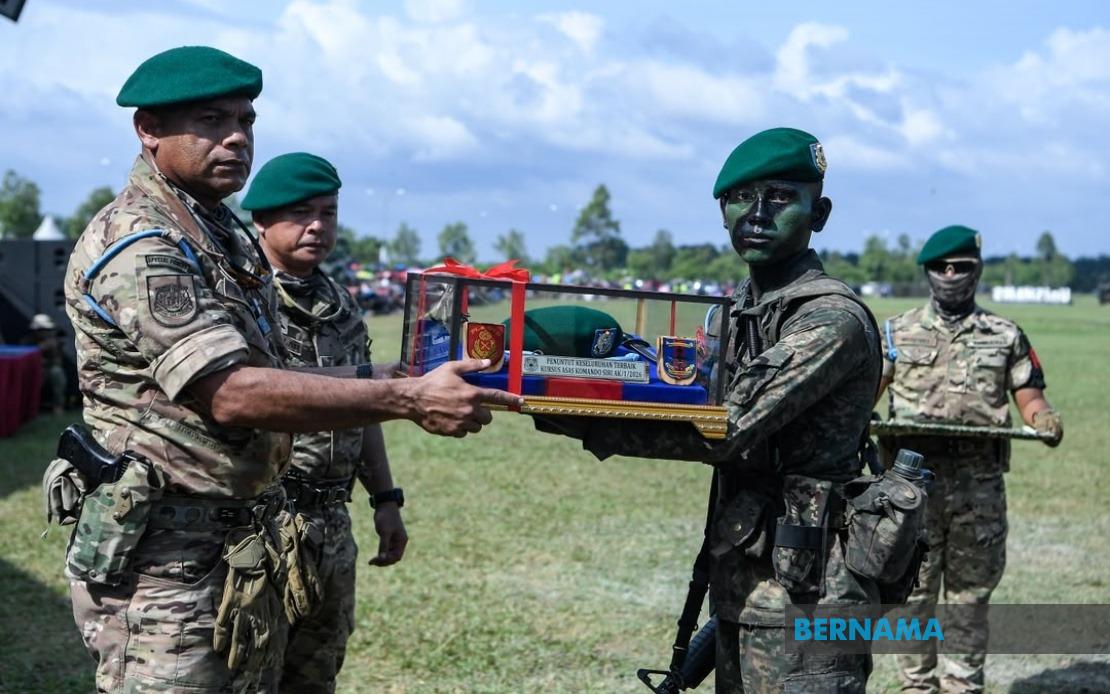
Second Lieutenant Muhammad Fadli Jamalluddin's journey to becoming the top commando trainee in the latest Basic Commando Course Series AK/1/26 demonstrates the resilience increasingly valued within Malaysia's military establishment. The 24-year-old officer from Ampang proved that initial failure need not define a military career, earning recognition for his determination after faltering on his first attempt at the rigorous three-month programme at Universiti Sultan Abdul Halim Mu'adzam Shah (UniSHAMS) in Kuala Ketil.
Muhammad Fadli's military aspirations crystallised during his secondary school years, a formative period when many Malaysians contemplate national service pathways. His commitment translated into concrete action through enrolment at the National Defence University of Malaysia (UPNM), where he pursued structured military education before formally joining the Royal Malay Regiment in 2024. The progression from university cadet to commissioned officer to elite special forces trainee reflects a deliberate career trajectory within Malaysia's armed services hierarchy.
The psychological dimension of his achievement extends beyond individual accomplishment. As the third of five siblings, Muhammad Fadli cited family motivation as instrumental to his perseverance, particularly his desire to honour his father's memory during what he described as a challenging period. His father's stroke more than a year ago transformed the commando qualification from personal milestone into familial significance, grounding his ambition in deeply human concerns rather than mere professional advancement.
Perhaps most revealing was the near-catastrophe during the eighth week of his successful attempt, when Muhammad Fadli narrowly avoided disqualification after failing a critical training exercise. Having already endured over 100 kilometres of demanding endurance marching, the prospect of repeating the entire programme loomed. The emotional weight of that moment—tears shed after investing months of sacrifice—crystallises the psychological intensity embedded within commando training protocols designed to test mental resilience as rigorously as physical capacity.
The decision to persist despite well-intentioned counsel to withdraw from the course speaks to a particular quality the Malaysian military values: the ability to compartmentalise setback as instructive rather than terminal. Muhammad Fadli reframed failure explicitly as opportunity, a philosophical stance increasingly advocated across military training programmes globally. His Bachelor's degree in Global Policing and Intelligence with Honours suggested intellectual capacity beyond physical prowess, positioning him within an emerging cohort of commissioned officers expected to navigate sophisticated operational contexts requiring both tactical acumen and strategic thinking.
The distinction Muhammad Fadli articulated between becoming a commando and becoming a commando officer carries institutional weight within Malaysia's defence structure. The former demands exceptional physical endurance and field competence; the latter adds layers of decision-making responsibility, planning capability, and leadership accountability. His observation that special operations require meticulous planning alongside physical capability reflects contemporary military doctrine emphasising precision and calculated execution over raw force.
The three-month Basic Commando Course Series AK/1/26 subjected participants to integrated land and sea training regimes specifically calibrated to eliminate unsuitable candidates while developing exemplary ones. The course completion rate underscores its selectivity: only five officers and 33 other ranks succeeded from what must have been a substantially larger initial cohort. Muhammad Fadli's Best Overall Trainee designation places him within the uppermost tier of this already elite group, suggesting his performance exceeded standardised thresholds across multiple evaluated competencies.
For Malaysian military observers, the significance extends beyond individual achievement to institutional messaging. The Special Warfare Training Centre (PULPAK) and its Commandant Colonel Nordin Abu publicly recognised Muhammad Fadli's award at the formal closing ceremony, signalling organisational endorsement of his trajectory. This visibility reinforces particular narratives about military service within Malaysian society: that dedication transcends initial disappointment, that structured progression rewards persistence, and that elite military credentials represent legitimate achievement worthy of public acknowledgment.
The timing of his qualification coincides with broader discussions within Southeast Asian defence communities regarding officer development and special operations capability. Malaysia's investment in specialised commando training reflects strategic priorities around capability enhancement and professional military standards. Muhammad Fadli represents the human dimension of these institutional frameworks—young officers navigating demanding preparation for roles requiring exceptional judgment under extreme operational pressure.
His educational background in Global Policing and Intelligence suggests UPNM's curriculum increasingly emphasises multidisciplinary preparation for modern military demands, extending beyond conventional warfare into counterterrorism, intelligence operations, and law enforcement coordination. The fusion of university-level academic training with elite commando qualification positions officers like Muhammad Fadli as versatile assets within contemporary defence architecture.
Looking forward, Muhammad Fadli's achievement establishes a professional milestone from which his military career trajectory extends. The green beret now earned through exceptional performance carries symbolic weight—recognition from peers, superiors, and institutions that he has met standards established through decades of institutional practice. For younger military aspirants in Malaysia, his narrative of overcoming initial setback may encourage persistence through demanding qualification programmes that might otherwise claim discouraged candidates.
Ultimately, Muhammad Fadli's commendation reflects values increasingly prominent within Malaysian institutional culture: resilience grounded in genuine adversity, family obligation motivating individual excellence, and intellectual capability complementing physical prowess. His journey from failed first attempt to recognised top performer provides a template for understanding contemporary military meritocracy, where second chances exist for those demonstrating genuine commitment and where outstanding performance receives explicit institutional celebration.

