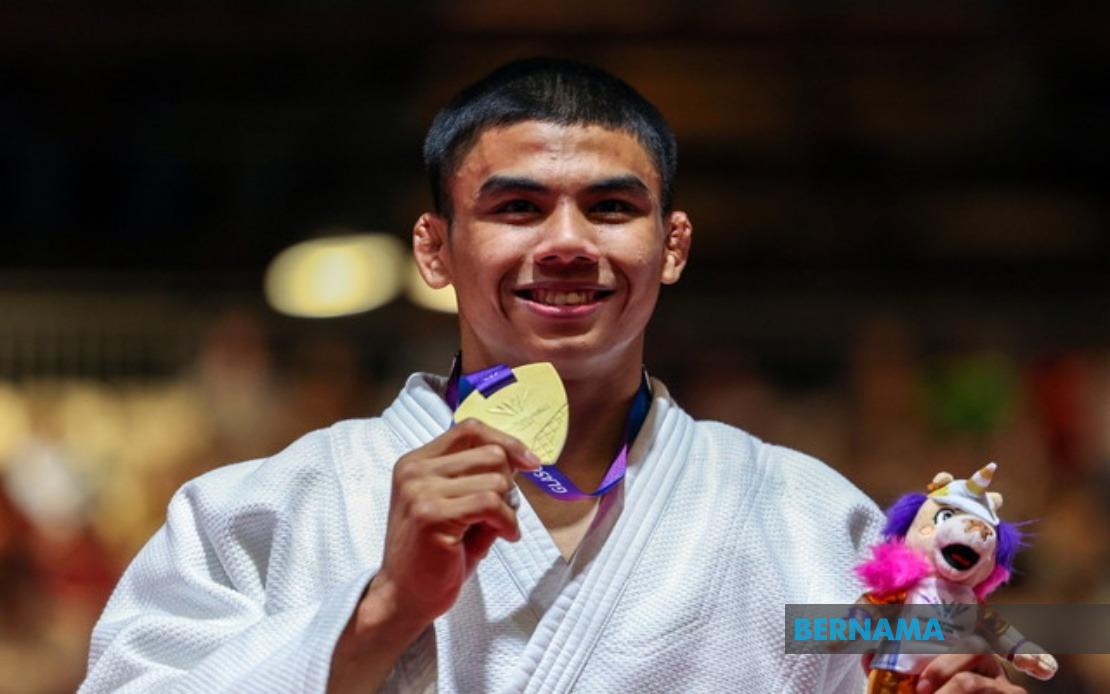
Amir Daniel Abdul Majeed, the decorated judoka who claimed Commonwealth Games gold, has embarked on an unexpected career transition that has proven far more psychologically demanding than his years spent competing on the mat. The 21-year-old national judo exponent is now serving as assistant coach of the Penang squad at SUKMA Selangor 2026, a role that has exposed him to entirely new dimensions of pressure and responsibility within the sport he knows intimately. Speaking at the IDCC Ideal Convention Centre in Shah Alam, the athlete-turned-mentor articulated the profound shift in mindset required to succeed in this coaching capacity.
The move from active competition to coaching represents a critical juncture in many athletes' careers, yet Amir's experience highlights an often-overlooked reality: the psychological burden of guiding others frequently exceeds the stress of individual performance. During his competing years, the athlete bore responsibility solely for his own technical execution, tactical decisions, and mental composure during bouts. Now, as he manages 13 athletes across the Penang contingent, his sphere of concern has expanded exponentially. This expanded accountability creates a different category of anxiety that leaves him feeling considerably more nervous than when he faced opponents across the mat.
The Penang judo squad's performance at SUKMA Selangor 2026 underscores the effectiveness of Amir's coaching contributions despite his relative inexperience in the role. The delegation concluded their three-day competition with an impressive haul comprising three gold medals, one silver, and five bronze medals overall. This medal tally positioned Penang level with Johor at the top of the overall standings, a significant achievement that validates the training methods and guidance provided by the coaching staff. For a relatively young coaching team, such results demonstrate that experience in technical mastery and recent competitive exposure can translate into effective instruction when coupled with genuine commitment to athlete development.
What distinguishes Amir's coaching philosophy is the intimate connection he maintains with his charges. Having competed alongside many of these athletes previously, he has witnessed their progression from junior competitors through to their present competitive level. This longitudinal perspective grants him unique insights into each athlete's potential, limitations, and development trajectory. However, this familiarity also intensifies the emotional investment in their performance outcomes, creating a more nuanced form of pressure than that experienced by coaches recruited from outside the athlete's immediate competitive circle.
Simultaneously, Amir is navigating his own continuing athletic ambitions. The judoka awaits official confirmation regarding his selection for the Aichi-Nagoya 2026 Asian Games in Japan, with a crucial selection meeting scheduled for the coming week. This dual role—operating as a coach while maintaining hope for continued international competition—requires compartmentalizing focus and managing competing priorities. Many athletes face this balancing act when transitioning toward coaching, yet few do so while actively pursuing major international competitions.
Aichi-Nagoya represents a distinctive opportunity within Amir's competitive roadmap. The Asian Games competition level significantly surpasses most regional tournaments, offering exposure to techniques, tactical approaches, and physical conditioning standards that directly inform preparation for Olympic competition. Amir explicitly frames the Asian Games as a crucial stepping stone toward his longer-term Olympic ambitions, viewing the Japanese competition as valuable preparation rather than merely another tournament title to pursue. This strategic perspective demonstrates maturity in his approach to career planning and competitive hierarchy.
The athlete also recognizes the essential role that the upcoming SEA Games Malaysia 2027 will play in his development timeline. Hosting the SEA Games provides Malaysian competitors with home-ground advantages and additional motivation, factors that could prove decisive in close competitions. Amir's reference to SEA Games 2027 alongside Asian Games preparation suggests a comprehensive developmental strategy that acknowledges different competitive environments and their respective values for athlete progression. Building competitive experience at Asia's highest level now positions him to peak appropriately for both the continental championship and the subsequent regional games.
The coaching role itself, despite its demands, provides Amir with valuable perspective on the sport's pedagogical dimensions. Observing athletes at different levels of development, communicating technical corrections, and managing group dynamics during competition cultivates skills that will serve him throughout his remaining years as an active competitor. Coaching experience builds emotional intelligence and situational awareness that frequently translates into improved performance outcomes among athletes who embrace the dual perspective of competitor-coach.
Amir's transparency about feeling more nervous as a coach than as a competitor reflects a growing recognition within elite sports that the responsibility of developing others generates distinct psychological pressures. Unlike individual performance, where outcomes depend primarily on personal effort and preparation, coaching success involves managing variables beyond direct personal control. The unpredictability of team dynamics, individual athlete responses to instruction, and competitive variables creates a more complex psychological landscape. This acknowledgment provides Malaysian athletes considering coaching transitions with honest perspective on what awaits them.
Looking forward, Amir's trajectory will significantly influence perceptions of athlete-to-coach transitions within Malaysian judo specifically and Southeast Asian combat sports broadly. Successful dual-role management by young, recently retired champions demonstrates that coaching expertise need not require decade-long sabbaticals from competition. The results achieved by the Penang squad validate this approach while establishing Amir as a mentor worthy of consideration for expanded responsibilities. Whether this path continues depends partly on outcomes from the imminent Asian Games selection decision and his performance at Aichi-Nagoya.

