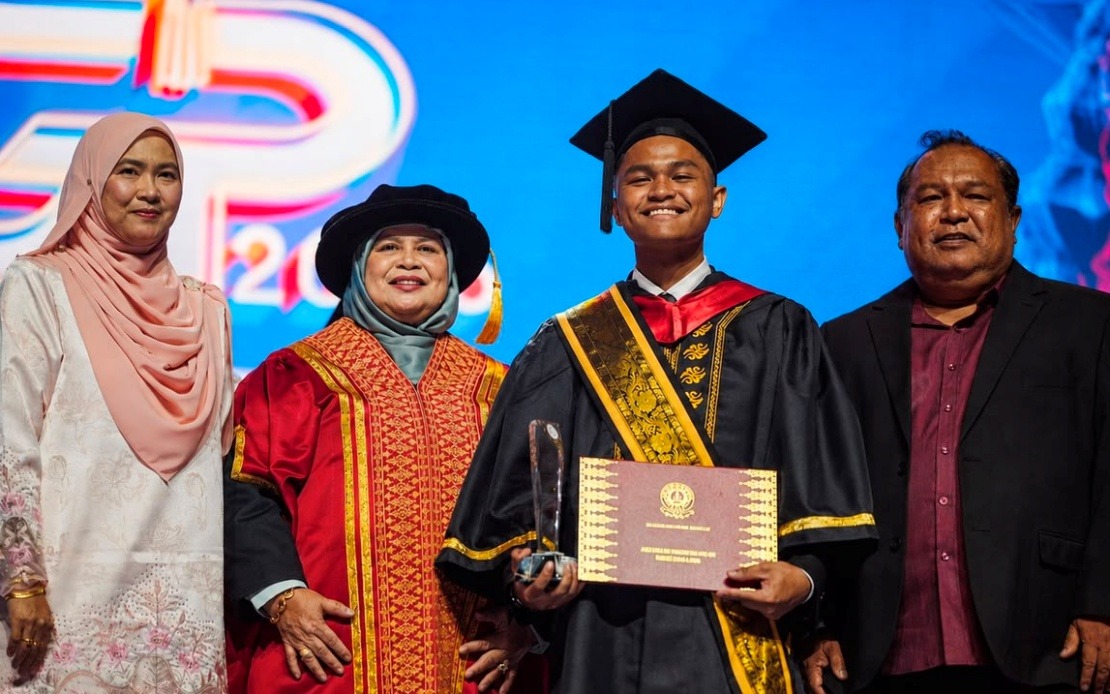
Muhammad Aaqif Dino Faezal represents a growing cohort of Malaysian students whose educational trajectories have been transformed by strategic institutional investment. The 19-year-old, recently recognised as the 2026 MARA College Graduate Icon, embodies the potential that emerges when targeted sponsorship meets individual ambition. Beginning his secondary education at MARA Science Junior College (MRSM) Tun Ghafar Baba in Melaka, Faezal has progressed to pursue a degree in Geology at Imperial College London, one of the world's premier institutions for science and engineering. His advancement reflects not merely personal achievement but illustrates how Malaysia's education infrastructure continues to identify and nurture talented young citizens for roles in the global knowledge economy.
The pathway that brought Faezal to this international platform originated through Majlis Amanah Rakyat's Young Talent Development Programme, which funded his International Baccalaureate Diploma Programme studies at Kolej MARA Banting from 2024 to May 2026. Without this sponsorship mechanism, the student candidly acknowledged the financial barriers would have proven insurmountable. The cost of international education, encompassing both tuition and living expenses in a developed economy, represents a formidable obstacle for Malaysian families even with substantial incomes. MARA's intervention at the pre-university stage effectively democratised access to world-class preparation, ensuring that capacity rather than circumstance determined whether a capable student could compete for places at elite universities.
Faezal's academic performance demonstrated the calibre of student selected through this programme. He attained 44 out of 45 points in the International Baccalaureate examination administered in May 2026, a score that reflects not only mastery of subject content but the rigorous analytical thinking demanded by the qualification. Such results do not emerge accidentally; they require sustained intellectual effort combined with institutional support and pedagogical quality. The IBDP's emphasis on critical thinking, research, and cross-disciplinary understanding proved particularly valuable preparation for tertiary study in geology, a discipline increasingly dependent on synthesising knowledge from physics, chemistry, biology, and mathematics.
Beyond examination results, Faezal's recognition as the MARA College Graduate Icon acknowledged contributions to institutional and community life that extended far beyond classroom performance. During his time at Kolej MARA Banting, he served as president of the Students' Representative Council, a leadership position that demands both vision and operational competence. His election and subsequent performance in this role demonstrated peer recognition of his capacity to represent collective interests while maintaining effective communication with institutional management. Peers and administrators alike identified in him qualities that transcended academic excellence—the ability to build consensus, manage competing priorities, and foster collaborative spirit among a diverse student population.
The awards accumulated during his KMB tenure—the institution's Best Graduate Award, the Co-curricular Icon Award, and recognition through the MARA Professional College's Inspiration Awards—indicate a holistic development model that extends beyond traditional academic metrics. This philosophy aligns with contemporary understanding of what international universities seek in admission candidates. Elite institutions increasingly value demonstrated leadership, community engagement, and character formation alongside intellectual achievement. Imperial College London's selection of Faezal reflects confidence that he possesses not merely the technical knowledge required for advanced geological study but also the maturity and interpersonal capabilities necessary to contribute meaningfully to a diverse academic community.
Faezal's choice of geology as a degree specialisation carries particular significance for Malaysia's economic future. The nation's historical dependence on petroleum and natural gas resources has begun yielding to diversified economic strategies, yet expertise in geology, geophysics, and resource management remains strategically valuable. The Malaysian oil, gas, and energy sectors continue requiring technically sophisticated professionals capable of competing in global markets and adapting to evolving environmental and economic constraints. By pursuing tertiary education at an institution of Imperial College's stature, Faezal positions himself to acquire advanced knowledge and international networks that could prove instrumental in addressing technical challenges facing these industries through the coming decades.
The broader context of MARA's educational mission reveals institutional evolution in response to Malaysia's positioning within global competition for talent and economic dynamism. Established with a mandate to develop Bumiputera communities through education and business opportunity, MARA has adapted its programmes to emphasise international competitiveness and excellence rather than merely domestic provision. The Young Talent Development Programme represents this strategic reorientation—rather than viewing international education as exclusively available to wealthy elites, MARA identified capable young citizens from modest backgrounds and invested in their potential. This approach simultaneously serves equity objectives and national interest, as the capabilities developed through exposure to world-leading educational institutions generate benefits that accrue to Malaysian society through returned expertise and networks.
Faezal's personal reflection on receiving the Graduate Icon award underscores an often-overlooked dimension of sponsored education—the emotional and psychological impact of institutional recognition. He described being deeply moved, reflecting on accumulated challenges and sacrifices that preceded the honour. This emotional authenticity counters any tendency to view educational sponsorship as merely transactional. For a young person from a family lacking extensive experience with international education or professional elites, MARA's investment carried profound meaning beyond the financial subsidy. It conveyed institutional confidence in his potential at a formative developmental stage, precisely the period when such external validation shapes self-perception and ambition.
Kolej MARA Banting's director, Arfaseela Amir, characterised Faezal's accomplishment as exemplifying the holistic excellence that MARA institutions aspire to develop. Her emphasis on intellectual capability combined with strong character reflects an educational philosophy increasingly prevalent among leading schools globally, yet still contested in some quarters. The recognition that universities and employers increasingly value graduates possessing emotional intelligence, ethical conviction, and collaborative capacity—alongside technical proficiency—has prompted educational institutions to redesign curricula and assessment mechanisms. Faezal's performance across academic, leadership, and co-curricular domains demonstrates that this integration is achievable within Malaysia's institutional context, provided adequate resources and institutional commitment materialise.
The implications of Faezal's trajectory extend beyond individual success to suggest possibilities for scaling excellence within Malaysia's education system. If MARA's sponsorship programmes continue identifying capable young people and providing transformative educational experiences, the cumulative effect could meaningfully influence Malaysia's position within the global knowledge economy. Each Imperial College graduate returning to contribute expertise, each MARA-supported student subsequently mentoring younger cohorts, each network connection forged at elite institutions—these constitute forms of human capital accumulation that compound across time. Faezal's September 2026 commencement at Imperial College thus represents not merely one student's achievement but a calculated investment in capabilities that Malaysia will subsequently possess and deploy.
As Faezal commences his geology degree this September, he carries with him not only scholarship support and intellectual preparation but also institutional expectations and community hopes. His own articulated intention to contribute his developing expertise to Malaysia's oil, gas, and energy sectors suggests awareness that his opportunity carries reciprocal obligation. Whether studied explicitly or absorbed through institutional culture at KMB and MARA, this understanding that educational privilege generates responsibility for broader contribution appears to have taken root. The trajectory from MRSM Melaka through KMB to Imperial College London thus exemplifies how strategic educational investment, combined with individual dedication and institutional support, can propel Malaysian talent onto the international stage whilst maintaining orientation toward service to national interest.

