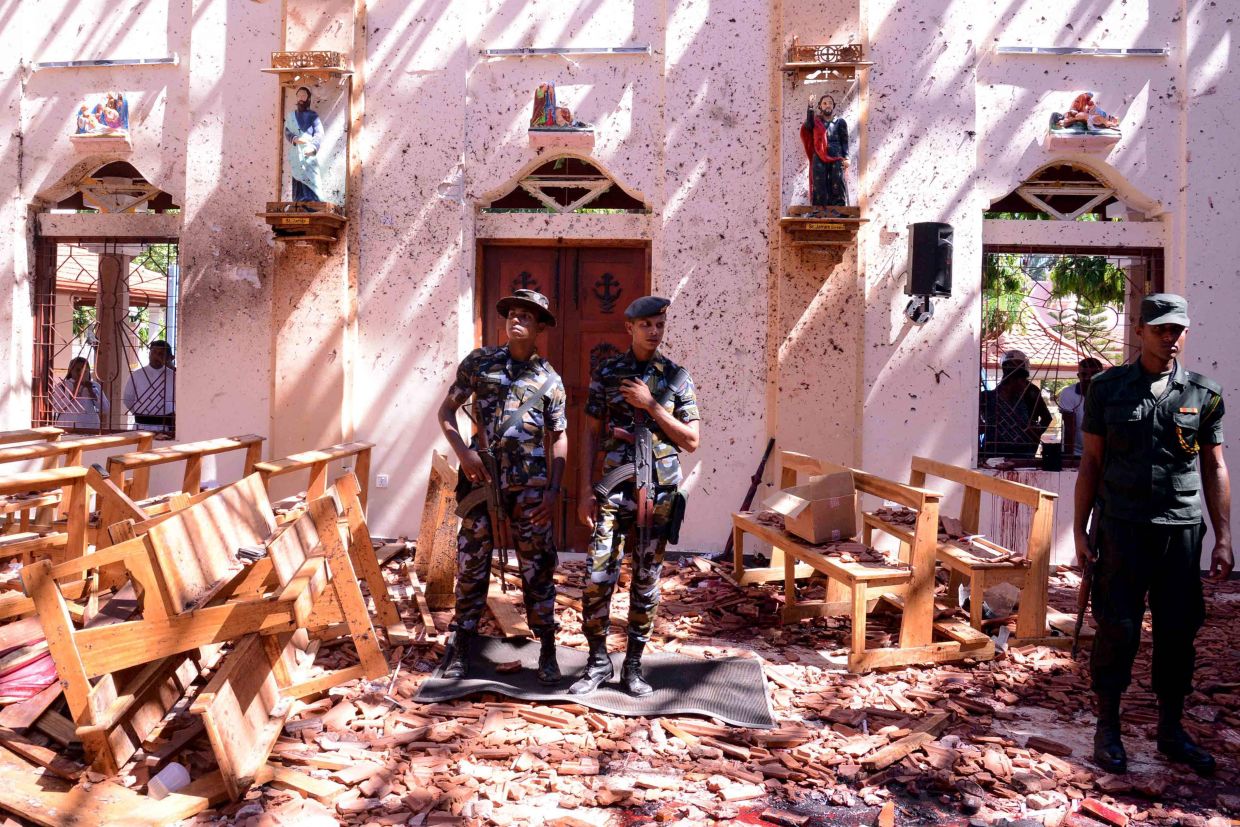
Major General Suresh Sallay, a retired Sri Lankan military officer and former spy chief who once lectured at the Pentagon about combating terrorism, now faces arrest under the very laws he spent decades helping to enforce. Detained in February on suspicion of masterminding the deadliest civilian attack in Sri Lanka's modern history, Sallay represents a striking reversal in how authorities have come to interpret the catastrophic Easter bombings of April 21, 2019, which claimed 279 lives and left over 500 wounded. His case has transformed from a straightforward counterterrorism narrative into a complex inquiry touching on alleged state conspiracy, political manipulation, and the weaponisation of extremist networks by deep state actors seeking power.
The coordinated bombings that morning targeted three prominent hotels and three churches across Sri Lanka, killing nationals from Australia, Britain, China, Denmark, the Netherlands, Japan, and the United States alongside local victims. Initial investigations pointed to a Sunni Muslim terrorist cell inspired by the Islamic State group, and the attacks appeared to validate longstanding security concerns about Islamist militancy on the island. Yet within weeks, investigative journalists and international observers began questioning fundamental aspects of the official account, particularly why advance warnings from Indian intelligence services had been dismissed and how the bombers had managed to operate undetected despite their apparent connection to known militant networks.
The shifting investigation has now pivoted toward a far more disturbing thesis: that elements within Sri Lanka's security establishment may have permitted, cultivated, or even directed the attacks to engineer a political outcome. According to this interpretation, the violence was designed to create the conditions necessary for Gotabaya Rajapaksa to win the 2019 presidential election on a platform of militant action against Islamic extremism, mirroring his earlier military campaign against Tamil separatists during the three-decade civil war. Britain's Channel 4 reported in 2023 that a whistleblower alleged the attack had been deliberately allowed to proceed, lending credence to theories that circulated among international observers and Sri Lankan civil society since immediately after the bombings.
Public Security Minister Ananda Wijepala made the unprecedented allegation in June that Sallay was the architect behind the attacks, claiming the former intelligence chief had met with Muslim men three weeks before the bombings to gather operational details about target locations. Wijepala stated in parliament that Sallay had "conspired with and strategically directed Islamic extremists until they carried out the attacks." These accusations represent official acknowledgment of theories that had previously existed in investigative reporting and civil society discourse but had not been articulated by senior government figures. The minister's statements suggest that court proceedings may ultimately expose an institutional network rather than prosecute an individual operative.
Sallay's international credentials as a security expert make the allegations particularly striking. He had addressed the Pentagon on suicide terrorism's impacts and spoken at United Nations headquarters about the role of social media in radicalisation and extremism. As a career military officer, he served in Sri Lankan diplomatic missions in France and Malaysia, completed studies at India's National Defence College in New Delhi, and earned qualifications from Britain's University of Bradford. These credentials positioned him as a respected voice in international counterterrorism circles, yet he now stands accused of orchestrating the very phenomenon he publicly warned against.
Critical to understanding the alleged conspiracy is Sri Lanka's historical practice of instrumentalising militant networks for intelligence gathering. Rajapaksa-era administrations have acknowledged that during the 1983-2009 civil war, the state funded jihadist operatives to gather intelligence on Tamil rebel movements. According to this historical context, extremist groups were enlisted as proxy intelligence assets rather than treated purely as security threats. Investigators have suggested that the network cultivated around the Easter bombers may have operated within this established framework of state-sponsored intelligence penetration, but that the arrangement unraveled or was deliberately weaponised for political ends.
The broader narrative suggests that security apparatus elements sought to nurture an Islamist militant threat capable of justifying extraordinary state powers and positioning Rajapaksa as the essential strongman leader. Such an engineered security crisis would parallel Rajapaksa's earlier political ascendancy during the civil war, when his reputation as a ruthless military strategist against Tamil nationalism propelled him to national prominence. By creating a comparable threat in the form of Islamist terrorism, allied factions could replicate the political formula that had served the family's interests in previous decades. The violence, from this perspective, was not merely a security failure but a calculated political investment.
Sallay's own trajectory under the Rajapaksas reveals a career arc that benefited from proximity to power. After Gotabaya Rajapaksa's 2019 election victory, Sallay was appointed to head the State Intelligence Service, becoming the first military officer to occupy that position. His rapid elevation suggests integration into the political leadership's inner circle. Yet his subsequent arrest indicates either a dramatic falling out with the Rajapaksa faction or a genuine investigation into allegations that his position facilitated the attacks. In 2020, Sallay had ordered the arrest of human rights lawyer Hejaaz Hizbullah, initially accusing him of orchestrating the bombings, but authorities released Hizbullah after 22 months without substantiating charges, suggesting investigative misdirection or evolving understanding of culpability.
Sallay's personal background underscores the sectarian complications embedded within this narrative. A Muslim married to a Buddhist woman with a Catholic mother, Sallay embodies Sri Lanka's religious diversity in ways the political leadership does not. Religious demographics show Buddhists comprising nearly 70 percent of the population, with Hindus at 12 percent, Sunni Muslims at 10 percent, and Christians at 7 percent. The Easter bombings themselves were framed as a sectarian attack on Christian churches, yet if accusations against Sallay prove substantiated, the attacks would represent security agency manipulation of religious tensions for political purposes, effectively weaponising inter-communal grievances.
The absence of formal charges despite Sallay's continued detention under anti-terrorism provisions reflects the extraordinary legal complications involved. His next court hearing was scheduled for July 10, yet months of legal proceedings have not resulted in indictment, suggesting either incomplete evidence gathering or deliberate delay. The lack of formal charges despite inflammatory ministerial statements raises concerns about due process, political pressure on the judiciary, and potential use of indefinite detention as a mechanism of political control. For Malaysia and other Southeast Asian democracies observing Sri Lanka's trajectory, the case illustrates how security apparatus authority can expand unchecked when counterterrorism powers remain insufficiently regulated by judicial oversight.
The implications extend beyond Sri Lanka's borders. Southeast Asian governments examining counterterrorism frameworks must contend with the possibility that security agencies, when granted extensive investigative powers and minimal accountability, may deploy those powers for institutional or political gain rather than genuine public protection. The Easter bombings investigation demonstrates how terrorist attacks, rather than merely representing security threats, can become occasions for institutional power consolidation and political calculation. For Malaysian policymakers and legal scholars, Sallay's case serves as a cautionary example of how counterterrorism apparatus, left without robust civilian oversight and transparent accountability mechanisms, may transform national security agencies into tools of political manipulation rather than genuine protectors of public safety.

