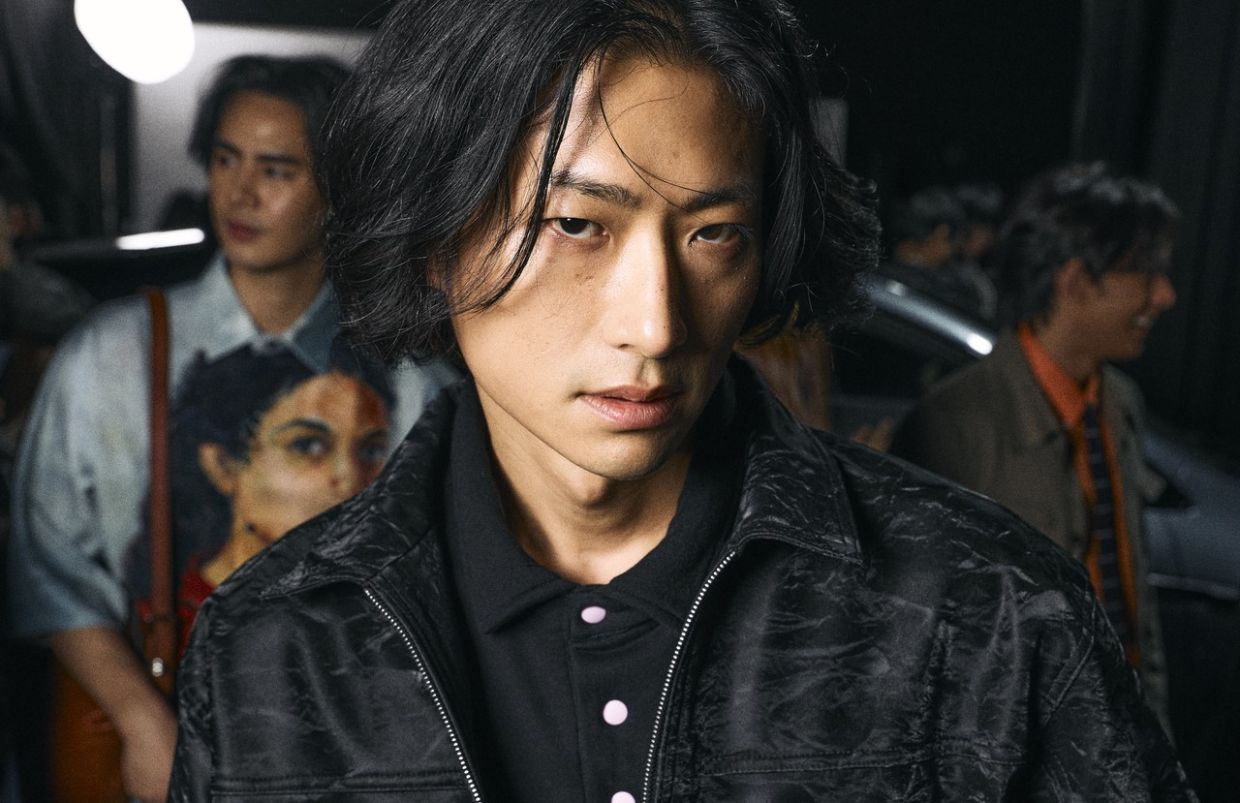
When Heo Yong-jin turned 40, most would have considered his career trajectory settled. A decade as a litigation support specialist at Kim & Chang, South Korea's most prestigious law firm, represented stability and professional achievement. Yet last July, the Seoul native found himself walking an exclusive Louis Vuitton trunk show in Bangkok, where creative director Pharrell Williams unveiled a men's collection co-designed with Japanese label Nigo. For Heo, the moment felt surreal—a validation of a gamble he had taken just a year earlier that defied conventional wisdom about age, timing, and career reinvention.
The seeds of this unlikely transformation were sown when Heo and his wife relocated to Spain in early 2023. His stated purpose was pragmatic: pursuing studies in sports management and the agency business while building professional credentials. What he did not anticipate was how a casual fitness routine would reshape not just his physique but his entire sense of professional possibility. Surrounded by classmates passionate about athletics, Heo gradually joined them for football and padel tournaments across Spain. The combination of regular activity and deliberate lifestyle changes produced visible results—weight loss that caught even his own attention and, more significantly, his wife's observant eye.
When his wife suggested he explore modelling, Heo's initial reaction was sceptical. Yet practical considerations aligned with ambition. At 188 centimeters tall, he possessed the physical proportions the industry demanded. More compellingly, European agencies actively recruited Asian models, a demographic gap that suggested genuine commercial opportunity. With merely four months remaining on his Spanish visa, Heo made a decision that prioritized experimentation over security: he would invest time and resources into building a modelling portfolio from zero. He hired photographers, curated images, and personally contacted potential clients—a bootstrapped approach that revealed both the demand for his profile and his own capacity for professional self-advocacy.
Returning to South Korea with cautious optimism proved deflating. Domestic agencies dismissed him with remarkable consistency, and their reasoning was blunt: his age disqualified him from consideration. The South Korean modelling industry, like much of the global fashion sector, privileges youth and early-career development. An aspiring model nearing 40 with negligible professional experience fell outside acceptable parameters. Rather than accept this verdict, Heo expanded his geographic scope strategically. He began a methodical campaign of outreach across China and Southeast Asia, submitting portfolios to agencies and waiting for responses. Thailand proved the breakthrough market. An agency there recognized commercial potential where Seoul-based firms saw only demographic liability.
Based between Thailand and South Korea, Heo began accumulating work that transformed his career narrative from aspiration to reality. Campaign assignments for regional brands multiplied—sunglasses advertisements, European insurance spots where he portrayed a Malaysian father, and increasingly visible shoots for Asian fashion houses. His Instagram account, chronicling this improbable professional pivot, accumulated four million views, turning him into a minor social media phenomenon. Yet Heo maintains measured expectations about his trajectory. He resists characterizing his journey as a success story, preferring to acknowledge that walking for Louis Vuitton, while genuinely significant, has not yet translated into sustained commercial momentum or financial stability.
The deeper psychological transformation matters more to Heo than any single booking. During his decade in litigation support, he cultivated a professional persona that masked genuine uncertainty about his work and life direction. Modelling has paradoxically reversed this—confidence now emerges from visible industry validation rather than performed competence. Brands actively seek him out, campaigns materialize, and his work directly communicates creative vision. This stands in sharp contrast to legal support work, which, however professionally respectable, often felt disconnected from personal authenticity. The financial precarity of modelling admittedly unnerves him, yet he has discovered that material security never produced the satisfaction that purposeful, visible work now generates.
For Malaysian readers and broader Southeast Asian audiences, Heo's narrative carries particular resonance. The region has emerged as a genuine hub for modelling opportunity, especially for Asian and male models who historically faced discrimination in Western-dominated markets. Thailand's burgeoning fashion and commercial production sectors actively recruit international talent, creating pathways unavailable in more insular markets. Heo's success in the region, rather than exclusively in Seoul or other Northeast Asian hubs, underscores how Southeast Asian cities increasingly function as destination markets for aspiring models seeking to build international portfolios and commercial experience.
Beyond individual career achievement, Heo's reinvention challenges cultural assumptions about age and professional possibility in East Asia, where hierarchical, seniority-based career structures typically discourage mid-life pivots. His willingness to absorb the social risks of career change—leaving an established profession, accepting industry rejection, pursuing work across unfamiliar countries—reflects individual boldness but also generational shift. Younger South Koreans increasingly prioritize fulfillment and authentic work over conventional stability, a value orientation that Heo's choices embody.
Looking forward, Heo has targeted Milan and Paris fashion weeks scheduled for late September through early October, where major houses including Prada, Bottega Veneta, Saint Laurent, and Tom Ford will present menswear collections. Accessing these platforms requires securing agency representation and competing against younger, more established models—formidable obstacles for a 40-year-old newcomer. Yet Heo approaches these challenges with the perspective earned through recent transformation. The uncertainty, rather than paralyzing him, generates the professional excitement he never experienced during stable legal employment.
What distinguishes Heo's journey is not exceptional talent or privileged circumstances, but rather his deliberate embrace of uncertainty at an age when most professionals solidify rather than reinvent. His modest reflection that he simply "lost weight and started pursuing modelling" obscures the psychological courage required to leave established professional identity, absorb repeated rejection, and build from nothing in a youth-obsessed industry. Recent inquiries from South Korean fashion brands suggest that domestic recognition may finally follow international opportunity, potentially validating his unconventional path. Whether he ultimately achieves sustained modelling success remains uncertain. What seems clear is that the deliberate choice to pursue work aligned with authentic interest has already delivered the fulfillment that a decade of professional respectability could not.

