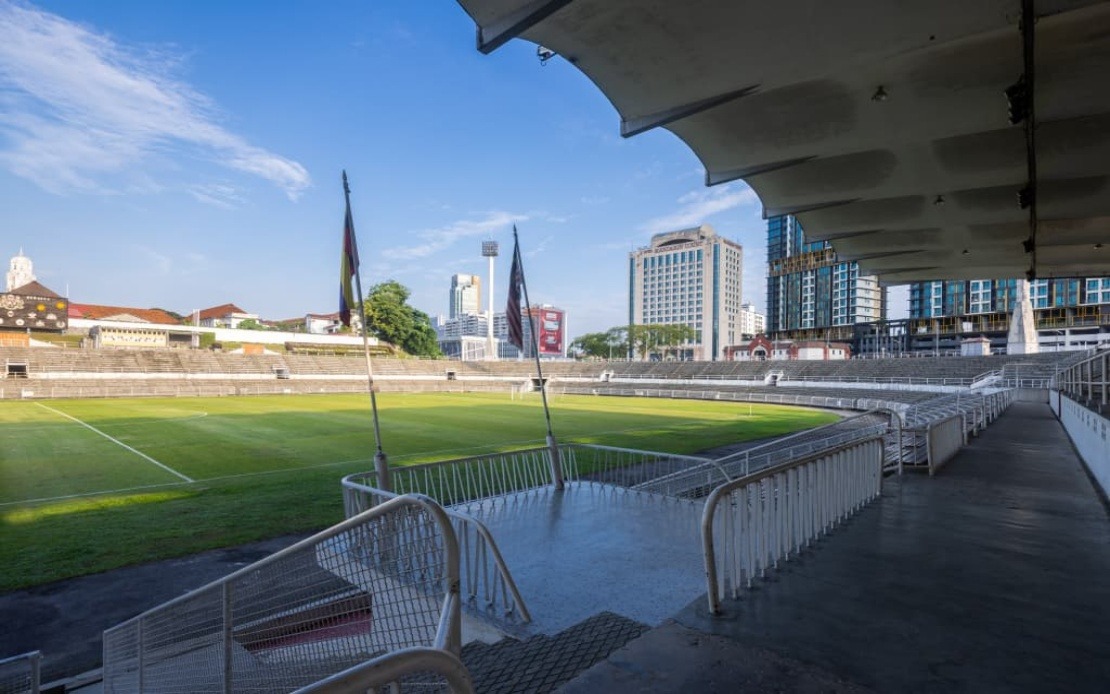
Nearly seven decades after Tunku Abdul Rahman Putra Al-Haj's resounding seven-fold cry of "Merdeka!" at Stadium Merdeka on August 31, 1957, that same patriotic flame now flickers in new spaces across the nation. The journey from Malaysia's birthplace of independence to the contemporary administrative hub of Putrajaya tells a story far deeper than mere logistical convenience—it reflects how a maturing nation chooses to remember itself and transmit its values forward.
The migration of the national-level National Day celebration from the hallowed grounds where colonial rule formally ended to Putrajaya's modern precincts represents one of Malaysia's most subtle yet significant cultural shifts. Since Putrajaya first hosted the national ceremony in 2003 under the theme "Keranamu Malaysia," the federal administrative centre has become the preferred venue, holding the celebration nine times previously and now set to host it for three consecutive years from 2025 to 2027 following a Cabinet decision in April 2025. This tenth occurrence underscores a deliberate policy choice that extends well beyond immediate National Day scheduling.
The question lingers whether relocating celebrations diminishes how contemporary Malaysians understand their nation's founding struggle. For many observers, the answer lies not in choosing between venues but in recognising what each symbolises. According to Prof Dr Sarjit Singh Gill, Chairman of the National Unity and Progressive Society Cluster at the Malaysian Professors Council, Stadium Merdeka and Putrajaya function as complementary historical anchors rather than competing narratives. The former evokes profound nostalgia particularly among citizens aged 70 and above, triggering visceral memories of a nation's birth. The latter, designed as a "smart city in a garden," embodies Malaysia's administrative evolution and forward-looking ambitions.
Putrajaya's development from its former designation as Prang Besar into the nation's federal administrative centre, completed in 1995, itself represents a deliberate national project to symbolise Malaysia's progression beyond colonial structures. Choosing this location for Independence Day celebrations carries intentional messaging: that the struggle for freedom achieved in 1957 translates into tangible governance, urban development, and institutional capacity today. This continuity narrative proves particularly important for younger Malaysians who may lack direct connection to independence-era imagery.
As an anthropology and sociology professor at Universiti Putra Malaysia, Sarjit emphasises that celebrating at both locations allows successive generations to grasp the historical significance behind their nation's existence and the social transformations enabling national advancement. He advocates preserving two critical elements within every National Day observance: firstly, honouring the diplomatic skill and consensus-building through which past leaders secured independence rather than through conflict, and secondly, celebrating Malaysia's multiethnic composition within a framework of unified diversity. These principles transcend any single venue.
Putrajaya's selection reflects both symbolic and practical considerations. The Event Management and Innovation Unit at the Ministry of Communications identified accessibility as paramount—the federal administrative centre's integration with the Mass Rapid Transit network, water taxi services, and shuttle bus systems provides alternatives to private vehicle congestion. When gatherings encompass hundreds of thousands of participants, such logistics determine whether younger and elderly citizens alike can participate meaningfully. This infrastructure advantage removes barriers that might otherwise prevent engagement with national commemoration.
Yet accessibility extends beyond transportation networks. The 2026 National Day theme, "Malaysia MADANI: Kesejahteraan Dinikmati" (Malaysia MADANI: Wellbeing Enjoyed), deliberately articulates the philosophical bridge between independence struggles and contemporary prosperity. Organisers incorporated elements targeting younger demographics: the "Gema Inovasi MADANI" performance merging innovation with cultural resonance, "Rentak MADANI, Paluan Tradisi" blending modern and traditional musical rhythms, and a human graphic formation involving 1,500 schoolchildren. These technological and creative interventions demonstrate recognition that patriotism must translate into experiential engagement for digital-native generations.
For individual participants, the celebrations create formative memories that cement national identity. Muhammad Nasrul Nasir, a 30-year-old Administrative Assistant at the Federal Territories Department, exemplifies this trajectory. His attendance at last year's Dataran Putrajaya celebration transformed from passive spectating into active participation this year as a parade representative. The experience reinforced his understanding of sacrifices made by independence-era leaders and connected abstract historical concepts to embodied patriotic feeling. Such personal journeys, multiplied across hundreds of thousands, constitute genuine nation-building at the grassroots level.
The professionalisation of National Day celebrations reflects Malaysia's institutional maturation. What began as a singular transformative moment at one stadium has evolved into a distributed nationwide phenomenon, with celebrations simultaneously occurring in multiple federal territories and states. This democratisation ensures that Malaysians across geographical regions participate in collective commemoration rather than pilgrimage to a single historical shrine. The shift acknowledges that patriotism operates not through mandatory historical tourism but through accessible, locally meaningful participation.
Yet preserving Stadium Merdeka's historical significance remains essential. The venue's continued cultural resonance, particularly among older generations and heritage enthusiasts, argues for its ongoing role in National Day consciousness even as Putrajaya hosts the official national ceremony. Malaysia might consider designating Stadium Merdeka specifically for heritage-focused programming, exhibitions exploring independence negotiations, and intergenerational dialogues where older Malaysians share lived experiences with younger cohorts. Such specialisation would enhance rather than diminish its patriotic importance.
The broader question concerns how nations sustain collective memory across generational transitions. Malaysia's approach—honouring historical birthplaces while embracing contemporary venues—suggests that patriotism need not be frozen in time and location. Instead, it can evolve, incorporating new spaces and modern expressions while maintaining philosophical continuity with founding principles. This flexibility may prove essential for keeping independence spirit vibrant among Malaysians born decades after 1957, who experience the nation through its present institutions, economic structures, and multicultural practices rather than through historical recollection.
As Malaysia approaches its 67th independence anniversary and Putrajaya prepares for its tenth hosting of the national-level celebration, the symbolic geography of commemoration continues shifting. Yet the underlying commitment—transmitting to successive generations an understanding of how negotiated independence, racial tolerance, and institutional development combine to form national identity—remains constant. Both Stadium Merdeka's hallowed grounds and Putrajaya's gleaming architecture serve this essential function, each speaking meaningfully to different constituencies and historical moments within the Malaysian narrative.

