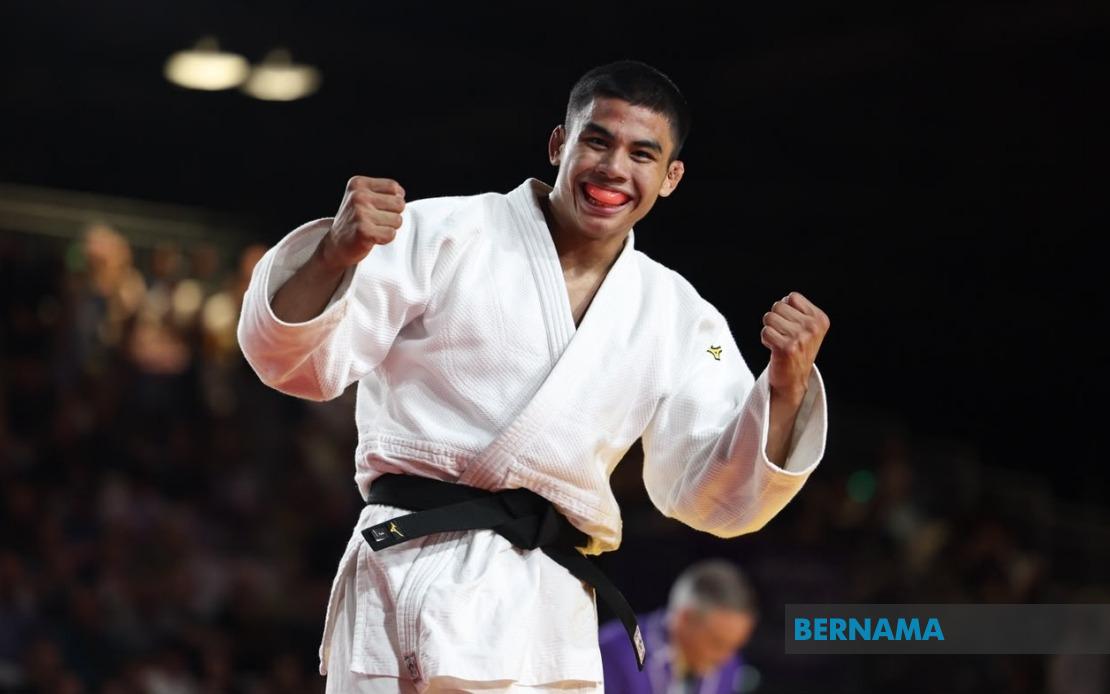
Penang-born judoka Amir Daniel Abdul Majeed has etched his name into Malaysian sporting folklore by capturing the gold medal in the men's under-81 kilogramme category at the Glasgow 2026 Commonwealth Games, becoming the nation's first-ever judoka to achieve this distinction at the Games. Competing at the Scottish Event Campus, the 21-year-old delivered a decisive victory against South Africa's Timothy Meuwsen to secure Malaysia's eighth gold medal of the event, a triumph that represents far more than a single sporting achievement—it symbolises the culmination of years of discipline, sacrifice, and an unwavering commitment to excellence cultivated since childhood.
The roots of Amir Daniel's extraordinary determination trace back to his early years, long before he stepped onto a judo mat. His mother, Yeoh Suatkhim, recalls a formative moment at age four when her young son struggled with a thumb-sucking habit that resisted conventional interventions. Rather than resorting to admonishment or physical remedies, Yeoh employed a simple yet effective strategy: she promised to purchase the storybook her son desired if he could overcome the habit. The result proved remarkable—Amir Daniel abandoned the behaviour entirely within a single day, motivated purely by the prospect of obtaining his coveted book. This incident, seemingly trivial on the surface, revealed a fundamental aspect of the child's character that would later define his athletic career: an almost singular capacity for resolute action when pursuing a goal.
Yeoh's observation about her son's early determination reflects a broader understanding of how childhood experiences shape adult achievement. Unlike many children who might require extended periods or multiple incentive attempts to modify ingrained behaviours, Amir Daniel demonstrated an almost preternatural ability to marshal self-control in pursuit of a desired outcome. This capacity for commitment—once a promise was made or a decision taken—would prove instrumental in navigating the rigorous demands of competitive judo. His mother notes that this perseverance has remained a defining characteristic throughout his life, suggesting that the foundational traits established in early childhood provided the psychological scaffolding necessary for athletic excellence.
Amir Daniel's formal introduction to judo occurred at age five under the tutelage of national coach Md Nashriq Md Nassir, a relationship that continues to define his sporting journey. The coach's influence extends far beyond the technical aspects of judo; Yeoh emphasises that Md Nashriq has become an integral figure in shaping her son's holistic development, encompassing discipline, academic performance, and personal character formation. This expanded coaching role, common in Asian sporting cultures where mentors often assume parental-like responsibilities, demonstrates how elite athlete development in Malaysia frequently involves collaborative relationships between coaching staff and families. When Amir Daniel faced important examinations, Yeoh would consult with Md Nashriq, who would establish mutual agreements with the young athlete to ensure academic obligations received proper attention alongside sporting commitments.
The integration of educational pursuits with athletic training reflects a sophisticated understanding of sustainable success. Many families pursuing competitive sports risk allowing athletic ambitions to overshadow academic development, potentially compromising long-term prospects should injury or changing circumstances interrupt sporting careers. Yeoh's approach, facilitated through her partnership with Md Nashriq, ensured that Amir Daniel's education remained prioritised alongside his judo development. This balanced approach appears to have borne fruit, as Amir Daniel has managed to sustain elite-level competition while maintaining educational progress—a combination that remains statistically uncommon among young Commonwealth athletes from Southeast Asia.
Amir Daniel's competitive pedigree extends back to the Birmingham 2022 Commonwealth Games, where he captured a bronze medal in the men's under-73 kilogramme category at just 19 years old. That achievement, while commendable, represented a stepping stone rather than a destination. The four-year interval between Birmingham and Glasgow 2026 provided opportunity for substantial physical maturation, technical refinement, and psychological development. Moving to the under-81 kilogramme division, Amir Daniel faced competition from heavier opponents, necessitating adjustments to his strategic approach and tactical execution. His progression from bronze to gold, across weight categories and in increasingly competitive fields, suggests sustained improvement rather than a singular fortunate outcome.
Malaysia's judo programme has historically struggled to produce medal-winning performances at the Commonwealth Games, making Amir Daniel's achievement particularly significant for the sport's profile and funding prospects within the country. Elite judoka from Malaysia have previously appeared at Commonwealth Games, but conversion of participation into podium finishes has remained elusive. This breakthrough potentially signals a turning point, demonstrating that systematic coaching, family support structures, and sustained athlete development can yield results at the highest amateur level. For aspiring judoka throughout Malaysia and the broader Southeast Asian region, Amir Daniel's victory provides a tangible example that medals at major Games remain achievable despite regional competition from established judo nations.
Yeoh's philosophy regarding childhood engagement in sports and learning environments aligns with contemporary developmental psychology, which emphasises early exposure to diverse activities as foundational for later achievement. She deliberately exposed both her children, eldest daughter Nur Yasmeen and younger son Amir Daniel, to structured sporting and educational experiences from young ages. Rather than imposing a singular path, this approach allowed children to develop interests organically while building foundational competencies across multiple domains. Amir Daniel's eventual gravitational pull toward competitive judo emerged from this enriched environment rather than from parental pressure or early specialisation—factors that research suggests contribute positively to sustained motivation and reduced burnout risk.
The broader implications of Amir Daniel's Commonwealth Games gold extend beyond individual achievement to encompass systemic questions about Malaysia's sporting infrastructure and talent development pipelines. Judo, despite its global prominence and inclusion in Olympic programmes, has received comparatively modest investment and attention within Malaysian sporting hierarchies historically dominated by badminton, squash, and football. Amir Daniel's success provides empirical evidence that targeted investment in less-prominent sports can yield international recognition and medals. For Malaysian sports administrators evaluating resource allocation across different disciplines, this case study suggests that systematic coaching (exemplified by Md Nashriq's sustained involvement), family support structures, and long-term athlete development planning represent more reliable pathways to podium finishes than sporadic, project-based interventions.
Looking forward, Amir Daniel and his family harbour considerably larger ambitions that extend well beyond Commonwealth Games success. The athlete has expressed explicit aspirations toward Olympic competition, a target that would require progressing through substantially more competitive international environments. The pathway toward Olympic qualification demands not merely competitive excellence at Commonwealth level but sustained performance across World Championship circuits, Olympic qualification tournaments, and increasingly rigorous professional judo settings. Yeoh's confidence in her son's capacity to reach these heights stems from his demonstrated track record of translating determination into achievement, from childhood promise-keeping through to international medal winning.
Yeoh articulates a vision for her son's future that encompasses multiple dimensions beyond sporting achievement. She hopes Amir Daniel will continue prioritising academic pursuits even as Olympic ambitions intensify, recognising that educational credentials provide important insurance against sporting career uncertainties. Additionally, she hopes he will leverage his elevated profile to mentor fellow Malaysian judoka, contributing to the sport's broader development within the country. This multi-faceted aspiration—combining individual Olympic pursuit with educational persistence and community contribution—reflects a matured understanding of what constitutes genuine, sustainable success for young athletes from emerging sporting nations. Amir Daniel's Commonwealth Games gold represents not a destination but rather a waypoint along an extended trajectory of ambition, one rooted in the same determined character his mother first observed when a four-year-old willingly sacrificed his thumb-sucking habit for a storybook.

