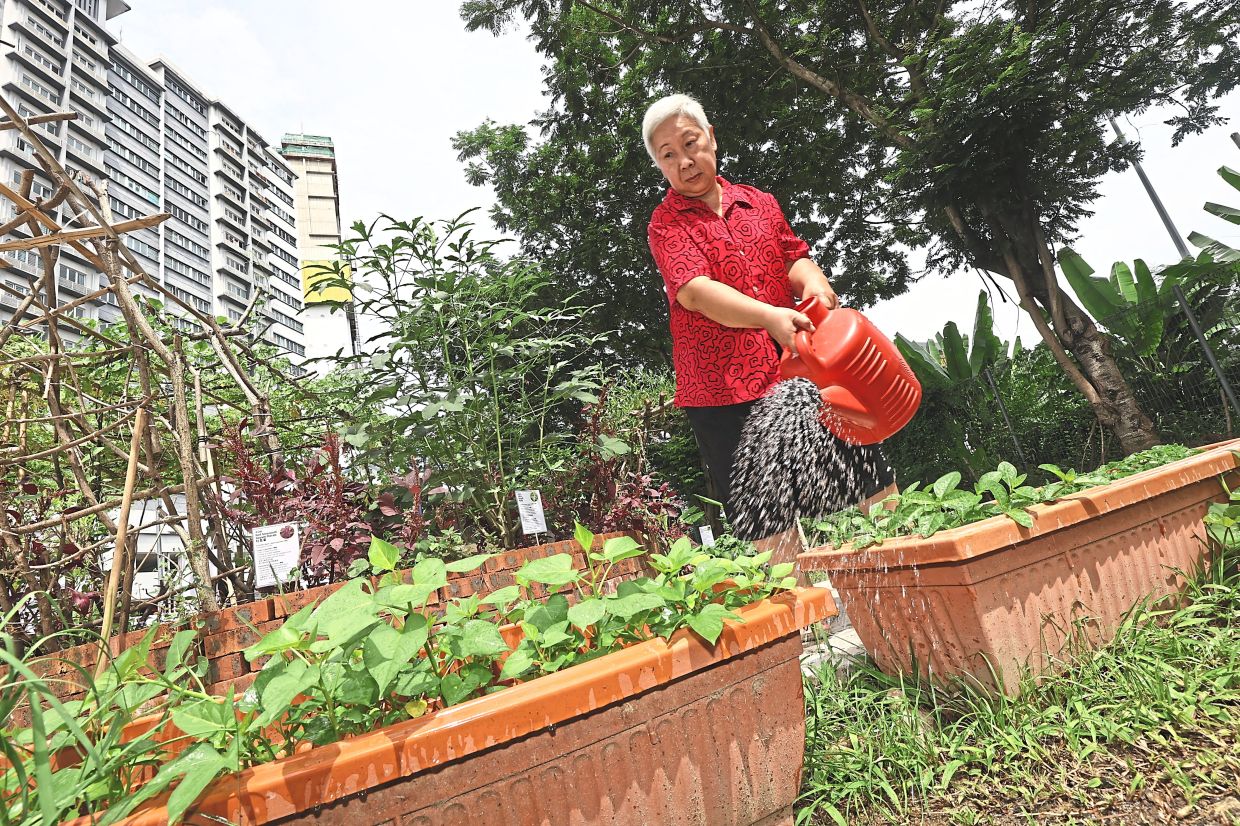
What was once an overgrown, forgotten corner behind 1Razak Mansion in Kuala Lumpur has undergone a remarkable transformation into a flourishing food forest, creating unexpected pathways to improved health and community cohesion. The initiative, spearheaded by social enterprise PWD Smart FarmAbility with backing from the residential management and active participation of inhabitants, represents a practical model for addressing the intersecting challenges of urban neglect, elderly isolation, and food security in Malaysia's densely populated capital.
The completion and official launch of the 1Razak Mansion Food Forest marks a significant milestone in how abandoned urban spaces can be repurposed to serve community needs. The garden now showcases organised rows of herbs, vegetables, fruit-bearing plants and flowers where weeds and disorder once prevailed. This transformation carries particular weight given the demographic composition of the residence: approximately 80% of inhabitants are senior citizens, a population segment often grappling with both physical deconditioning and psychological challenges that come with retirement and reduced social engagement.
Minister in the Prime Minister's Department (Federal Territories) Hannah Yeoh highlighted the critical balance between physical and mental wellbeing during the launch celebration. While the residence already offers structured physical activities such as tai chi classes, she recognised that mental health represents an equally urgent but sometimes overlooked dimension of aged care. The food forest addresses this gap by creating a natural, engaging environment that encourages regular outdoor activity and purposeful engagement without the regimented feel of formal exercise programmes.
Resident Alice Fernandez, 64, articulates the multifaceted benefits the garden delivers to the senior community. Beyond the immediate appeal of a beautified shared space, the food forest reduces the economic burden on fixed-income residents by providing direct access to fresh produce they can harvest for personal consumption. For Fernandez, the psychological dimensions run equally deep: the garden provides mental respite from the confinement of domestic spaces, offers opportunities for meaningful connection with nature, and transforms what had been an isolated, unusable area near the refuse room into an attractive gathering spot for residents with limited mobility or energy for external exercise.
The dramatic spatial transformation resonates particularly with residents accustomed to the area's previous condition. Fernandez's observation that the abandoned space offered little incentive for visits underscores how environmental design shapes daily behaviour and community participation. The beautification has made the food forest part of her daily routine, with visits following her morning jog and during leisure hours spent maintaining and watering plants. This organic integration into residents' schedules suggests the garden has achieved genuine integration into community life rather than remaining a cosmetic addition.
Behind the scenes, the logistical efforts of project contributors like Thieeben Sivabalasingam, 38, proved essential to realising the vision. Working through the construction phase overseeing material transport and arrangement, Sivabalasingam witnessed the gradual materialisation of what initially seemed a fragmentary, difficult-to-visualise project. His reflection on returning to find materials organised more systematically, week after week, captures the iterative, collaborative nature of community development initiatives. Standing with his three-year-old son observing the completed garden, he represents the intergenerational dimension of the project—engaging younger residents and families in sustainable food production and environmental stewardship.
Sivabalasingam's perspective extends beyond immediate utility to the psychological and existential needs of an ageing population. The food forest provides not merely healthy edible produce but daily purpose and anticipation—reasons to rise, engage, and experience positive emotion. For communities where retirement can precipitate a loss of structure and identity, such spaces offer gentle pathways to meaningful activity and social connection that resist the passivity that can accompany advanced age.
Neighbouring residents have also taken note of the initiative's potential. Jenny Wong, 70, and her husband KC Wong, 76, from adjacent Razak City Residences travelled to the launch event, recognising the garden's value for hobby cultivation, environmental contribution, and community building. KC's hope that similar initiatives might be implemented in his own residential complex reflects the replicability of the model across different housing communities. For retired couples with substantial free time, such programmes offer tangible avenues for meaningful contribution beyond the household sphere.
Founder and social entrepreneur Dr Billy Tang Chee Seng, 60, frames the food forest as an initial phase of a more expansive vision for community development and education. Planned additions include a kitchen hub facility housed within a central building, where residents can learn practical cooking skills using harvested ingredients—transforming the garden from a production space into a learning environment. Simultaneously, introducing microscopes and soil science education for younger residents extends the project's reach across age groups, linking food security with scientific literacy and environmental awareness.
These expansions signal how the food forest might evolve from a simple garden into a knowledge hub addressing multiple community needs simultaneously. The integration of culinary education with agricultural production creates pathways for skill development and qualification—assets particularly valuable for residents seeking renewed purpose or younger inhabitants developing competencies. The emphasis on soil microorganisms and sustainable production methods positions environmental literacy as central to the project's educational mission.
The 1Razak Mansion initiative offers Malaysia a compelling model for urban renewal and aged-care innovation that sidesteps expensive institutional approaches in favour of community-centred environmental design. As Malaysia's population ages—with projections showing seniors comprising nearly 15% of the population by 2040—replicating such models across residential communities could significantly enhance quality of life for elderly inhabitants while addressing urban food security and environmental degradation simultaneously. The project demonstrates that addressing senior isolation and poor mental health need not require pharmaceutical or institutional interventions; sometimes what communities require is simply a reimagined outdoor space, collaborative stewardship, and recognition that purposeful engagement with nature and community represents a form of health maintenance as legitimate as any structured programme.

