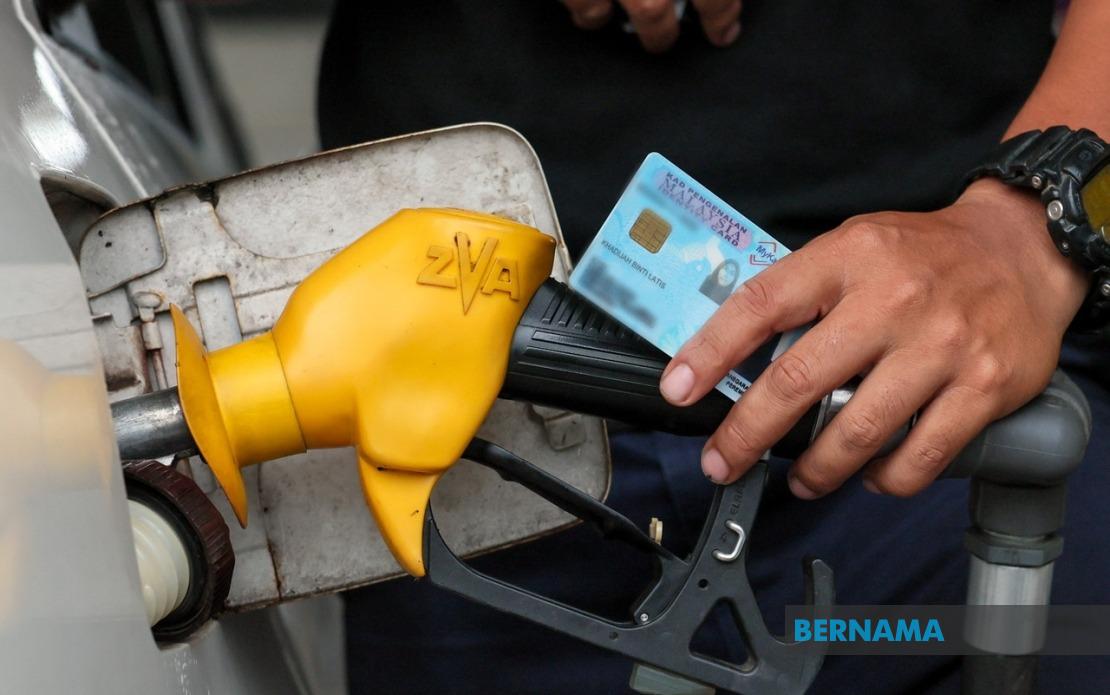
Malaysia's government has moved to ease cost-of-living pressures by restoring and expanding fuel subsidy quotas under its targeted BUDI MADANI programme. Prime Minister Datuk Seri Anwar Ibrahim announced the changes during the 2026 National Day address at the Putrajaya International Convention Centre, effective immediately. The decision represents a significant recalibration of fuel support, with the basic RON95 petrol quota rising from 200 litres to 300 litres monthly, while diesel allocations jump from 300 litres to 400 litres. The announcement has drawn widespread approval from workers, business owners, and transport operators who have long grappled with volatile fuel costs eating into household budgets and operational margins.
The BUDI MADANI initiative represents the government's philosophical shift towards precision-targeted subsidies rather than blanket fuel price controls. By allocating fixed monthly quotas to eligible Malaysians at subsidised rates, the programme attempts to balance fiscal responsibility with social support. This approach prevents unlimited subsidy payouts while ensuring that ordinary citizens and small business owners retain access to cheaper fuel within defined limits. For a Southeast Asian nation heavily dependent on imported energy and facing fiscal constraints, such targeted mechanisms have become increasingly attractive to policymakers seeking to maintain social stability without overextending government finances.
The expansion holds particular significance for commuter workers navigating Malaysia's sprawling urban and suburban landscapes. Furzani Ahmad, a 24-year-old private sector employee, exemplifies the relief the quota increase provides. With a daily commute of approximately 30 kilometres, his monthly fuel requirements previously stretched the 200-litre allocation uncomfortably thin. The upgrade to 300 litres now allows him meaningful breathing room, transforming what was previously a carefully rationed expense into something more predictable. For workers like Furzani earning modest salaries in Malaysia's competitive job market, such adjustments translate directly into financial flexibility—money that can now flow toward rent, food, education, or healthcare rather than remaining locked in fuel consumption.
Small-scale logistics and transport operators similarly benefit from the diesel quota increase. Abdul Manan, a 63-year-old fruit trader relying on diesel vehicles to source supplies from distant markets, faces transportation costs that directly impact his retail pricing and competitiveness. When diesel quotas shrink, operators either absorb costs through reduced margins or pass them to consumers through higher prices. The increase from 300 to 400 litres eases this pressure considerably. For traders like Manan operating in Malaysia's complex supply chains, where sourcing fresh produce from distant regions is routine, stable fuel costs become instrumental in maintaining affordable consumer prices. The ripple effects extend beyond individual traders to entire food supply ecosystems where transport economics fundamentally shape what ordinary Malaysians pay at markets.
The quota restoration also reflects political calculations around cost-of-living perceptions heading into electoral cycles. Malaysia's middle and working classes have repeatedly signalled through surveys and social media that fuel and energy costs rank among their deepest concerns. While inflation globally has moderated, Malaysian households continue experiencing pressure from utility bills, food costs, and transportation expenses. By visibly restoring subsidies rather than maintaining reductions, the government demonstrates responsiveness to public sentiment and delivers tangible benefits that voters notice immediately. The announcement's timing—during the National Day address, a platform of maximum visibility—suggests strategic intent to highlight government concern for ordinary citizens' welfare.
Darwisy Khairudin, another young worker, illustrates how quota uncertainty creates anxiety even for those whose baseline commutes are manageable. With a home-to-workplace distance of 20 to 25 kilometres but occasional assignments requiring unexpected travel, Darwisy previously faced monthly calculations and potential shortfalls. The expanded quota eliminates this cognitive burden and planning anxiety. This dimension—the psychological relief of knowing fuel support is more adequate—matters beyond pure mathematics. When Malaysians feel they can plan their months without fear of hitting subsidy ceilings, consumer confidence and financial planning both improve.
The programme's architecture reflects lessons learned from previous subsidy regimes that created distortions and encouraged smuggling. Rather than universal fuel price controls that invite speculation and cross-border arbitrage, BUDI MADANI uses identity verification and transaction monitoring to ensure quotas reach intended beneficiaries. This approach has proven more defensible fiscally while reducing opportunities for fraud or abuse. For Malaysia, which has struggled with fuel smuggling to neighbouring countries when price differentials grew too wide, this targeted system offers cleaner administration and more transparent public spending.
Beyond immediate household relief, the quota increase signals the government's commitment to maintaining purchasing power for lower and middle-income segments. Malaysia's income inequality remains significant, with many workers in smaller towns and rural areas facing longer commutes and fewer public transport options. Enhanced fuel quotas effectively subsidise the mobility that economic participation demands. Workers in manufacturing hubs, logistics centres, and service industries depend on personal vehicles to reach employment. Without adequate fuel support, their effective wages erode, potentially dampening labour force participation and economic dynamism.
The diesel quota increase carries particular weight for Malaysia's agricultural and food production sectors. Farmers, transporters, and wholesalers operating throughout Peninsular Malaysia and across Sabah and Sarawak rely heavily on diesel vehicles. These sectors form the backbone of food security and rural livelihoods. When diesel costs spike, it cascades through supply chains, raising prices for consumers and squeezing farmers' already-thin margins. By restoring and expanding diesel quotas, the government supports both food affordability and rural economic stability, addressing concerns particularly acute in less-developed regions.
Implementing such quota increases requires robust administrative infrastructure. The government must process applications, verify eligibility, manage digital payment systems, and prevent leakage. Malaysia's experience with previous subsidy schemes provides institutional knowledge, though execution remains challenging. Any programme affecting millions of beneficiaries carries risks of technical glitches, unequal access based on digital literacy, or administrative backlogs. Successful rollout will depend on whether the relevant agencies—likely involving petroleum retailers and financial institutions—can handle the volume smoothly.
Regionally, Malaysia's approach offers a model for Southeast Asian peers wrestling with similar pressures. Thailand, Indonesia, and the Philippines have each struggled with fuel subsidy costs and targeting effectiveness. Malaysia's BUDI MADANI demonstrates one feasible pathway: combining identity-based entitlements with modest quota levels rather than attempting universal price controls. As energy prices remain volatile and fiscal pressures persist across the region, such targeted approaches may increasingly appeal to governments seeking sustainable social support mechanisms.
Looking forward, the durability of these quotas depends on international energy markets and Malaysia's fiscal position. If crude oil prices spike significantly, even enhanced quotas may prove insufficient, risking renewed pressure for further increases or complaints of inadequacy. Conversely, if global energy prices moderate further, the government might face questions about subsidy necessity. The political economy of fuel subsidies remains eternally contentious, balancing legitimate social concerns against fiscal sustainability. For now, however, the announcement delivers measurable relief to millions of Malaysians while signalling government attentiveness to living-cost anxieties that shape electoral dynamics and social stability.

