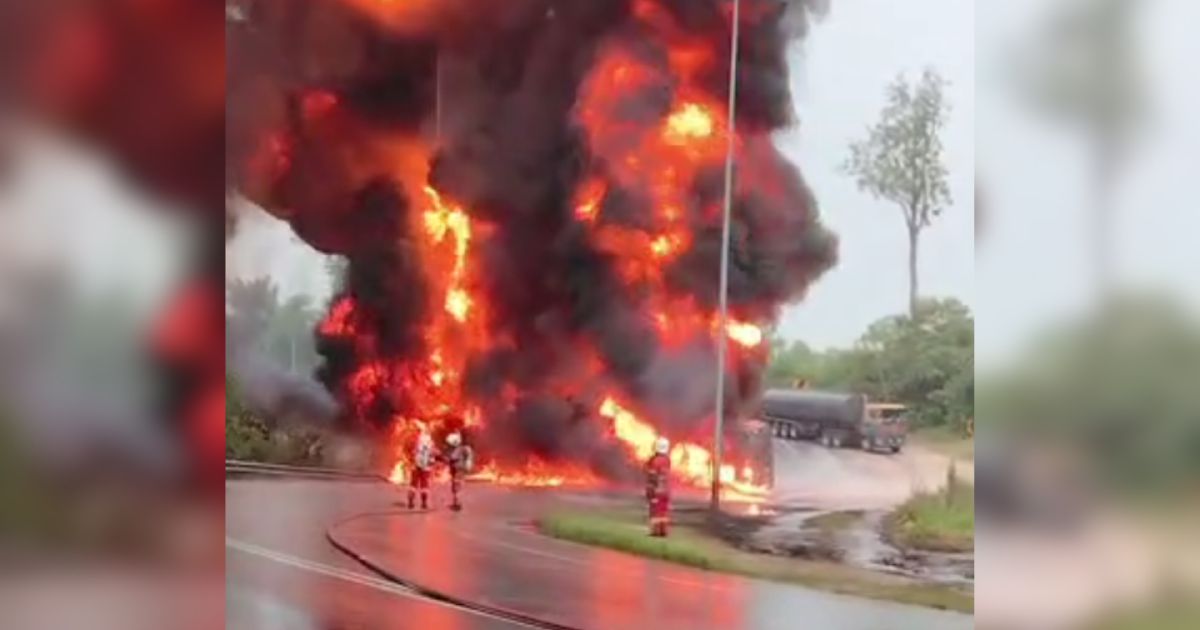
A fuel tanker driver involved in a fatal road accident near Temerloh remains in police custody, with authorities ordering his four-day remand to facilitate ongoing investigations into the collision that claimed two lives. The incident, which occurred at Km9 of Jalan Temerloh-Triang adjacent to Kampung Lebak, resulted in the death of both a mother and her young son, marking another tragedy on Malaysia's highway network.
The remand order represents a critical phase in the investigation process, allowing police to conduct detailed interviews with the suspect and reconstruct the sequence of events that led to the devastating crash. During this period, detectives will examine evidence collected from the accident scene, review any available dashcam or surveillance footage, and assess the mechanical condition of the fuel tanker involved in the collision.
Fatal accidents involving commercial vehicles such as fuel tankers remain a persistent concern on Malaysian roads, particularly on inter-town routes like the Temerloh-Triang corridor. These heavily-laden vehicles, which often travel at considerable speed despite their substantial mass, present heightened risks to other road users when driver fatigue, mechanical failure, or momentary lapses in concentration occur. The Pahang state road has witnessed numerous incidents over recent years, underscoring the ongoing challenge of managing traffic safety in areas with mixed light and heavy vehicle usage.
The deaths of the mother and son represent a painful reminder of how quickly ordinary journeys can transform into tragedy. Such incidents ripple through families and communities, leaving behind grieving relatives and unanswered questions about what went wrong in those final moments. Investigators will focus on determining whether speed, vehicle maintenance issues, driver fitness, or external factors contributed to the collision.
Malaysian authorities routinely examine multiple factors in commercial vehicle accidents, including driver licensing compliance, working hours regulations, vehicle roadworthiness certificates, and adherence to transport safety standards. The fuel tanker industry operates under specific regulatory frameworks designed to prevent hazardous goods incidents, and any breach of these protocols will form part of the investigation's scope.
The four-day remand period allows investigators to establish a factual timeline of events, interview witnesses, and gather forensic evidence from the collision site. Police will also coordinate with the Road Transport Department and other relevant agencies to determine whether any traffic laws or vehicle safety regulations were breached. The Temerloh-Triang route, despite its importance for regional connectivity, has occasionally featured in accident statistics that prompt calls for enhanced safety measures.
For Malaysian drivers, such incidents serve as sobering reminders of the unpredictability of road travel and the importance of defensive driving practices. The presence of commercial vehicles on highways demands heightened vigilance from private motorists, particularly regarding safe following distances, speed adaptation to traffic conditions, and awareness of blind spots around larger vehicles.
Once the remand period concludes, prosecutors will evaluate the evidence compiled by the investigating officer to determine whether charges will be filed against the driver. The nature of these charges will depend on findings regarding causation, ranging from negligence to potential more serious traffic offenses. The outcome of this case may also influence discussions about driver training standards, fatigue management in the haulage industry, and highway safety infrastructure improvements.
The incident underscores broader concerns about road safety in Pahang and similar states where trunk roads carry significant traffic volumes mixing commercial and private vehicles. Advocates for transport safety continue to push for stricter enforcement of speed limits, mandatory rest periods for long-distance drivers, and improved maintenance standards for commercial fleets. The human cost of road accidents—measured in lost lives and shattered families—provides the ultimate justification for such efforts.
As investigations proceed, the focus remains on establishing the precise circumstances that led to this tragedy. Whether mechanical failure, human error, or a combination of factors played a role, the investigation's findings will be crucial for both the immediate justice process and the broader objective of preventing similar occurrences on Malaysian roads. The remand order gives investigators the time necessary to build a comprehensive case while the community grapples with the loss of two lives in a senseless highway collision.

