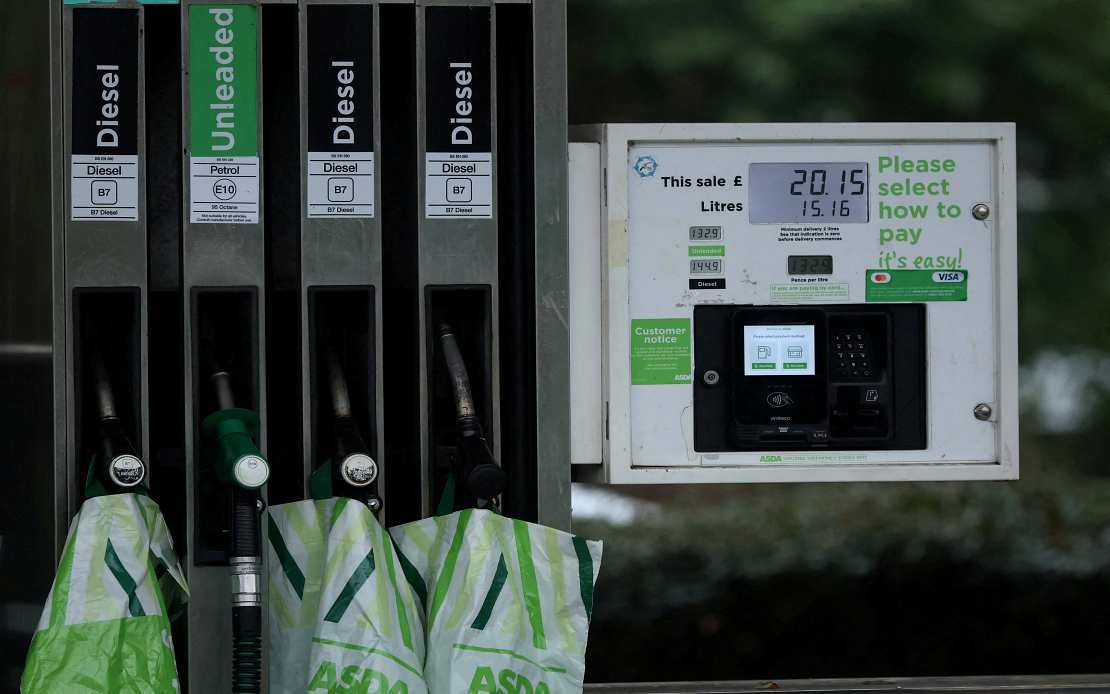
Fuel theft across the United Kingdom has reached alarming proportions in the months following the onset of the Iran conflict, with analysis showing that motorists are now absconding with nearly £200,000 worth of petrol and diesel daily from forecourts nationwide. The trend underscores the severe impact that geopolitical disruptions to global energy supplies are having on consumer behaviour and retail crime, a concern that carries particular relevance for Malaysian and Southeast Asian observers given the region's dependence on stable energy markets.
According to Forecourt Eye, a company specialising in fuel theft prevention, the five-month period following the conflict's commencement on 28 February witnessed a 20 per cent surge in recorded fuel theft incidents compared to the preceding five months. However, the financial impact has proven even more dramatic: the monetary value of stolen fuel has climbed by 48 per cent over the same timeframe, reaching an estimated daily average loss of £194,000 across the UK's 8,359 petrol pumps. This disparity between incident frequency and monetary loss reflects the sharply elevated prices at which fuel is now being stolen, fundamentally altering the economics of retail crime at forecourts.
The underlying driver of this criminal surge is plainly visible on pump displays across Britain. Petrol prices have risen to 160 pence per litre, approximately 27 pence above pre-conflict levels and marking a three-and-a-half-year high. Diesel has experienced even steeper increases, climbing 37 pence per litre to stand at 179 pence. For many motorists operating on constrained household budgets, these incremental daily costs translate into substantial monthly expenses, creating powerful incentives to avoid payment altogether. The pattern demonstrates how energy price shocks rapidly cascade into secondary social impacts, a lesson worth noting as Asian energy markets remain vulnerable to similar disruptions.
Analysis of offender demographics reveals a notable shift in who is committing these crimes. First-time offenders accounted for a 23 per cent increase in incidents and a 26 per cent rise in actual fuel volumes stolen, compared with 17 per cent and 20 per cent increases respectively among repeat offenders. This pattern suggests that fuel theft is no longer concentrated among habitual criminals but has broadened into the broader population facing financial strain. Two distinct behavioural categories drive the thefts: drive-offs, where motorists simply depart without any pretence of payment, and no-means-of-payment incidents, where customers complete their refuelling before claiming inability to settle their account.
The human cost of this surge extends beyond mere financial loss for forecourt operators. Gordon Balmer, executive director of the Petrol Retailers Association representing independent petrol stations, reports that members are experiencing escalating abuse and aggression from customers, directed at staff members who bear no responsibility for pricing decisions. The psychological toll on forecourt workers, combined with the physical risk involved in confrontations, represents a largely invisible but significant cost of the energy crisis. This interpersonal dimension adds texture to what might otherwise appear as a purely economic problem.
Ben Lawrence, director of Lawrences Garages, which operates five petrol stations in Norfolk and Hampshire, articulates a crucial distinction often lost in broader discussions of fuel theft. Many consumers incorrectly assume that all branded forecourts—particularly those displaying logos of major energy corporations such as BP and Shell—are directly operated by these multinational companies. In reality, most are franchised to independent operators, meaning when a customer drives away without paying for £80 or £90 worth of fuel, the loss strikes small business proprietors rather than distant oil giants. This misperception likely contributes to moral justification that some offenders construct for their actions, embedding the problem in a broader context of public anger directed at perceived corporate profiteering during energy crises.
The profile of fuel thieves has fundamentally changed according to industry observers. Historically, such crimes were predominantly committed by individuals already engaged in broader criminal activities. Lawrence notes that rising costs of living have democratised fuel theft, bringing it within the scope of people who would not ordinarily engage in criminal behaviour. This transformation suggests that the issue reflects genuine financial desperation among British households rather than opportunistic criminality by organised networks. For policymakers, the implication is sobering: energy affordability challenges drive ordinary citizens toward illegal action.
Forecourt operators are responding to this criminal wave through technological investment and inter-industry coordination. Forecourt Eye is partnering with Facewatch, a crime reporting and management platform, to provide participating stations with free access to technology designed to simplify the recording of fuel thefts, shop-related crimes, and other criminal incidents. The initiative extends beyond simple record-keeping: participating retailers have the option to join a live facial recognition network operated by Facewatch, which would alert them to known offenders attempting to return to their stations. Michelle Henchoz, Forecourt Eye's managing director, emphasises that as offending becomes increasingly organised and sophisticated, operators require integrated technological solutions capable of protecting both forecourts and associated convenience stores.
Gordon Balmer's endorsement of these technological approaches reflects industry consensus that crime prevention measures warrant support. Bringing together technologies enabling retailers to prevent crime, manage incidents as they unfold, and facilitate subsequent police investigations represents progress for an industry facing mounting pressures. The adoption of such systems also signals broader changes in how retail businesses confront organised crime, moving beyond simple deterrence toward intelligence gathering and offender identification.
For Malaysian and Southeast Asian observers, the British experience offers several cautionary lessons. First, energy price shocks propagate rapidly through consumer behaviour and social stability, extending far beyond simple inflation effects. Second, geopolitical disruptions to global energy supplies create cascading secondary consequences that may prove more economically damaging than the immediate supply constraints themselves. Third, technological solutions, while valuable, cannot substitute for addressing underlying affordability challenges that drive criminal behaviour. As Southeast Asian economies remain tightly integrated into global energy markets and vulnerable to Middle Eastern geopolitical volatility, understanding how energy crises destabilise social order warrants serious policy attention from regional governments concerned with maintaining stable, law-abiding communities.

