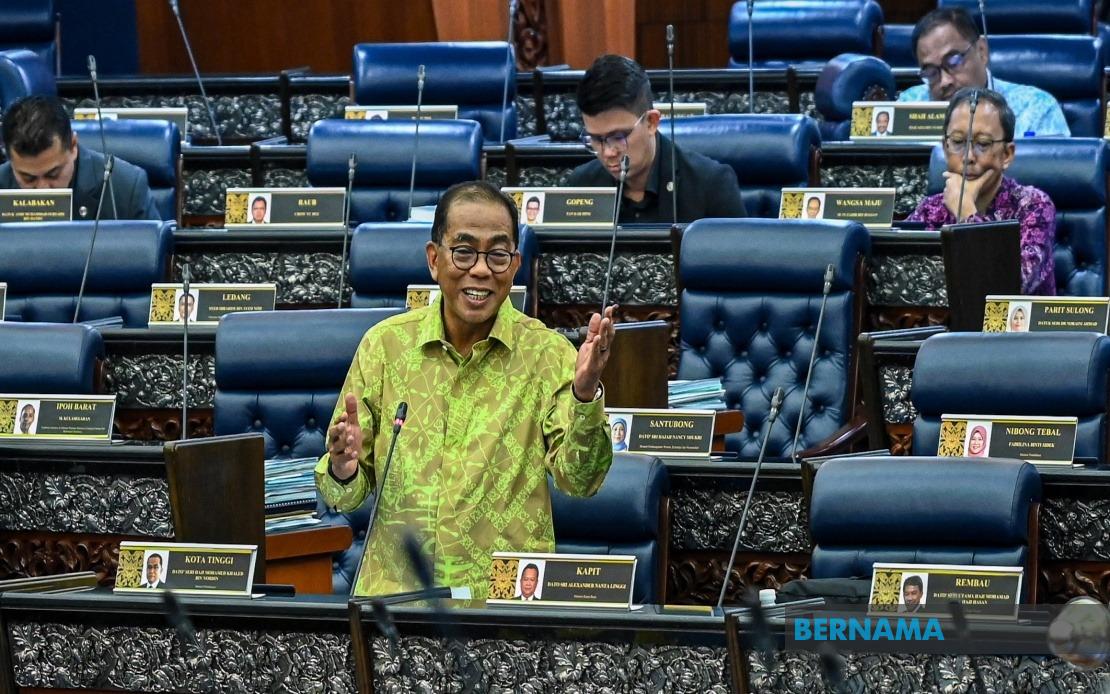
The Defence Ministry is on track to deliver a comprehensive investigation report on July 23 regarding the fatal grenade explosion that occurred at Hobart Camp Firing Range in Gurun, Kedah last month, Defence Minister Datuk Seri Mohamed Khaled Nordin announced in Parliament today. The incident, which took place on June 16 during a Combat Enhancement Training exercise, resulted in the deaths of Lance Corporal Siti Khadijah Sungip and Sergeant Norazmi Abu Bakar, both of whom sustained catastrophic injuries while conducting operations inside a bunker.
The inquiry process has proven more complex than initially anticipated. The Army established a board of inquiry the day after the incident on June 17, 2026, and submitted preliminary findings to the 2nd Division Headquarters and Army Western Field Command Headquarters for review. When the ministry received the initial report on July 13, officials identified significant gaps requiring further investigation. Rather than rushing toward preliminary conclusions, authorities decided to recall witnesses and potentially gather additional testimony to ensure the investigation meets the rigorous standards necessary for determining the precise cause of the explosion.
Mohammad Khaled's decision to extend the inquiry timeline reflects the gravity of the situation and the ministry's commitment to transparency. In his response to a parliamentary question from Datuk Mohd Isam Mohd Isa, the Defence Minister stressed that a thorough examination of technical aspects, established procedures, and witness statements is essential before drawing final conclusions. This approach acknowledges that deficiencies in the initial investigation could undermine public confidence and potentially mask systemic safety failures within military training protocols.
The timing of the incident proved particularly tragic. The grenade explosion occurred at approximately 10:57 am on June 16 during what should have been a routine training exercise. Both victims were transported immediately to Sultan Abdul Halim Hospital in Sungai Petani, but their injuries were too severe for medical intervention. The loss of life during a training scenario—rather than combat operations—has intensified scrutiny of safety measures and procedural compliance within Malaysia's Armed Forces.
In immediate response to the tragedy, Army Chief General Tan Sri Azhan Md Othman implemented decisive precautionary measures. All grenade-throwing exercises across the armed forces were temporarily suspended pending the outcome of the investigation. Additionally, a comprehensive special inspection was ordered of all remaining grenades held by the 1st Squadron of the Royal Engineer Regiment, the unit directly involved in the incident. These actions demonstrate official recognition that the explosion may reflect broader safety concerns rather than an isolated accident.
Beyond the investigation itself, the Defence Ministry has initiated a series of preventive measures designed to strengthen safety culture within military training environments. Installation of closed-circuit television cameras at firing ranges will create permanent records of training activities, enabling post-incident analysis and accountability. Body-worn cameras for personnel directly involved in explosive training will provide additional documentation from operator perspectives. These technological interventions address the challenge of reconstructing events when accidents occur in inherently high-risk training scenarios.
Perhaps most significantly, the ministry is establishing a casting policy for ammunition and explosives that will track service life and establish replacement schedules based on age and degradation. This administrative measure reflects recognition that grenade malfunctions or deterioration could contribute to unexplained explosions. The policy will require systematic tracking of each round's manufacture date and periodic inspection intervals, moving beyond reactive management toward predictive maintenance protocols.
For Malaysian families of military personnel and the broader defence community, the investigation's scope carries profound implications. The grenade explosion represents a rare but catastrophic failure within one of Southeast Asia's more professionalized armed forces. Understanding precisely what transpired—whether equipment failure, procedural breach, or training protocol deficiency—will inform safety improvements with potential applications across regional defence establishments. Thailand, Indonesia, Singapore, and other nations with similar conscription or volunteer military training programs will likely monitor the investigation's findings.
The parliamentary context of this announcement underscores political accountability for military safety. Mohamed Khaled's detailed response to Mohd Isam Mohd Isa demonstrates that opposition lawmakers maintain meaningful oversight capacity regarding defence operations. The fact that investigation timelines and safety measures receive parliamentary scrutiny reflects Malaysia's democratic institutional frameworks, distinguishing the country from several regional peers where such incidents might remain opaque to public discourse.
The July 23 deadline carries both practical and symbolic weight. Practically, it represents the ministry's confidence that additional witness testimonies and technical analysis will be completed within one week. Symbolically, it signals official commitment to providing the bereaved families and the public with authoritative answers rather than indefinite uncertainty. In military organizations worldwide, fatal training accidents trigger complex investigations balancing thoroughness against the pressure for rapid closure.
As the investigation enters its final phase, attention will focus on what systemic factors emerge. Did supervision protocols prove inadequate? Were grenades properly stored and maintained? Did training procedures deviate from established standards? Or does the explosion represent an unpredictable equipment malfunction that no reasonable precaution could have prevented? The answers will likely reshape how Malaysia's Armed Forces approach explosive training and may influence defence procurement and maintenance standards throughout the region.

