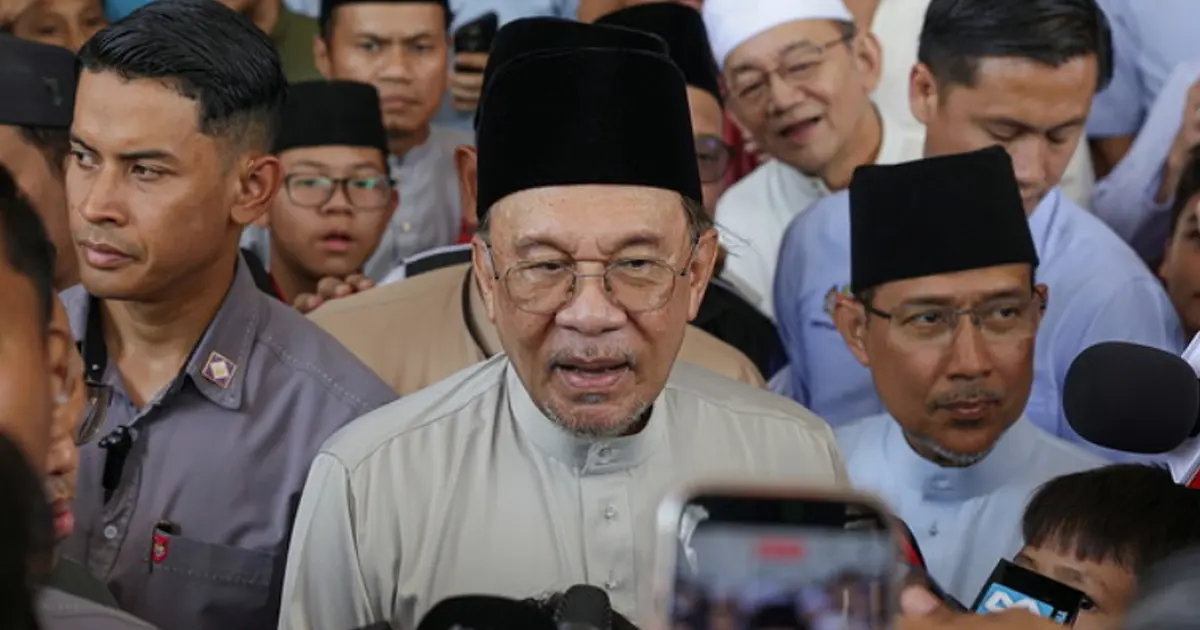
Prime Minister Anwar Ibrahim has moved to dispel speculation about the scope and integrity of the Royal Commission of Inquiry into Tabung Haji, announcing that the entire report has been made public without editorial intervention or suppression of content. The confirmation addresses longstanding concerns about governmental transparency and accountability regarding the hajj pilgrimage fund's management, a matter of considerable significance to Malaysia's Muslim-majority population and international observers monitoring governance standards in the region.
Anwar's assertion that no censorship or modifications were imposed on the RCI report signals an important moment in Malaysia's trajectory towards institutional accountability. The statement carries particular weight given the historical context of Malaysian governance, where questions about selective disclosure and institutional independence have periodically dominated public discourse. The release of the unabridged report demonstrates an apparent commitment to confronting institutional weaknesses rather than obscuring them through selective information management.
Tabung Haji, formally known as the Pilgrimage Fund Board, holds extraordinary significance within Malaysian society as the institution entrusted with managing savings and investments from millions of Muslims preparing for their hajj obligations. The fund's financial health directly impacts the retirement security and religious aspirations of ordinary Malaysians, making its governance a matter extending far beyond technocratic concerns into the realm of public trust and social welfare. Controversies surrounding Tabung Haji's management have periodically erupted, with allegations of mismanagement, inadequate oversight, and questionable investment decisions generating public concern and parliamentary scrutiny.
The establishment of the Royal Commission of Inquiry represented a deliberate institutional response to mounting concerns about Tabung Haji's operational practices and financial performance. Such commissions typically carry significant investigative powers and are tasked with examining systemic issues, identifying failures in institutional frameworks, and recommending corrective measures. The decision to commission such an inquiry reflected acknowledgment that questions about the fund's stewardship warranted sustained, independent examination rather than routine administrative review.
The timing of the report's full release carries implications for Malaysia's governance architecture. International observers and regional governments increasingly scrutinise how Southeast Asian nations manage institutional accountability and respond to public sector challenges. Malaysia's approach to the Tabung Haji investigation and the transparency of its findings could influence perceptions of the country's commitment to institutional reform and good governance standards. The unredacted publication suggests receptiveness to critical examination of longstanding institutional practices.
For individual savers within Tabung Haji, the availability of a comprehensive RCI report enables informed assessment of the fund's past performance and future reliability. Millions of Malaysian Muslims have accumulated savings through Tabung Haji, viewing it as both a religious obligation facilitation mechanism and an investment vehicle. Access to authoritative, unfiltered findings about the fund's management allows savers and their families to make informed decisions regarding their participation and long-term financial planning around hajj participation and retirement.
The confirmation of unedited publication also carries procedural significance for Malaysia's investigative and oversight institutions. Royal Commissions derive their legitimacy and effectiveness from the perception that their findings remain insulated from political manipulation or institutional pressure to soften inconvenient conclusions. When reports emerge unaltered, it reinforces confidence in the investigative process itself and encourages institutions to commission similar inquiries without apprehension that findings will be substantially modified before public release. This dynamic potentially strengthens Malaysia's institutional capacity for self-examination and reform.
The Malaysian public and opposition political figures have periodically questioned whether critical institutional reports faced suppression or substantial revision before release. The explicit statement that no censorship occurred on the Tabung Haji RCI report represents a direct response to such skepticism. However, observers note that the mere absence of censorship does not necessarily resolve all questions about investigative thoroughness or institutional receptiveness to implementing recommendations that might require substantial policy shifts or administrative reorganisation.
Regional peers within Southeast Asia face similar challenges regarding institutional accountability and public sector governance. Malaysia's handling of the Tabung Haji inquiry may provide precedent or illustrative examples for neighbouring nations grappling with equivalent issues regarding sovereign wealth funds, religious institution governance, or public finance oversight. The report's publication without redactions could influence regional discussions about best practices in institutional transparency and accountability frameworks.
Implementation of the RCI's recommendations now emerges as the critical next phase. Confirming that the report has been published without modification addresses concerns about the disclosure process itself, but substantive change will require government and institutional commitment to addressing whatever failings the inquiry identified. The report's findings likely contain specific recommendations for structural reform, enhanced oversight mechanisms, or operational modifications. The measure of genuine institutional responsiveness will manifest in how comprehensively and expeditiously such recommendations are implemented across Tabung Haji's governance and operational structures.
For Malaysian Muslims planning hajj journeys and depositing savings with Tabung Haji, the unredacted report provides essential transparency about the institution managing their resources during a spiritually and financially significant life transition. The ability to access authoritative findings about the fund's practices enables informed participation in religious obligations without unnecessary anxiety about institutional reliability. This transparency reinforces public confidence in Malaysia's institutional willingness to examine performance critically and communicate findings candidly.

