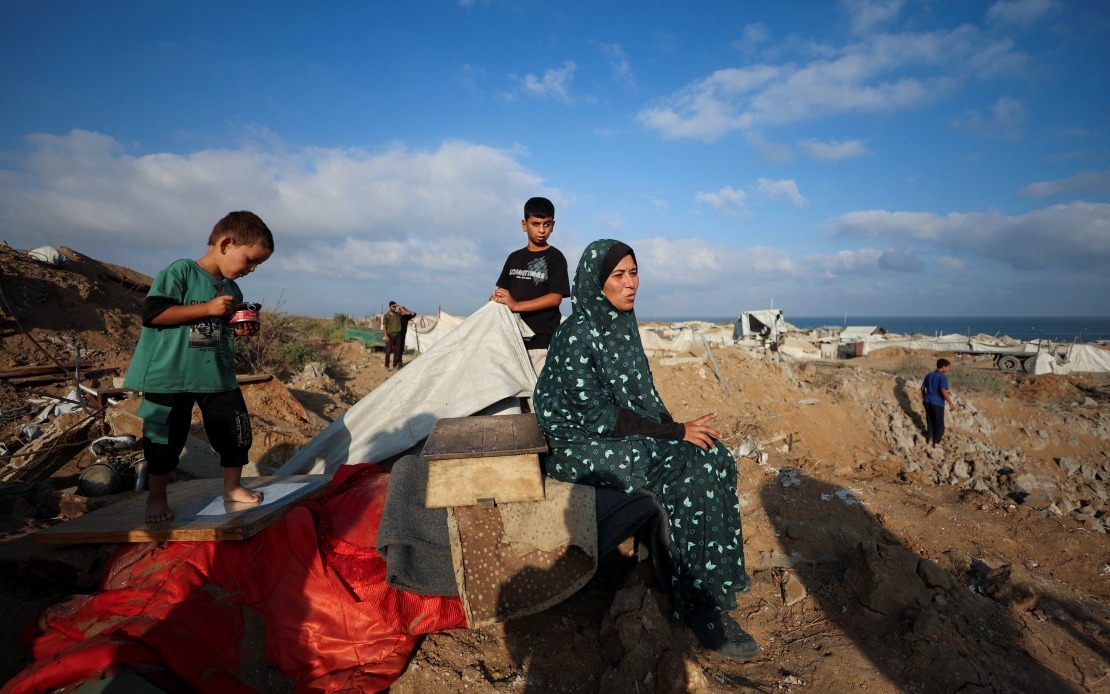
The humanitarian situation in Gaza remains precarious, with projections showing a marked deterioration in food security as the year progresses. According to the latest Integrated Food Security Phase Classification analysis released Thursday, approximately 1.4 million residents are expected to experience what experts classify as "high levels of acute food insecurity" through the end of 2026. This represents a significant increase from the 1.2 million people recorded during the mid-April through June assessment period, painting a troubling picture of a population sliding back towards crisis conditions despite recent intervention efforts.
The scale of the emergency cannot be overstated in demographic terms. The IPC's projections indicate that two-thirds of Gaza's entire population—67 per cent—will find themselves in either crisis conditions or worse by year-end. Within this broader figure, approximately 212,000 individuals are expected to remain classified in the emergency phase, the second-highest level on the food security scale. Most notably, all five governorates in the territory have already been classified as facing crisis-level conditions, indicating that the problem is not concentrated in specific areas but rather pervasive across the entire region.
The deterioration occurs despite what appeared to be meaningful progress in the months following the October 2025 ceasefire agreement. The expanded delivery of humanitarian assistance in that period did yield tangible improvements, with food aid reaching approximately 1.49 million people in May alone. These gains suggested that a sustained commitment to humanitarian support could stabilize the situation and gradually rebuild food security. However, the current projections reveal that these improvements may have been temporary respites rather than the foundation for lasting recovery.
Several structural factors are undermining the sustainability of any gains achieved thus far. Humanitarian rations, even when distributed, remain insufficient to meet basic nutritional requirements across affected populations. More fundamentally, the collapse of economic livelihoods has left the vast majority of Gaza's households without any viable income source. The analysis reveals that 83 per cent of families report having absolutely no means of earning income, forcing them into almost total dependence on external humanitarian assistance for their survival. This dependency creates an extremely fragile situation where any disruption to aid flows immediately translates into acute hunger.
Precisely such disruptions appear to be occurring. The IPC warns that the humanitarian assistance reaching Gaza has contracted significantly since February, driven primarily by funding constraints that limit the ability of international organizations to sustain operations at previous levels. These funding pressures have created what researchers describe as a "highly fragile" recovery, vulnerable to reversal. The uncertainty surrounding how international aid organizations will be able to continue operating in the coming months adds another layer of unpredictability to an already dire situation.
The scale of the humanitarian need without external intervention is staggering. Should humanitarian food assistance cease entirely, the IPC estimates that approximately 1.9 million people—roughly 90 per cent of Gaza's total population—would face high levels of acute food insecurity through December. This figure underscores the extent to which the entire population has become dependent on aid delivery and the catastrophic consequences that would follow any complete breakdown in the humanitarian pipeline. The difference between the current projection of 1.4 million and this counterfactual scenario of 1.9 million represents the full scope of what humanitarian assistance is currently preventing.
The nutritional crisis extends beyond generalized food insecurity to affect the most vulnerable demographics. Children under five represent a particularly concerning population, with projections suggesting that 74,200 youngsters in this age group will require treatment for acute malnutrition by April 2027. Among these, 11,432 cases are expected to be classified as severe malnutrition, a condition that carries serious long-term developmental consequences if not addressed promptly. Simultaneously, approximately 24,600 pregnant and breastfeeding women have been identified as requiring urgent nutritional support, highlighting how the crisis affects reproductive health and infant development prospects.
The IPC's assessment offers three critical recommendations to prevent the situation from worsening further. First, sustained humanitarian access must be maintained and guaranteed, requiring donor countries and organizations to provide consistent funding commitments rather than the episodic support that has characterized recent months. Second, nutrition-specific programs must be expanded and targeted toward the most vulnerable populations, particularly young children and women of reproductive age. Third—and perhaps most fundamentally—a permanent cessation of hostilities is deemed essential, as the uncertainty and disruption created by ongoing conflict inevitably hampers both humanitarian delivery and the reconstruction of civilian livelihoods.
For Southeast Asian observers and policymakers, this crisis carries implications extending beyond humanitarian concern. The situation demonstrates how protracted conflicts create dependencies on international assistance that can persist for years, straining global humanitarian systems and resources. The funding constraints now affecting Gaza relief operations reflect broader global competition for humanitarian dollars, a dynamic that directly affects the region's own vulnerability to humanitarian crises. As Southeast Asia confronts its own climate-related disasters and potential displacement challenges in coming years, the experience of Gaza underscores the importance of rapid conflict resolution and the prevention of situations where entire populations become aid-dependent.

