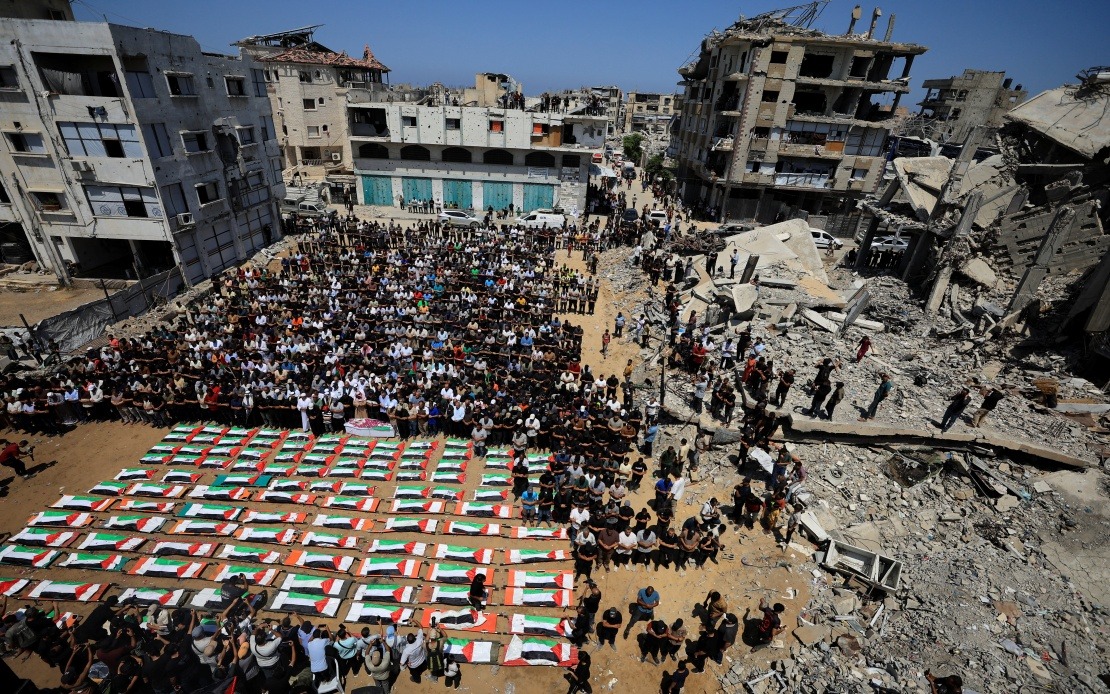
The protracted ceasefire negotiations in Gaza have created a grinding emotional toll on residents whose futures hinge on the outcome of diplomatic talks between Israeli officials and international mediators. For Saeed Helles, a 55-year-old father of five, the past weeks have oscillated between moments of cautious optimism and crushing disappointment as he waits for his 13-year-old daughter Saja to receive life-saving cancer treatment outside Gaza. The girl's medical condition cannot be treated adequately within the enclave, yet border restrictions remain in place, transforming what should be a straightforward evacuation into a hostage to political negotiations that extend far beyond her hospital bed.
When Hamas initially signalled acceptance of the international mediators' proposal for the second phase of the ceasefire agreement, Palestinian families dared to believe that an end to the conflict might finally be within grasp. The prospect of reopening border crossings held particular significance for those with urgent medical needs or those seeking to return to destroyed homes. Helles began preparing his daughter's travel documentation for Egypt, where she could continue her cancer treatment regimen. The family's tentative preparations reflected a broader sentiment across Gaza where millions have endured years of restrictions and conflict, clinging to any indication that normalcy might be restored. Yet this fragile optimism proved short-lived as fresh complications emerged from negotiations that appeared to be unravelling.
The latest round of complications emerged when the international mediation effort announced that its representative had met with Israeli Prime Minister Benjamin Netanyahu to discuss implementation conditions. According to official statements, Israeli forces would withdraw from certain positions only after Gaza's militant factions completed disarmament, including the dismantling of weapons caches and underground tunnel networks. This conditionality has created a fundamental impasse: Hamas insists that Israel must first halt military operations, fully withdraw, and implement the initial ceasefire phase before progress can be made on disarmament discussions. The gap between these positions exposes a core negotiating challenge that has undermined previous peace efforts in the region.
The human cost of these diplomatic stalemates extends far beyond individual cases like Saeed Helles and his daughter. According to medical administrators at the Gaza Cancer Centre, approximately 11,000 cancer patients within the enclave face acute medicine shortages that threaten their survival. An additional 4,000 patients who hold medical referrals for treatment abroad remain trapped by border restrictions, unable to access specialised care that could save their lives. The Centre's medical director has documented a grim reality: roughly three cancer patients die daily due to inadequate treatment facilities. This ongoing humanitarian crisis demonstrates how political negotiations directly translate into mortality rates for the most vulnerable populations, with each day of delay incrementally reducing survival chances for those dependent on external medical resources.
Beyond the medical emergency lies another dimension of Gaza's humanitarian challenge: the massive displacement crisis. Mariam Qudaih, a 46-year-old mother of four, was forced to flee her home in Khan Younis in southern Gaza when military operations devastated the area. Though her house now stands as rubble, she has clung to the hope that a ceasefire opening the second phase would permit returns, allowing displaced families to reclaim their land and begin reconstruction. She had begun reassuring her children that they might soon walk among the ruins of what was once their home, and they discussed excitedly the possibility of rebuilding even if they had to start in temporary shelters. The renewed uncertainty has shattered these fragile plans, returning families to a state of not knowing whether return is months, years, or indefinitely away.
Political analysts within Gaza have begun warning that the current negotiation structure may actually entrench Israeli control over the timeline for implementing subsequent ceasefire phases. Mustafa Ibrahim, a Gaza-based political observer, has noted that linking Israeli withdrawal to completed disarmament creates asymmetrical leverage in negotiations. Israel can effectively determine the pace of implementation by setting conditions on disarmament completion, potentially indefinitely delaying the restoration of normal border movement and humanitarian corridors. This structural imbalance within the negotiating framework raises fundamental questions about whether the proposed roadmap can deliver the transformative change that Palestinians desperately seek, or whether it may instead institutionalise prolonged restrictions under the guise of security requirements.
The cyclical nature of hope and disappointment has become the defining experience for Gaza's population across multiple constituencies. When international mediation efforts announce progress, Palestinians experience momentary relief and begin preparing for changes—gathering documents, discussing return plans with family members, envisioning resumed medical treatment. Each new announcement of complications or conditional requirements then collapses these tentative preparations, returning residents to a state of suspended uncertainty. This repeated emotional whiplash has corrosive effects beyond individual despair; it undermines collective confidence in any negotiated settlement and deepens skepticism about whether external mediation can deliver meaningful change to people whose circumstances demand urgent resolution.
The second phase of the ceasefire, as originally proposed, was intended to transition from temporary humanitarian relief toward permanent resolution, including discussion of weapons decommissioning and the framework for longer-term stability. However, the conflicting statements and implementation disputes suggest that the path toward this transition remains deeply contested. Hamas has publicly committed to approaching mediators' proposals with responsibility and positivity, yet the organisation simultaneously insists on preconditions—complete Israeli withdrawal and first-phase implementation—that Israel has not accepted. This deadlock suggests that the parties may not share a common understanding of what the second phase actually entails or how it should be sequenced, leaving international mediators attempting to bridge gaps that may be fundamentally structural rather than merely procedural.
For international observers monitoring the situation, Gaza's current trajectory carries troubling implications for broader regional stability and the prospects for sustainable peace agreements. When ceasefire negotiations drag on indefinitely while humanitarian conditions deteriorate, populations lose faith in diplomatic solutions and may increasingly support hardline actors who reject negotiated settlements entirely. The mounting death toll among cancer patients, the blocked returns of displaced families, and the psychological toll of repeated false hopes all represent pressure valves that eventually may explode into renewed violence. The international community's ability to broker meaningful agreements depends on demonstrating that negotiated settlements can deliver tangible improvements to affected populations within discernible timeframes, not months or years of uncertainty.

