Datuk Yusof Haslam, the producer of the highly anticipated Gerak Khas 2.0 series, has made the decisive move to eliminate an actress from the 26-episode police drama following her arrest on drug-related charges. The decision came just days after the show's premiere, marking an unprecedented disruption to the production undertaken by Skop Production. The move underscores the stringent standards the entertainment industry maintains regarding the public conduct of its talent, particularly when projects carry institutional weight or government association.
The arrested actress, who portrays a police inspector in the series, was taken into custody during a raid conducted by officers from the Dang Wangi district police headquarters on July 7. Subsequent testing revealed the presence of three types of drugs in her system, triggering immediate action from production management. Haslam confirmed that the discovery came as a shock to the production team, one that necessitated swift remedial action to protect the creative and institutional integrity of the project.
Despite the advanced stage of production, Haslam disclosed that the removal process proved manageable from a logistical standpoint. With approximately 90 percent of filming already concluded, the actress retained screen time in only two of the final four episodes—specifically episodes 23 and 24 out of the total 26. The production team opted to excise all remaining scenes featuring her character entirely, rather than attempt costly reshoots or narrative workarounds. This decision meant that viewers will not see the completion of her character's arc within the series.
The producer's response to inquiries about the dismissal carried both pragmatism and finality. When questioned about potential appeals or mitigating circumstances the actress might present, Haslam made clear that no negotiation remained possible. He informed her directly that further pleas or explanations would be futile, stating simply that the moment for remediation had passed. His position reflected a zero-tolerance approach to conduct that could undermine the show's credibility or that of its institutional partner, the Royal Malaysia Police.
Haslam acknowledged that the situation lay entirely beyond the production team's capacity to predict or prevent. The actress had worked on previous Skop Production projects without incident, presenting no prior warning signs that might have alerted management to potential problems. However, this history of professionalism provided no shield against the consequences of her current transgression. The producer emphasized that had the team possessed advance knowledge of her involvement with illegal substances, the casting decision would never have been made in the first instance.
The incident prompted Haslam to reflect on the broader challenge of maintaining professional standards across large creative teams. He noted that despite issuing consistent reminders to all cast and crew members regarding the importance of personal discipline and the reputational stakes involved, he ultimately possessed limited authority to police the private conduct of adult professionals. His comparison to parenting—that even vigilant supervision of ten children cannot guarantee that one or two will not encounter difficulties—captured the inherent limitations of a producer's reach beyond the filming set.
From the outset of the Gerak Khas 2.0 project, Haslam had established explicit expectations around conduct and lifestyle choices. He had specifically warned the arrested actress on two separate occasions to avoid involvement in any activities that could damage the drama's standing or that of the Royal Malaysia Police. These preemptive communications underscored management's awareness of the reputational risks associated with the project, given its portrayal of law enforcement. Yet despite these reminders, the warning evidently failed to deter the actress's choices.
The producer used the incident as a teaching moment for the entire cast and production crew, framing the dismissal as instructive rather than purely punitive. His message stressed that personal conduct carries consequences that extend beyond an individual, affecting colleagues and institutional partners who share association with a project. For emerging and established performers alike, the situation illustrated that a single serious mistake can rapidly erase accumulated professional goodwill and opportunity, regardless of prior accomplishments or reputation.
Haslam's stance also reflected broader societal expectations, particularly regarding female performers in Malaysia. He acknowledged that female entertainers face heightened public scrutiny and judgment compared to their male counterparts, a cultural reality that influences casting and retention decisions. This observation highlighted the asymmetrical standards that often persist in Asian entertainment industries, where personal conduct expectations for women frequently exceed those applied to men in equivalent roles. The producer's comments suggested that beyond the legal and contractual breaches involved, the actress's actions triggered a social dimension that further complicated her position.
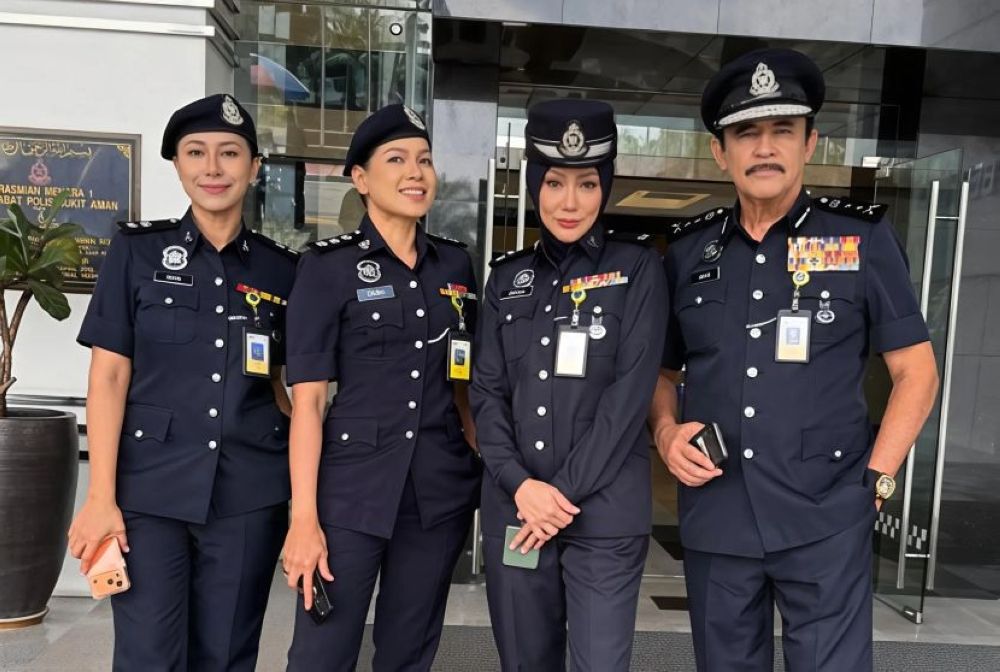
The Gerak Khas 2.0 series represents a significant entertainment undertaking, bringing together established talent including Hans Isaac, Erra Fazira, C. Kumaresan, and Salina Saibi, alongside police inspector characters portrayed by Tisha Shamsir, Nabiha Aimi, and Emily Elizabeth. The removal of one actress from this ensemble cast, while manageable due to the advanced production stage, nonetheless creates narrative gaps and raises questions about how the story will address her character's absence in the final episodes. The drama's alignment with a government institution—the Royal Malaysia Police—adds another layer to the production's sensitivity regarding cast conduct.
The incident highlights the precarious position occupied by entertainment professionals in Southeast Asia, where personal conduct remains subject to intense public and institutional scrutiny. For Malaysian viewers and industry observers, the Gerak Khas 2.0 situation serves as a reminder that entertainment contracts, institutional partnerships, and career advancement all depend not solely on talent and performance, but on maintaining personal standards that align with broader societal expectations. Haslam's uncompromising stance, while harsh, reflects the realities of a competitive industry where reputational management trumps individual circumstances.
Looking forward, the Gerak Khas 2.0 production will proceed toward completion without the arrested actress, with her eliminated scenes representing both a creative adjustment and a symbolic statement about accountability. The series will ultimately air with narrative discontinuities that viewers may notice, serving as an unintended documentary of the consequences that befell one performer. For the entertainment industry in Malaysia and the wider region, the case demonstrates that even advanced production stages and significant financial investments provide no protection against the swift, terminal dismissal of talent whose personal conduct creates institutional liability.

