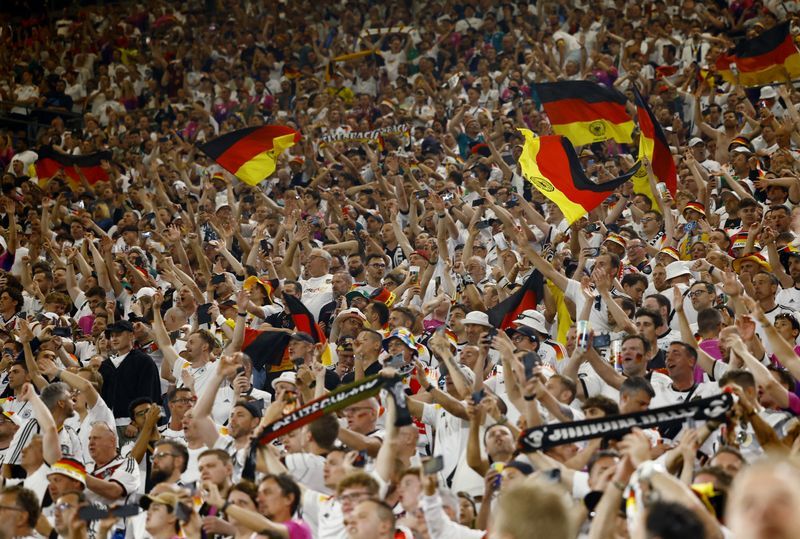
German law enforcement authorities have executed a series of coordinated raids across the country, with the Deutsche Fußball-Bund (DFB) soccer association's headquarters in Berlin among the targeted locations. The nationwide operation centres on an investigation into suspected irregularities in how tickets for Euro 2024 were distributed, according to reporting by Bild newspaper on Wednesday. The searches mark a significant development in scrutiny of one of Europe's major sporting events and raise questions about governance practices at Germany's football governing body.
The investigation involves multiple individuals under suspicion, including at least one German national and one French national, though authorities have not publicly disclosed the full scope of those being investigated. The involvement of individuals across different countries suggests the alleged violations may have cross-border dimensions, potentially implicating networks that extended beyond Germany's administrative boundaries. This international angle adds complexity to what prosecutors are treating as a matter of sufficient gravity to warrant coordinated enforcement action.
While official statements from police and prosecutorial authorities confirmed that searches were being conducted at several sites throughout Germany, they notably refrained from specifically naming the DFB as a target. This measured public communication stands in contrast to Bild's more explicit reporting, which identified the football association's offices as a location of interest. The divergence between official silence and media disclosure raises questions about what authorities may have discovered and how they intend to proceed with any potential charges.
Euro 2024, held in Germany earlier this year, represented a major undertaking for the DFB and German sporting institutions. The tournament's success depended heavily on logistics, including the fair and transparent distribution of tickets to fans across multiple nations. Any systemic problems with ticket allocation could have undermined public confidence in the event's integrity and the DFB's administrative competence. For Malaysian readers following European football, this situation underscores how even prestigious sporting organisations can face scrutiny over operational practices that might seem peripheral to the sport itself.
The timing of these raids, coming shortly after the conclusion of Euro 2024, suggests investigators may have been gathering intelligence and building their case during or immediately following the tournament. Such timing indicates this was not a routine matter but rather something that caught authorities' attention during the high-profile event itself. The decision to move forward with searches implies investigators had accumulated sufficient evidence to persuade prosecutors that violations had likely occurred and that further examination of records and communications at the DFB was warranted.
Ticket allocation for major sporting events has become an increasingly sensitive issue across Europe and globally. Previous controversies involving World Cups and Olympics have highlighted how distribution systems can be exploited for personal gain or used to provide preferential access to well-connected individuals or corporate interests. The focus on ticket procedures at the DFB reflects broader international attention to transparency and fairness in how access to major sporting spectacles is managed and controlled.
The DFB, as the governing body for football in Germany, holds considerable influence over how the sport is organised and represented nationally. Any credibility damage from allegations of administrative impropriety could have implications for the organisation's authority and public standing. Sponsorships, partnerships, and fan trust all depend to some extent on perceptions of institutional integrity. The current investigation therefore carries significance beyond the specific question of Euro 2024 ticket distribution.
For football enthusiasts in Southeast Asia, including Malaysia, these developments serve as a reminder that governance challenges in sport transcend geographic boundaries. Whether in Germany, England, or other football nations, questions about administrative integrity and fair dealing remain constant concerns for fans and regulators alike. The willingness of German authorities to investigate their own sporting institutions reflects standards of transparency and accountability that are increasingly expected of major organisations worldwide.
The investigation's direction and eventual outcomes will likely influence how future major sporting events manage ticket distribution systems. If violations are substantiated, authorities may recommend structural reforms designed to prevent similar occurrences. Conversely, if the investigation concludes without major findings, it could reinforce confidence in the processes used. Either way, the case demonstrates how modern sports governance occurs within a framework of legal scrutiny and institutional oversight that extends well beyond the pitch itself.

