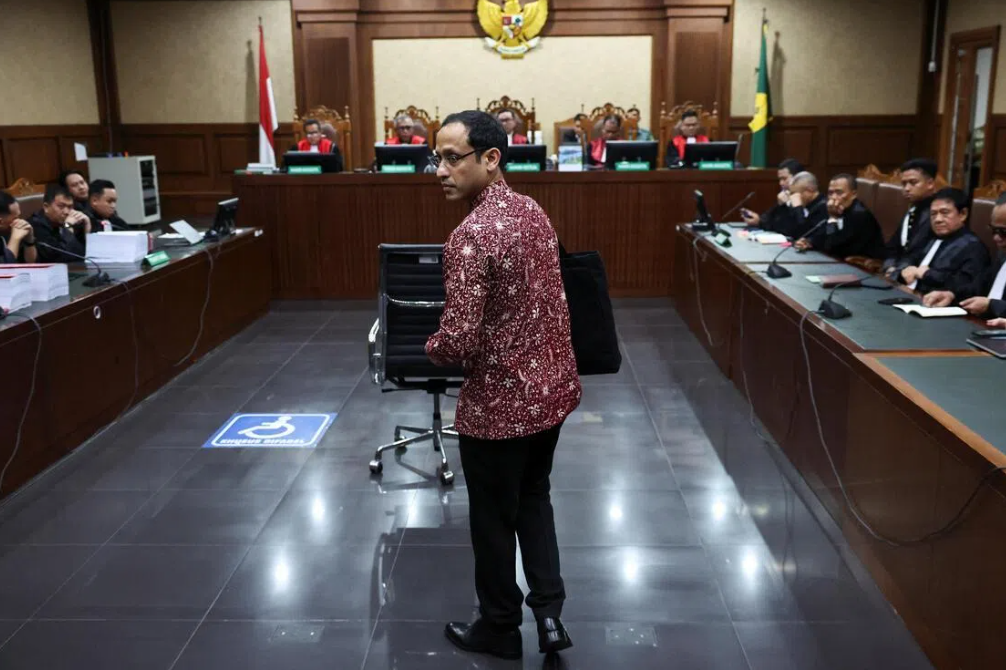
Indonesia's technology sector reeled on Tuesday as the Jakarta Corruption Court handed down a decade-long prison sentence to Nadiem Makarim, the visionary entrepreneur behind Southeast Asia's first unicorn start-up, for his role in a controversial school laptop acquisition programme during the Covid-19 pandemic. The court imposed an additional fine of 1 billion rupiah alongside a mandatory restitution payment of 809.6 billion rupiah, with a further five years of incarceration looming should Makarim fail to meet the financial obligations. This outcome represents perhaps the most significant downfall of any Indonesian technology leader in recent memory, transforming the once-celebrated symbol of a new generation of digital-savvy governance into a convicted felon.
The rapid ascent and equally dramatic collapse of Makarim's public fortunes underscores the vulnerability of even Indonesia's most celebrated entrepreneurs when they cross into politics. Before his appointment as education minister in 2019 under former president Joko Widodo, Makarim had built Gojek from a motorcycle taxi application into a diversified platform offering courier services, food delivery, and the GoPay digital payments system. By the time he entered government, Gojek's valuation had reached approximately $10 billion, establishing him as a poster child for Indonesian innovation and entrepreneurial ambition both domestically and across the diaspora.
At the heart of the prosecution's case lay allegations that Makarim had deliberately steered his ministry towards procuring around 1.1 million Chromebook laptops between 2020 and 2022, a period when Indonesian schools transitioned to emergency remote learning. The state prosecutors argued that this policy choice resulted in losses totalling 2.18 trillion rupiah and generated personal benefits to Makarim valued at approximately 809 billion rupiah through transactions routed through PT AKAB, Gojek's parent company. Prosecutors further suggested that Google's substantial investment in Gojek had influenced the procurement decision, though Google itself faced no charges and Makarim categorically denied the allegation throughout the proceedings.
Chief Judge Purwanto's pronouncement of guilt centred on judicial findings that Makarim had "consciously and intentionally directed" the Chromebook policy with motives that constituted "abuse of authority intended to unlawfully benefit certain parties." The five-judge panel characterised the defendant's conduct as particularly egregious because it allegedly violated the ministerial oath of office by prioritising the strategic business interests of his own corporation over the public good. This framing proved decisive, distinguishing the case from a simple matter of poor procurement planning and instead presenting it as a deliberate abuse of public trust for private gain.
The defence mounted by Makarim and his legal team rested on several foundational arguments that ultimately failed to convince the court. They contended that the Chromebook initiative had been pursued in good faith during one of Indonesia's most educationally disruptive periods, with approximately 97 per cent of the devices successfully delivered to some 77,000 schools by 2023. Critically, they maintained that Makarim had received no personal financial benefit from the programme and presented evidence that ministry studies conducted in 2018, before his appointment, had already flagged concerns about Chromebook effectiveness in remote and rural areas lacking adequate internet infrastructure. The defence also challenged the prosecution's interpretation of a pre-appointment group chat from August 2019, arguing it did not constitute proof of corrupt intent.
The trial itself became a remarkable cultural event in Indonesia, attracting unprecedented public attention and mobilising unusual forms of civic engagement. Dozens of Gojek drivers attended hearings to demonstrate solidarity, while court sessions were livestreamed, generating calls for organised social media watch parties. The proceedings received amicus curiae submissions supporting Makarim's case, reflecting his substantial symbolic importance to both the technology sector and a younger generation of Indonesians who viewed him as proof that talented outsiders could contribute meaningfully to national governance. In one particularly poignant moment, Makarim arrived at court wearing a Gojek driver jacket before changing into a blue batik shirt, a gesture that appeared designed to reassert his connection to the community that had made him famous.
Makarim's family background, marked by prominence and historical distinction, formed part of the narrative context surrounding the trial. His father, Nono Anwar Makarim, is a respected lawyer, while his maternal grandfather participated in Indonesia's independence struggle. This lineage positioned Makarim not merely as a businessman but as someone drawn from the ranks of Indonesia's establishment, which perhaps intensified scrutiny of his alleged transgressions. The court's guilty verdict thus carried implications extending beyond individual culpability to questions about whether Indonesia's elite would be held accountable by the judicial system.
In his final defence plea delivered on June 23, Makarim attempted to expand the case's significance beyond the specific procurement dispute. Addressing the judges directly, he framed the proceedings as a national referendum on Indonesia's commitment to encouraging talented professionals from outside the political establishment to enter public service. He posed a pointed question to the court: would young Indonesians and members of the diaspora still regard Indonesia as "safe" for public service given the outcome of his trial? This rhetorical manoeuvre sought to position his conviction not merely as punishment for an individual's misconduct but as a potential deterrent to future generations of reformers and innovators considering government roles.
The prosecutors had sought substantially harsher penalties, requesting an 18-year sentence, a 1 billion rupiah fine, and 5.6 trillion rupiah in restitution. The court's decision to impose a 10-year term instead, while still severe, suggested the judges either found mitigating factors in Makarim's case or determined that the prosecution's evidence, while sufficient to prove guilt, did not support the most extreme sentencing recommendations. The restitution figure of 809.6 billion rupiah notably corresponded precisely to the alleged personal benefits, indicating the court accepted the prosecution's calculation of ill-gotten gains without extending it to the broader claimed state losses of 2.18 trillion rupiah.
The implications of Makarim's conviction extend throughout Indonesia's technology sector and governance structures. The case demonstrates that even the most celebrated entrepreneurs face serious legal jeopardy when their commercial interests intersect with ministerial authority. For Southeast Asia more broadly, the trial illustrates the region's deepening institutional capacity to prosecute high-profile corruption cases involving powerful business figures, though questions persist regarding whether enforcement remains selective or truly impartial. The Chromebook programme itself, despite its controversial origins, achieved substantial practical distribution, leaving unresolved the question of whether a policy can be simultaneously corrupt in its genesis yet beneficial in its implementation.
On the eve of sentencing, Makarim issued a statement through his legal team's LinkedIn account, expressing continued faith in Indonesia's judicial process despite months of adversarial proceedings. His declaration that "after five months on trial, I still believe in justice" struck many observers as either a remarkable display of composure or perhaps a final attempt to appeal to younger Indonesians who might view his case as emblematic of whether the country's institutions genuinely function fairly. The conviction guarantees extended legal battles ahead, as appeals will almost certainly follow, meaning Indonesia's most celebrated technology entrepreneur will remain at the centre of national discourse regarding corruption, accountability, and the risks of bridging the gap between business success and public service.

