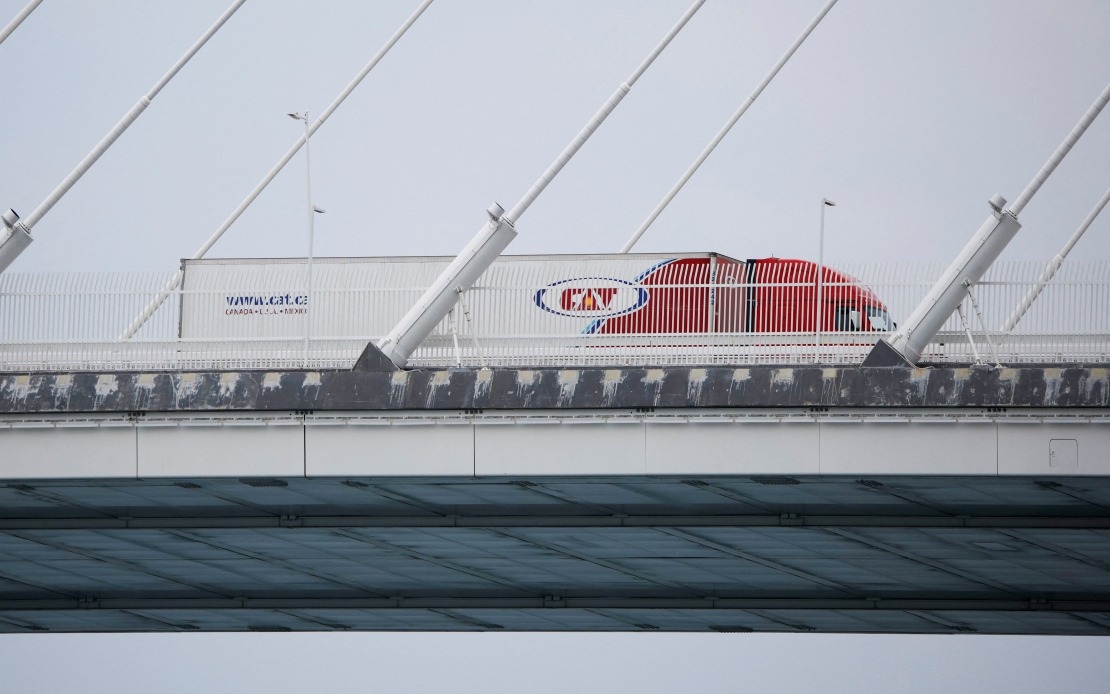
The Gordie Howe International Bridge, a major new transportation link between Michigan and Ontario, has officially begun operations with the first vehicles crossing into service this week, according to the Windsor-Detroit Bridge Authority. The infrastructure project, named after the legendary Canadian hockey player, represents a significant expansion of cross-border capacity between the two neighbouring jurisdictions and marks the completion of a multi-decade planning and construction effort.
Official opening celebrations took place on July 24, but the occasion was notably subdued compared to what might have been expected for such a major bilateral project. Canada proceeded with its own inaugural ceremony without participation from United States officials, reflecting underlying tensions in the countries' trading relationship. The decision to forego a joint opening reflected deteriorating diplomatic conditions between Ottawa and Washington, specifically stemming from threatened tariff escalations announced by the Trump administration.
The economic stakes surrounding this bridge are substantial. Canadian Prime Minister Mark Carney emphasized that the crossing will facilitate what amounts to an enormous volume of commercial activity, noting that roughly 300 billion Canadian dollars in cross-border trade flows annually between Ontario and Michigan. Converting that figure to US currency yields approximately 212 billion dollars, underscoring the critical importance of efficient border infrastructure for both regional and continental commerce. For Malaysian businesses with North American supply chains or investment interests in the region, understanding this trade corridor's significance is essential for assessing market dynamics and logistics strategies.
The bridge's opening comes against a backdrop of contentious trade negotiations and tariff disputes. President Donald Trump's administration had threatened to impose substantial additional duties—specifically 50 percent—on various Canadian goods, with implementation scheduled to begin in mid-August. These threats applied significant pressure on Canadian negotiators and fundamentally altered the terms under which the bridge would operate financially. The tariff threat essentially became leverage in broader discussions about border economics and bilateral trade arrangements.
Recognizing the weight of these pressures, Canada ultimately agreed to modify the financial structure governing the bridge's operations. Under the renegotiated arrangement, Canada will make annual economic participation payments to the United States equivalent to half of all net revenues generated through bridge and crossing operations. This commitment extends until 2041, representing a substantial long-term financial obligation. The payments will flow into the US-Canada Economic Development Fund, which is managed exclusively by the United States side of the arrangement.
The revised payment structure represents a significant concession by Ottawa. Rather than maintaining complete operational independence or a more balanced revenue-sharing model, Canada essentially committed to subsidizing American economic development through bridge operations. While both parties agreed that investment objectives would be determined through reasonable consensus and that the fund would theoretically benefit bilateral trade interests, the unilateral management by the US creates an asymmetry that favours American interests in deciding how revenue is deployed.
For Southeast Asian observers and business communities monitoring North American affairs, this arrangement illustrates several broader trends. First, it demonstrates how infrastructure projects can become entangled with trade negotiations and geopolitical positioning. The bridge's opening was no simple ribbon-cutting ceremony but rather emerged from complex power dynamics between trading partners. Second, it shows how major economic agreements can be renegotiated under political pressure, potentially creating uncertainty for parties relying on established terms. Third, it underscores the continuing centrality of US-Canada trade to continental economics, with even infrastructure projects becoming negotiating tools.
The Windsor-Detroit Bridge Authority celebrated the opening as marking the beginning of genuine cross-border connectivity for the travelling public. The organization noted that the bridge now serves multiple purposes—facilitating commuters heading to work, enabling family visits and tourism, and most importantly, supporting the movement of goods essential to integrated North American manufacturing and commerce. This last function proves particularly crucial given how interconnected supply chains have become across the continent, with components and finished goods regularly crossing borders multiple times during production processes.
The bridge's capacity assumes particular relevance for the automotive sector, which remains heavily concentrated in the Great Lakes region. Vehicle manufacturing, parts production, and distribution networks depend critically on seamless border crossing, and this new infrastructure potentially eases congestion at existing crossings such as the Ambassador Bridge and Detroit-Windsor Tunnel. For companies operating North American supply chains, the addition of crossing capacity offers alternatives that could reduce wait times and transportation costs, though the effectiveness will depend on how quickly commercial traffic patterns shift to utilize the new route.
The tariff dispute that shaped the bridge's financial terms remains unresolved at the broader level. The underlying tensions between Washington and Ottawa over trade balances, agricultural products, energy, and other goods suggest that this bridge agreement may represent only an interim resolution rather than a definitive settlement of trade issues. Malaysian companies with interests in North American trade should monitor how these disputes evolve, as changes in tariff regimes or trade relationships can have cascading effects throughout integrated supply chains, potentially affecting costs and market access across the continent.
From a Southeast Asian perspective, the Gordie Howe Bridge's opening and the tensions surrounding it offer important lessons about infrastructure development in contested or sensitive economic contexts. As the region contemplates its own cross-border connectivity projects and deepens economic integration, the US-Canada experience demonstrates that major infrastructure investments inevitably become intertwined with political relationships and economic power dynamics. Understanding these dynamics proves essential for anticipating potential complications and structuring arrangements that remain resilient across changing political circumstances.

