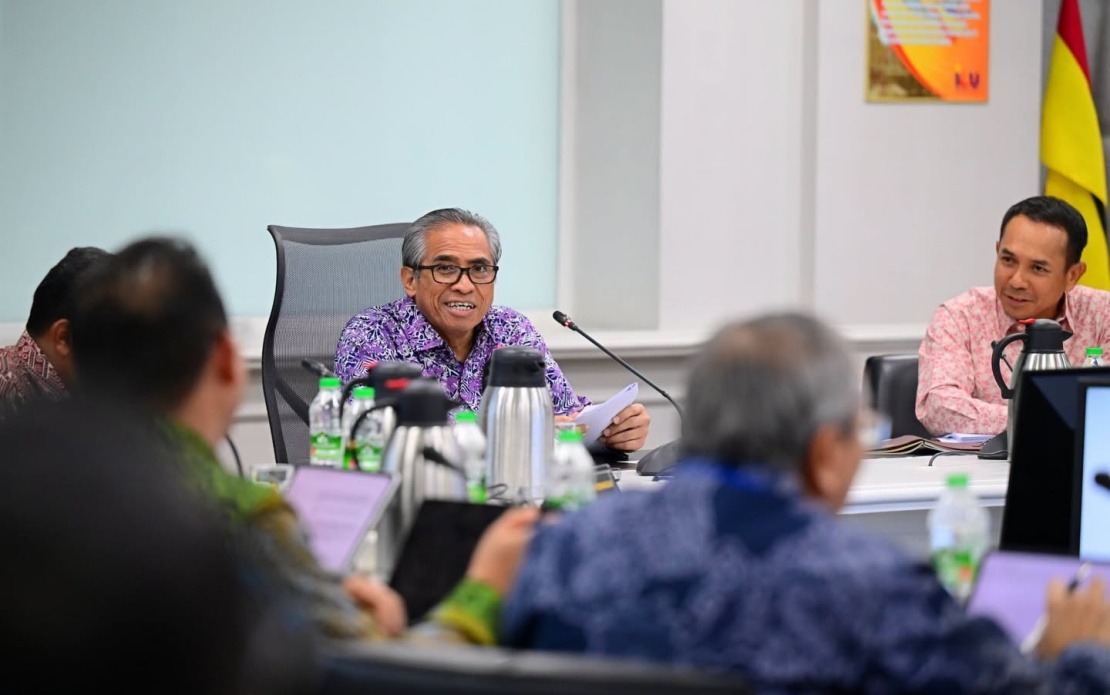
Tan Sri Shamsul Azri Abu Bakar, the Chief Secretary to the Government, has issued a comprehensive directive requiring all ministry secretaries-general to place immediate focus on the implementation of over 40,000 small-scale development initiatives distributed throughout the country. The announcement, made through a social media statement on June 25, underscores the government's strategic pivot towards delivering tangible benefits to communities through a portfolio of projects that officials characterise as achievable within tight timeframes.
The directive emerged from deliberations held during a National Development Action Committee meeting presided over by Shamsul Azri himself. Among the principal resolutions was an emphasis on accelerating what government officials term "low-hanging fruit" — projects that, while individually modest in scope, collectively represent significant infrastructure and service enhancement across Malaysian communities. This nomenclature reflects an administrative strategy of identifying quick-win initiatives that can demonstrate government effectiveness and improve living conditions without requiring protracted implementation periods.
Secretaries-general across all ministries now face explicit instructions to conduct regular site inspections, maintain rigorous oversight of project progress at ground level, and intervene swiftly to eliminate obstacles that might delay completion. This hands-on management approach represents a departure from traditional bureaucratic oversight mechanisms, embedding senior officials directly into project monitoring and problem-solving processes. The emphasis on fieldwork and direct engagement suggests recognition that implementation delays frequently stem from administrative bottlenecks rather than resource constraints.
The portfolio of projects identified spans multiple sectors reflecting grassroots infrastructure needs. Road maintenance and resurfacing projects address deteriorating transportation networks in both urban and rural areas. Drainage system upkeep tackles flooding vulnerabilities that plague numerous communities during monsoon seasons. Refurbishment of government residential quarters improves housing conditions for public servants. Educational infrastructure receives attention through classroom repairs and facility upgrades, addressing physical infrastructure deficits in Malaysian schools. Healthcare facilities modernisation focuses on upgrading equipment and infrastructure at clinics and medical centres. Complementary initiatives target public trading infrastructure, including improvements to hawker stalls and market facilities that form the backbone of Malaysia's informal economy.
Timeline projections indicate that the majority of these initiatives require only three to six months for completion, a substantially compressed delivery window compared to conventional infrastructure programmes. This accelerated schedule reflects both the modest technical requirements of individual projects and deliberate government policy to demonstrate rapid implementation capability. For ordinary Malaysians, this means infrastructure improvements touching daily life—better roads, improved school facilities, enhanced healthcare access—becoming reality within a calendar year rather than languishing in multi-year project cycles.
The strategic logic underlying this initiative carries broader implications for Malaysian governance and public administration. Rather than pursuing large-scale, capital-intensive megaprojects that demand extended planning, financing, and construction periods, the government is leveraging its existing infrastructure and human resources to address accumulated maintenance backlogs and community-level service deficiencies. This approach acknowledges budgetary constraints while maximising visible public benefit and citizen satisfaction through distributed implementation.
For Southeast Asian observers, Malaysia's initiative reflects regional trends in responsive governance and infrastructure democratisation. Governments across the region increasingly recognise that citizens gauge governmental performance not through grand visions but through functional daily infrastructure—accessible healthcare, navigable roads, functional public facilities. By systematising the identification and acceleration of such projects, Malaysia's approach offers a governance model emphasising service delivery efficiency over monumental development ambitions.
The directive's emphasis on ministry secretaries-general ownership creates accountability structures that extend administrative responsibility beyond project management units into senior leadership. By making secretaries-general personally responsible for progress and problem resolution, the government institutes direct political consequences for implementation failures. This structure potentially overcomes common Malaysian infrastructure implementation challenges where responsibility becomes diffused across multiple agencies and levels, diluting accountability.
Implementation success will test Malaysia's administrative capacity and inter-agency coordination mechanisms. Projects spanning multiple sectors—education, health, public works, trade and industry—require seamless cooperation among different government portfolios. The National Development Action Committee structure provides a formal mechanism for addressing coordination challenges, but sustained political commitment to resolving inter-departmental friction will prove essential to meeting the ambitious timeline.
The emphasis on community-proximate projects also reflects demographic and political realities in Malaysia. Voters respond tangibly to infrastructure improvements in their neighbourhoods, and such projects generate immediate visibility and political goodwill. The strategic timing of this initiative suggests governmental awareness that public infrastructure delivery remains a primary metric through which citizens evaluate governmental competence and responsiveness.
Monitoring mechanisms embedded in the directive—mandatory site visits and progress reporting—should generate concrete data on implementation velocity and sectoral performance. Such information becomes valuable for identifying systemic implementation barriers and refining administrative processes. If executed rigorously, this data collection could inform future infrastructure programming and resource allocation decisions across government.
The success of this 40,000-project initiative will ultimately depend on whether participating ministries translate directives into sustained operational focus. Bureaucratic inertia, resource constraints, and coordination complexities remain formidable obstacles to rapid, widespread implementation. However, the Chief Secretary's public commitment through social media documentation creates explicit tracking mechanisms and political accountability that were absent from previous infrastructure initiatives, potentially shifting implementation dynamics toward greater completion velocity and reduced project abandonment rates.

