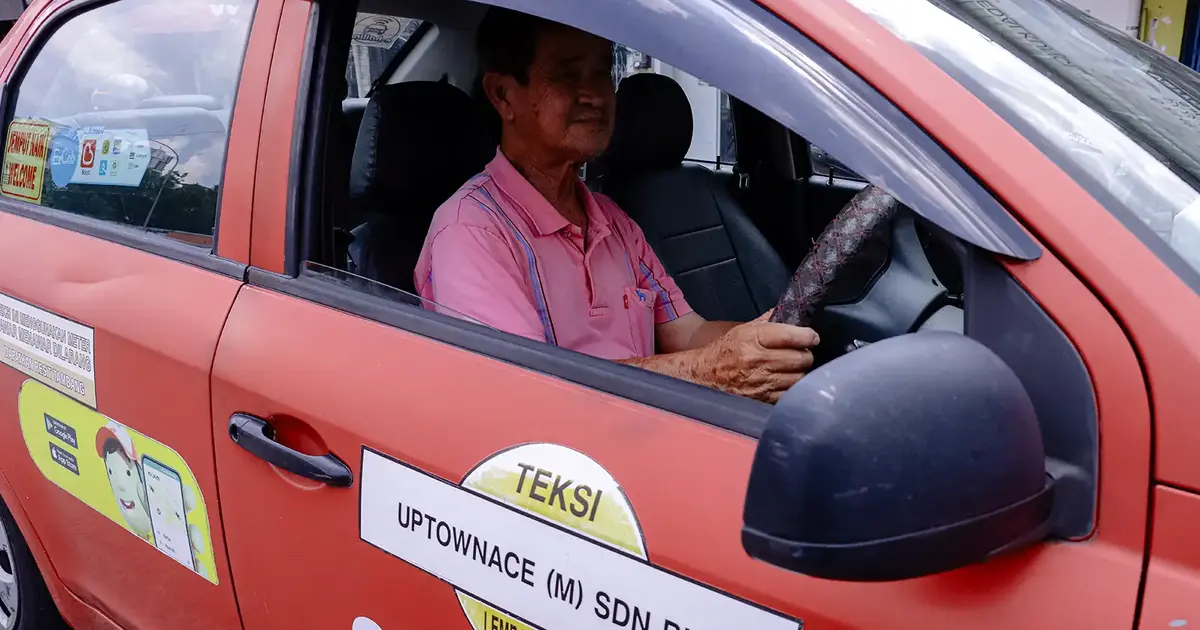
Prime Minister Anwar Ibrahim has announced a supplementary RM10 million funding package directed toward Malaysia's taxi driver community, underscoring the administration's commitment to supporting transport sector workers who face mounting operational pressures and income volatility. The allocation represents a targeted intervention designed to address specific hardships confronting drivers navigating an increasingly challenging economic landscape characterised by fuel price fluctuations, vehicle maintenance costs, and competition from ride-hailing platforms.
Anwar characterised taxi drivers as essential frontliners whose daily interactions with international tourists fundamentally shape global perceptions of Malaysia as a travel destination. This framing elevates the profession beyond mere service provision, positioning drivers as informal ambassadors who influence whether visitors develop positive associations with Malaysian hospitality, safety, and customer service standards. The prime minister's rhetoric reflects growing governmental recognition that transport sector reputation directly impacts Malaysia's tourism competitiveness, particularly as regional destinations compete aggressively for visitor arrivals and spending.
The timing of this allocation carries significance within Malaysia's broader economic recovery narrative. Following pandemic-related disruptions that devastated transport and tourism sectors, the government has progressively reintroduced support mechanisms alongside gradual market normalisation. This latest intervention suggests policymakers view taxi driver stability as instrumental to comprehensive tourism sector recovery, acknowledging that visitor experiences are fundamentally shaped by ground-level service quality and affordability of essential transport.
Taxi drivers have historically occupied a vulnerable position within Malaysia's transport ecosystem, operating as independent contractors or small fleet operators with limited bargaining power against fuel costs, insurance premiums, and vehicle depreciation. Unlike formal sector employees benefiting from structured compensation frameworks, drivers absorb economic shocks directly through reduced earnings. The RM10 million injection, while modest relative to aggregate transport sector needs, provides immediate relief channelled through mechanisms designed for rapid dispersal to grassroots beneficiaries.
The government's intervention must be understood alongside persistent tensions within Malaysia's transport landscape. Ride-hailing services have fundamentally reconfigured urban mobility, creating dual-tier transport markets where traditional taxi operators compete against technology-enabled platforms offering convenience and pricing advantages. While e-hailing platforms expand consumer choice and employment opportunities, they simultaneously compress margins for conventional taxi operators unable to scale technology adoption costs. This structural challenge necessitates policy responses that preserve livelihoods within traditional transport while accommodating sector evolution.
Malaysia's tourism recovery trajectory depends substantially on accessible, affordable ground transportation systems that facilitate visitor mobility across cities and regions. Inadequate taxi supply, exorbitant fares, or service quality deterioration creates friction points undermining positive tourist experiences and potentially redirecting discretionary spending toward more professionally managed transport alternatives. Government support for taxi drivers therefore functions as indirect tourism infrastructure investment, maintaining service accessibility that complements formal hospitality and attractions sectors.
The allocation mechanism reflects evolving governmental approaches to worker support within informal and semi-formal transport sectors. Rather than imposing price controls or implementing restrictive regulations that potentially reduce driver participation, the government has opted for direct financial assistance addressing operational constraints. This approach acknowledges that sustainable sector health requires protecting worker livelihoods whilst preserving market flexibility necessary for efficient resource allocation and service innovation.
Regional context adds complexity to Malaysian transport policy deliberations. Several Southeast Asian economies have implemented comparable driver support initiatives, recognising that transport sector resilience influences broader economic stability and tourism competitiveness. Government decisions regarding taxi driver assistance therefore position Malaysia within regional policy conversations about balancing traditional transport sector preservation against disruptive technological change and market liberalisation.
The RM10 million allocation's effectiveness will depend substantially on implementation modalities determining whether funds reach intended beneficiaries efficiently and whether assistance translates into tangible improvements enabling long-term sector sustainability. Transparent distribution criteria, expedited disbursement procedures, and complementary initiatives addressing underlying structural challenges would amplify policy impact beyond immediate cash transfers.
Looking forward, government support for taxi drivers requires integration within comprehensive transport strategy addressing sector transformation across multiple dimensions. This includes facilitating driver participation in technology platforms, supporting skill development enhancing customer service capabilities, and potentially enabling collective mechanisms strengthening negotiating positions vis-à-vis platform operators. Isolated financial injections, whilst immediately beneficial, cannot resolve fundamental structural pressures reshaping traditional transport sectors globally.
Anwar's emphasis on drivers' roles as national image ambassadors reflects growing recognition that tourism sector competitiveness encompasses operational dimensions extending beyond hotels and attractions into everyday visitor interactions. Government investment in driver welfare therefore represents strategic positioning within competitive global tourism markets where marginal service quality differences influence destination selection among affluent international travellers. This integrated perspective linking worker welfare to macroeconomic tourism objectives characterises increasingly sophisticated policy approaches recognising that comprehensive sector health requires attending to foundational service delivery components.

