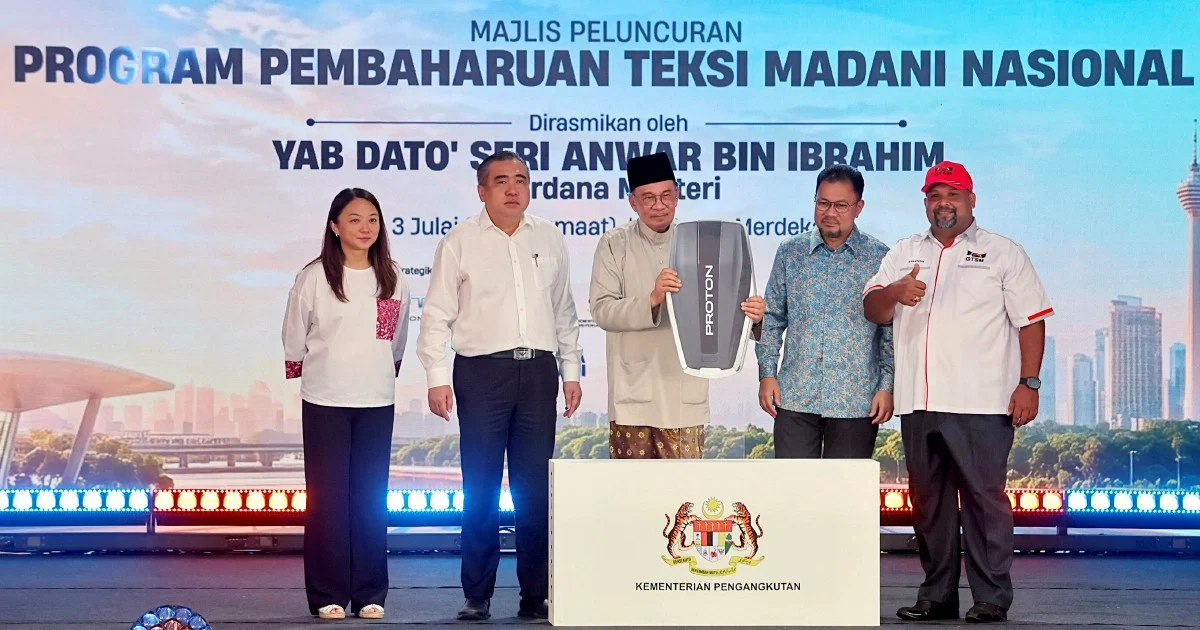
Prime Minister Datuk Seri Anwar Ibrahim revealed today that the government has approved an additional RM10 million in support for the taxi matching grant programme, which aims to facilitate the replacement of ageing vehicles within Malaysia's taxi fleet. The fresh allocation represents a significant commitment to modernising one of the nation's most visible transport sectors and addressing long-standing concerns about vehicle condition and passenger safety standards.
The matching grant approach operates as a financial partnership mechanism, where government funds are paired with contributions from taxi operators themselves. This structure encourages greater accountability and shared investment between the public sector and industry participants, ensuring that those benefiting from the scheme have genuine financial skin in the game. The model has proven effective in other countries seeking to upgrade aging vehicle fleets while distributing costs across multiple stakeholders.
Malaysia's taxi industry, predominantly concentrated in major urban centres like Kuala Lumpur, Petaling Jaya, and other metropolitan areas, has long grappled with the challenge of an ageing vehicle fleet. Many taxis operating on Malaysian roads exceed a decade in service, creating concerns among regulators about maintenance standards, emissions compliance, and passenger comfort. The replacement scheme directly addresses these structural challenges by providing financial incentives for operators to invest in newer, more reliable vehicles.
For ordinary commuters, particularly those dependent on taxis for urban mobility, the initiative promises tangible improvements in service quality. Newer vehicles typically offer better air conditioning, more comfortable seating, and enhanced safety features including modern braking systems and structural reinforcements. Beyond passenger experience, updated taxis generate lower emissions and tend to consume fuel more efficiently, contributing to Malaysia's broader environmental objectives while reducing operating costs for drivers in the longer term.
The scheme's economic implications extend beyond individual taxi operators. Urban transport infrastructure depends on well-maintained conventional taxis alongside ride-hailing services. A modernised taxi fleet helps ensure a competitive, quality-conscious sector that can maintain relevance against digital transport platforms. For the automotive aftermarket industry, particularly spare parts and servicing sectors, fleet modernisation can sometimes present near-term challenges as demand shifts from older models to newer vehicles with different maintenance requirements.
The announcement comes amid ongoing debates within Malaysia regarding the future structure of urban mobility. While ride-hailing applications have transformed transportation patterns in major cities, traditional taxi services remain crucial for many demographic groups, including elderly citizens, those unfamiliar with mobile applications, and communities in areas where digital service penetration remains limited. Strengthening this conventional transport layer ensures equitable access to mobility across all population segments.
Road transport analysts emphasise that fleet modernisation initiatives like this one address multiple policy objectives simultaneously. Environmental compliance becomes easier as newer vehicles typically meet stringent emission standards more readily than vehicles maintained through increasingly expensive retrofitting. Safety outcomes improve measurably when vehicles incorporate contemporary safety technologies. Furthermore, the economic stimulus effect should not be overlooked, as the initiative encourages spending on vehicle manufacturing, financing services, and related commercial activities throughout the supply chain.
For the taxi workforce itself, which comprises a significant proportion of Malaysia's transport employment sector, the scheme carries important implications. Drivers operating newer vehicles can potentially command higher fares and attract more passengers seeking comfortable, reliable service. The financial barrier to participating—even with matching grants—may nevertheless exclude some smaller operators or those facing cash flow difficulties, raising equity questions about which segments of the industry will benefit most from the programme.
The government's continued engagement with taxi sector modernisation signals acknowledgment that conventional taxi services remain strategically important to Malaysia's urban transport ecosystem. Rather than allowing this sector to decline as digital alternatives proliferate, the policy approach attempts to strengthen and upgrade it competitively. This pragmatic stance recognises that sustainable urban mobility systems benefit from diverse transport options serving different user needs and preferences.
Implementation mechanics of the RM10 million allocation will likely involve application procedures through transport authorities or designated financial institutions. Operators will need to meet specified criteria regarding vehicle age, condition standards, and maintenance history to qualify. The matching grant structure means individual allocations per operator will typically be modest, encouraging participation from those genuinely committed to fleet renewal rather than purely speculative applications.
Regional comparisons suggest similar schemes across Southeast Asia have achieved moderate success in improving fleet quality, though uptake rates vary significantly depending on operator awareness, application complexity, and availability of financing for the required operator contribution. Malaysia's announcement positions the country within a broader regional trend toward managed transport sector modernisation, though the specific outcomes will depend heavily on implementation execution and ongoing policy support.

