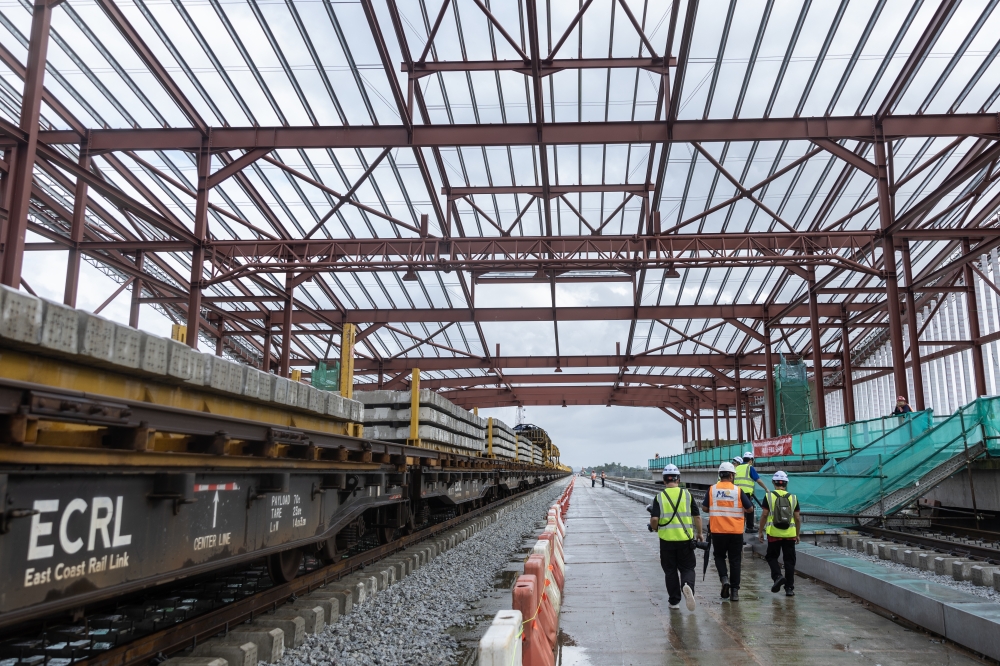
The federal government has unveiled an ambitious development blueprint for Pasir Puteh, approving 46 projects valued at RM207 million designed to capitalize on the constituency's positioning along the East Coast Rail Link (ECRL) corridor. This strategic investment package represents a concerted effort by Putrajaya to transform the Terengganu parliamentary seat into a growth engine by harnessing the transportation and logistics advantages that the ECRL will deliver once fully operational.
The scale of the commitment underscores how federal planners are using major infrastructure projects as catalysts for broader regional development. Rather than viewing the ECRL primarily as a transportation link, the government has identified it as a springboard for economic diversification in Pasir Puteh, a constituency that has historically lagged in industrialization and economic dynamism compared to western Malaysian regions. By concentrating substantial resources here, authorities are attempting to correct spatial imbalances that have long characterized the country's development pattern.
Passir Puteh's strategic location along the ECRL corridor positions it as a natural hub for manufacturing, warehousing, and logistics operations that will thrive once the rail link becomes fully operational. The RM207 million injection suggests federal recognition that passive positioning along new infrastructure is insufficient; active preparation through complementary investments in facilities, utilities, and services is essential to realizing the constituency's potential. This proactive approach differs markedly from historical patterns where infrastructure projects were completed without adequate surrounding ecosystem development.
The 46 projects likely encompass diverse sectors ranging from industrial park development and commercial zones to social infrastructure and utilities enhancement. Such a comprehensive approach reflects understanding that sustainable economic transformation requires simultaneous improvements across multiple domains. Industrial clusters need reliable electricity and water supplies, worker accommodation, and connectivity to markets. Communities require improved schools, healthcare facilities, and public amenities to support an expanding population and workforce.
For Malaysian policymakers, the Pasir Puteh initiative represents a broader strategy of leveraging the ECRL to rebalance development across the peninsula. The East Coast has historically received less investment attention than the Western Corridor, creating economic disparities that manifested in uneven employment opportunities and income distribution. By explicitly anchoring development packages to ECRL-serviced constituencies, the government signals commitment to ensuring the railway serves not merely as a transportation conduit but as a genuine development multiplier.
The timing of this announcement carries political resonance, particularly as the government seeks to demonstrate tangible returns on major infrastructure investments. The ECRL, completed at substantial cost and involving complex negotiations with Chinese interests, has been subject to public scrutiny regarding its economic justification. By simultaneously launching complementary development projects in adjacent areas, Putrajaya aims to build a compelling narrative around the ECRL's transformative potential, illustrating how the railway becomes meaningful only when accompanied by strategic planning and investment in surrounding regions.
For investors and businesses, the RM207 million commitment signals government seriousness about supporting commercial activity in Pasir Puteh. Property developers, manufacturers seeking industrial space, and logistics operators may interpret this as official validation that the constituency represents a viable investment destination. Such signals can trigger private capital inflows that multiply the initial government expenditure, creating a virtuous cycle where public investment catalyzes private activity.
The broader Southeast Asian context makes this initiative significant. Regional integration through ASEAN and mega-infrastructure projects like the ECRL requires that participating nations maximize economic returns from investments. Malaysia's approach to comprehensive corridor development—rather than standalone infrastructure—offers lessons for other regional economies planning major transportation networks. Merely building physical infrastructure proves insufficient if surrounding areas lack the human capital, institutional frameworks, and complementary facilities necessary for commercial activity.
For Pasir Puteh constituents, the RM207 million initiative promises improved living standards through job creation, better public services, and enhanced facilities. However, success depends on effective project execution and ensuring that opportunities generated through development genuinely benefit local populations rather than primarily enriching outside investors. Historical experiences across the region illustrate that infrastructure-driven development can sometimes concentrate benefits among specific groups while displacement and environmental pressures fall disproportionately on existing communities.
The federal government's commitment also reflects recognition that constituency-level development planning requires customized approaches. A one-size-fits-all national policy proves less effective than strategies tailored to specific regions' geographical advantages and constraints. Pasir Puteh's positioning along the ECRL represents its unique asset; the RM207 million package essentially represents government bet on converting this geographical advantage into sustained economic benefit.
Looking ahead, the success of this initiative will likely influence how the government approaches development in other ECRL-adjacent constituencies. If the projects deliver measurable economic growth, employment gains, and improved living standards, the model may be replicated elsewhere. Conversely, implementation challenges or disappointing outcomes could prompt recalibration of the broader strategy. Regional observers will monitor Pasir Puteh's trajectory closely as a test case for whether major infrastructure investments can genuinely reshape development patterns in historically disadvantaged areas.

