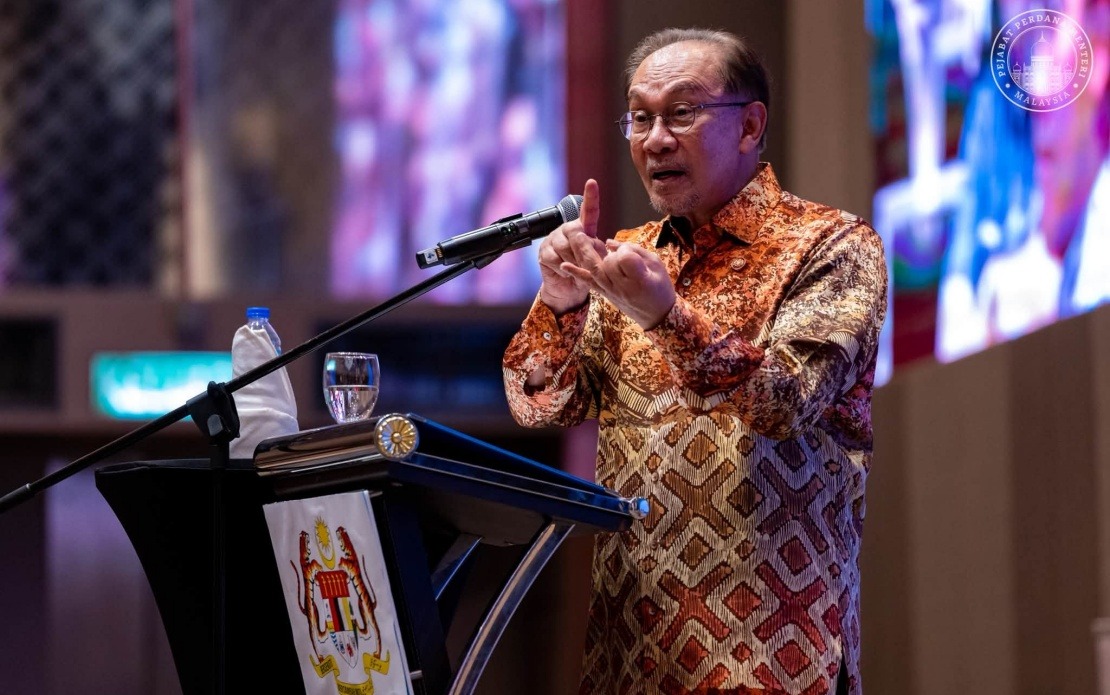
Prime Minister Datuk Seri Anwar Ibrahim has reaffirmed the government's determination to mobilize available resources in support of Malaysia's youth as they contend with an increasingly intricate social and economic landscape. Speaking through a Facebook post following engagements in Klang, Selangor, the Prime Minister emphasized that despite constraints, the administration remains focused on providing meaningful assistance to younger citizens grappling with multifaceted contemporary issues.
The commitment emerged from direct consultations during the "Temu Anwar" session and the opening of the 2026 International Youth Assembly (HAMKA), where the Prime Minister engaged with youth leaders and sought their perspectives on pressing matters affecting their generation. These interactions reflect a deliberate effort by the government to ground policy responses in the actual concerns and lived experiences of young Malaysians rather than relying solely on top-down assessments of youth needs.
Anwar highlighted the distinctive challenges confronting today's young people, noting that disagreement and intellectual friction, while inevitable in a pluralistic society, must be channeled constructively through evidence-based discourse and civility rather than channeled into divisive sentiments or factional loyalty. This observation carries particular resonance in Malaysia's context, where social media increasingly amplifies polarized viewpoints and where younger cohorts navigate competing narratives on identity, economic opportunity, and national direction. The Prime Minister's emphasis on the primacy of knowledge and reasoned argument suggests a governance approach that seeks to foster intellectual maturity among the youth demographic.
The government's positioning reflects an acknowledgment that young people constitute both a demographic reality and a political constituency with distinctive vulnerabilities. Employment precarity, housing affordability, mental health pressures, and uncertainty about economic prospects represent substantive challenges that transcend rhetoric. By situating the government's response within available capacity rather than making unlimited promises, the Prime Minister adopted a pragmatic framing that sets realistic expectations while maintaining rhetorical commitment to the issue.
The invocation of HAMKA, the 2026 International Youth Assembly, carries symbolic significance beyond its immediate convening purpose. The nomenclature references Abdul Malik Karim Amrullah, a twentieth-century Islamic scholar and intellectual whose legacy encompasses both theological contributions and literary output. Anwar's connection of this historical figure to contemporary youth governance underscores a vision of young people as inheritors of intellectual tradition and potential agents of constructive social discourse. The emphasis on Amrullah's advocacy for knowledge, expressive freedom, and ideological openness positions these values as central to the government's youth engagement framework.
Malaysia's youth face distinctive pressures that differ materially from those confronting previous generations. The digital native cohort navigates employment markets disrupted by automation and artificial intelligence, housing markets shaped by decades of appreciation and speculation, and information environments fractured by algorithmic curation and disinformation. Against this backdrop, government statements acknowledging complexity carry weight primarily insofar as they translate into concrete policy interventions. The reference to working within available capacity suggests fiscal constraints that may shape the ambition of youth-focused programming.
The consultation process itself merits attention as a governance practice. By convening sessions dedicated to listening to youth perspectives, the government signals recognition that younger citizens possess valuable insights into problems affecting their circumstances. This stands in contrast to approaches that position youth primarily as recipients of guidance or objects of social policy rather than as participants in problem definition. The "Temu Anwar" format, emphasizing direct engagement between the Prime Minister and youth representatives, creates potential for genuine dialogue while also generating media visibility that underscores government attentiveness to this demographic.
Regional and global context adds texture to Malaysia's youth engagement strategy. Southeast Asian governments increasingly recognize that demographic transitions and economic shifts create both opportunities and risks associated with young population cohorts. Countries across the region grapple with youth unemployment, brain drain, and political alienation among younger voters. Malaysia's explicit commitment to youthful engagement, articulated at the highest political level, positions the country within a broader regional conversation about inclusive governance and intergenerational equity.
The emphasis on intellectual rigor and civility as antidotes to sectarian sentiment addresses a genuine anxiety in contemporary Malaysia regarding social polarization. Young people increasingly encounter ideological pressures from multiple directions—whether religious, ethnic, or political—and the government's advocacy for knowledge-based discourse represents a counterweight to zero-sum framings of national identity and interest. Whether this rhetorical commitment translates into educational programming, platform policies, or institutional reforms remains to be demonstrated through subsequent policy announcements.
Moving forward, observers will assess whether the government's pledges materialize in measurable support for youth employment, educational access, mental health services, and civic participation. The opening of HAMKA and the consultation sessions provide launching points for policy development, but the actual impact on young Malaysians will depend on the translation of these engagement moments into budgetary allocations and structural reforms. The government's acknowledgment of complexity and commitment within available capacity establishes a baseline expectation that youth-focused initiatives will follow, offering a metric against which future performance can be evaluated.

