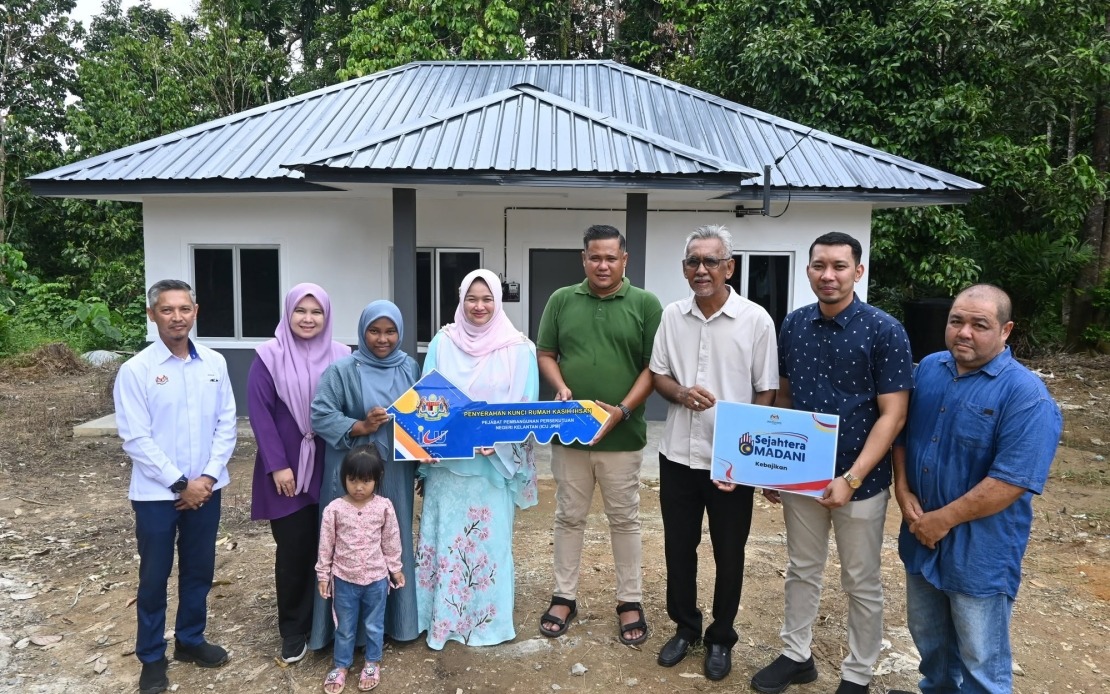
The federal government has reinforced its commitment to raising living standards across Malaysia by distributing Rumah Kasih Ihsan homes to qualifying households in Jeli, Kelantan, marking another milestone in its broader agenda to ensure vulnerable communities gain access to secure and dignified housing. Prime Minister Datuk Seri Anwar Ibrahim highlighted the programme's progress through a social media announcement on August 19, drawing attention to the tangible impact the initiative continues to deliver in one of the country's less-developed districts.
The delivery ceremony, coordinated through the Kelantan Implementation Coordination Unit (ICU) operating under the Prime Minister's Department (JPM), saw two separate housing arrangements completed for eligible recipients. Dr Wan Nur Ibtisam Wan Ismail, the Kelantan ICU JPM director, presided over the official handover, which was facilitated by the PMX Coordination Team—a mechanism established to accelerate development programmes across key constituencies. The structured approach reflects how the government is attempting to channel assistance more efficiently to those most in need, moving beyond conventional bureaucratic procedures.
The first beneficiary, Yusof Mohamed Nawawi from Kampung Renyut, received formal documentation authorizing the construction of a replacement dwelling, essentially granting him the opportunity to transition from his current inadequate housing situation into a purpose-built residence designed to modern safety and comfort standards. This arrangement demonstrates the programme's flexibility in addressing diverse circumstances; rather than providing a one-size-fits-all solution, the initiative accommodates different stages of housing delivery. For Yusof, the letter of acceptance represents the beginning of a transformation process that should ultimately provide his family with substantially improved living conditions.
The second recipient, Shamsul Bahri Che Musa, experienced an accelerated timeline, with his home already completed and formally transferred to him during the same ceremony. The dual approach—one providing construction authorization and another delivering a finished product—illustrates how the government is attempting to adapt the Rumah Kasih Ihsan framework to individual circumstances and readiness levels. Both households also received food baskets, a supplementary welfare gesture that underscores the government's intention to provide immediate relief alongside longer-term housing solutions.
Rumah Kasih Ihsan translates conceptually as compassionate housing, and the initiative explicitly frames improved housing not merely as construction but as foundational infrastructure for human dignity and socioeconomic advancement. According to statements issued by the Kelantan ICU JPM, the programme recognizes that safe housing transcends its functional purpose; it operates as a catalyst for broader personal development, psychological well-being, and community stability. This philosophical positioning distinguishes the initiative from purely transactional welfare programmes, positioning it instead as an investment in comprehensive human development.
The government's messaging around the programme emphasizes that meaningful development should not be evaluated solely through visible infrastructure metrics—roads built, buildings constructed, or projects completed—but rather through the actual improvement in people's lived experiences and quality of life. This reflects a shift in development philosophy, where impact assessment prioritizes citizen benefit over statistical achievement. For Kelantan, a state that has historically grappled with lower household incomes and higher poverty concentrations compared to peninsular averages, such initiatives carry particular significance in addressing persistent regional inequality.
Jeli district, where these homes were distributed, represents one of Kelantan's more economically challenged areas, where many households remain vulnerable to housing insecurity and associated social vulnerabilities. The concentration of Rumah Kasih Ihsan activities in such districts suggests the government is strategically targeting its housing interventions toward communities where housing deficiencies most severely constrain human potential. The programme therefore functions as a targeted poverty-alleviation mechanism, though whether its implementation scale matches the actual magnitude of housing need across the state remains an open question for policy evaluation.
The involvement of the Prime Minister's Department in coordinating this initiative, through the ICU mechanism, indicates that housing improvement has been elevated to a priority-level issue warranting direct oversight from the apex of the executive hierarchy. This institutional arrangement contrasts with conventional approaches where housing programmes operate primarily under the purview of the Ministry of Housing. The centralized coordination structure potentially enables faster decision-making and resource mobilization, though it also concentrates accountability within the PM's office.
For Malaysian policymakers observing housing challenges across the country—particularly in rural and semi-urban zones where informal settlements and substandard dwellings remain common—the Rumah Kasih Ihsan model offers a potential template for scaling interventions. The programme's combination of new construction, housing replacement, and complementary welfare support creates a comprehensive intervention framework that addresses both immediate hardship and structural housing inadequacy. As Malaysia pursues its vision of inclusive development, such initiatives represent practical mechanisms through which that aspiration translates into concrete improvements for ordinary citizens.
The sustainability and long-term impact of the Rumah Kasih Ihsan initiative will depend significantly on whether the programme maintains adequate funding allocation, sustains implementation momentum beyond high-profile announcements, and develops complementary support systems that help recipients stabilize their housing situations. For communities like those in Jeli, improved housing represents not merely shelter but a foundation upon which families can build more stable livelihoods, invest in education, and participate more fully in economic and civic life.

