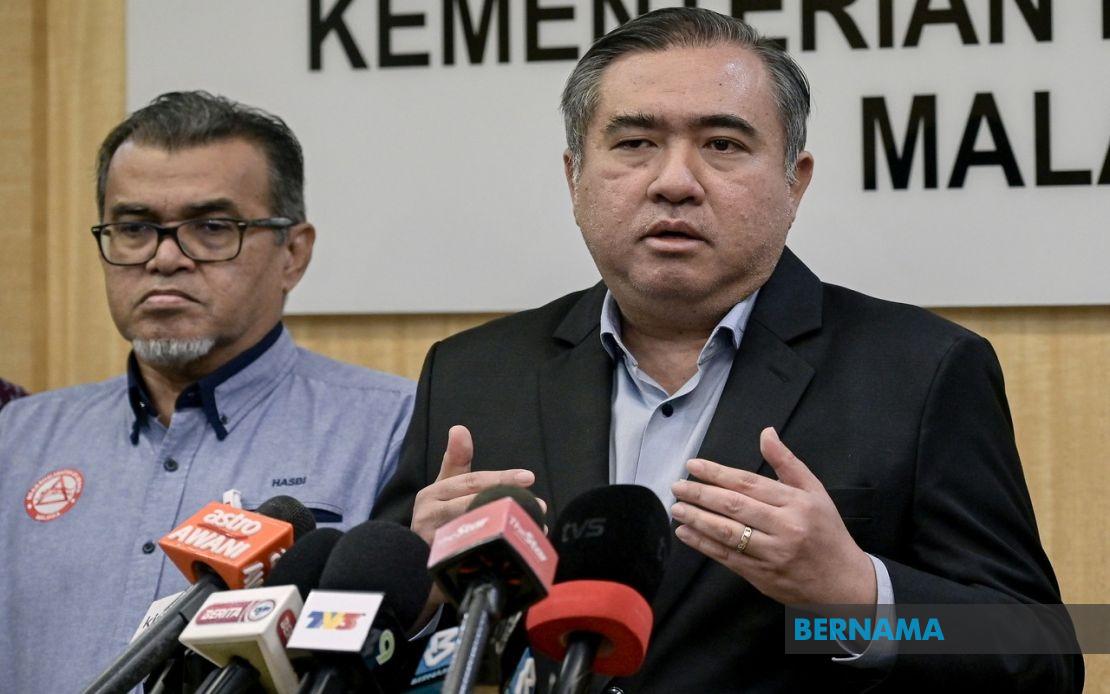
Transport Minister Anthony Loke has moved to dispel concerns about government interference in corporate management decisions at Malaysia's port operators, drawing a clear distinction between ownership requirements and operational autonomy. Speaking at a press conference in Putrajaya on Wednesday, Loke explained that while the state maintains strict guidelines on shareholding for companies managing strategic national assets, it deliberately refrains from dictating who occupies executive positions within those firms.
The clarification comes amid international media coverage of Sultan Ahmed Sulayem, the former chairman and chief executive of global shipping giant DP World, assuming the role of executive chairman at MMC Ports Holdings Bhd. The appointment had prompted questions about whether such moves involving prominent foreign executives warranted government scrutiny or approval. Loke's statement appears designed to reassure stakeholders that the administration operates a hands-off approach to management decisions, even when international figures are involved, provided fundamental ownership thresholds remain intact.
At the heart of the government's regulatory framework lies a straightforward principle: companies holding port concessions or operating other strategic national assets must remain at least 51 per cent Malaysian-owned. This threshold represents a cornerstone of national economic policy, ensuring that control of critical infrastructure remains predominantly in Malaysian hands. However, Loke emphasized that compliance with this ownership requirement does not extend to government vetting of internal corporate appointments, including the selection of chief executives or board members.
The distinction carries significance for Malaysia's competitive positioning in regional shipping and logistics sectors. By signalling openness to foreign expertise in operational leadership while maintaining ownership safeguards, the government aims to balance nationalist economic interests with the practical need to attract world-class management talent. The Port of Tanjung Pelepas, Malaysia's major container terminal in Johor, exemplifies this approach—it operates under foreign chief executives while maintaining structures compatible with national ownership policies.
What distinguishes mere management appointments from matters requiring government notification is the question of shareholding changes. Loke made clear that any alteration to the ownership structure of port-operating companies must be formally communicated to relevant government bodies, including the Public-Private Partnership Unit (UKAS). This requirement ensures transparency and allows the state to monitor compliance with the 51 per cent Malaysian ownership mandate. Without such notification procedures, the regulatory framework would lack enforcement mechanisms.
Regarding the specific circumstances at MMC Ports Holdings Bhd, Loke indicated that the Transport Ministry had received no formal notification of shareholding changes from either the company or its concession holder. This absence of notification suggests that the recent executive transition, at least as understood by the minister's office, reflects an internal governance decision rather than a fundamental shift in the company's capital structure. The distinction underscores how corporate reorganizations can proceed through management changes without necessarily implying alterations to ownership.
The minister's comments reflect broader policy philosophy about the appropriate scope of government economic involvement. Rather than micromanaging corporate affairs, the state establishes clear ownership parameters and allows private sector operators substantial discretion in how they structure their internal operations. This approach acknowledges that operational efficiency and competitive performance often depend on management decisions that lie beyond the competence or purview of government regulators.
For Malaysian port users and the broader logistics ecosystem, the implications are considerable. An assurance that port operators can recruit international executives without bureaucratic obstruction potentially strengthens the country's appeal as a neutral, professionally managed logistics hub. Investors and shipping companies seeking predictable, competent management across their regional networks may view such openness more favourably than regimes that impose restrictions on leadership composition.
However, the government's position also reflects confidence in the adequacy of ownership requirements as a safeguard against loss of national control. By maintaining the 51 per cent threshold and requiring notification of ownership changes, regulators argue they preserve ultimate authority over strategic direction while permitting operational flexibility. The approach assumes that Malaysian majority owners will exercise appropriate oversight of executive appointments and that management talent, regardless of nationality, ultimately serves shareholder interests.
The timing of Loke's clarification suggests awareness that international perceptions of Malaysia's governance climate matter for attracting investment and operational expertise. Regional competitors in Singapore, Thailand, and Indonesia similarly balance nationalist economic objectives with openness to foreign capital and expertise. Clear, transparent statements about the boundaries of government interference can influence decisions by multinational corporations about where to locate regional hubs and management centres.
Looking forward, the government's articulated position establishes parameters that stakeholders across Malaysia's maritime and logistics sectors can reference. Port operators can pursue management restructuring without anticipating arbitrary government interference, provided they maintain ownership compliance and communicate shareholding changes through established channels. This clarity itself represents a form of regulatory value, reducing uncertainty and enabling longer-term strategic planning.
The broader context reflects Malaysia's integration into global supply chains and the premium now placed on operational sophistication and international best practices. The country's three major ports—Port Klang, Port of Tanjung Pelepas, and Port of Penang—compete for container volume across the Strait of Malacca and beyond. Demonstrating that port operators enjoy genuine autonomy in selecting experienced leadership, while maintaining national ownership safeguards, positions Malaysia competitively against regional rivals and reinforces its positioning as a professionally managed, business-friendly maritime hub.

