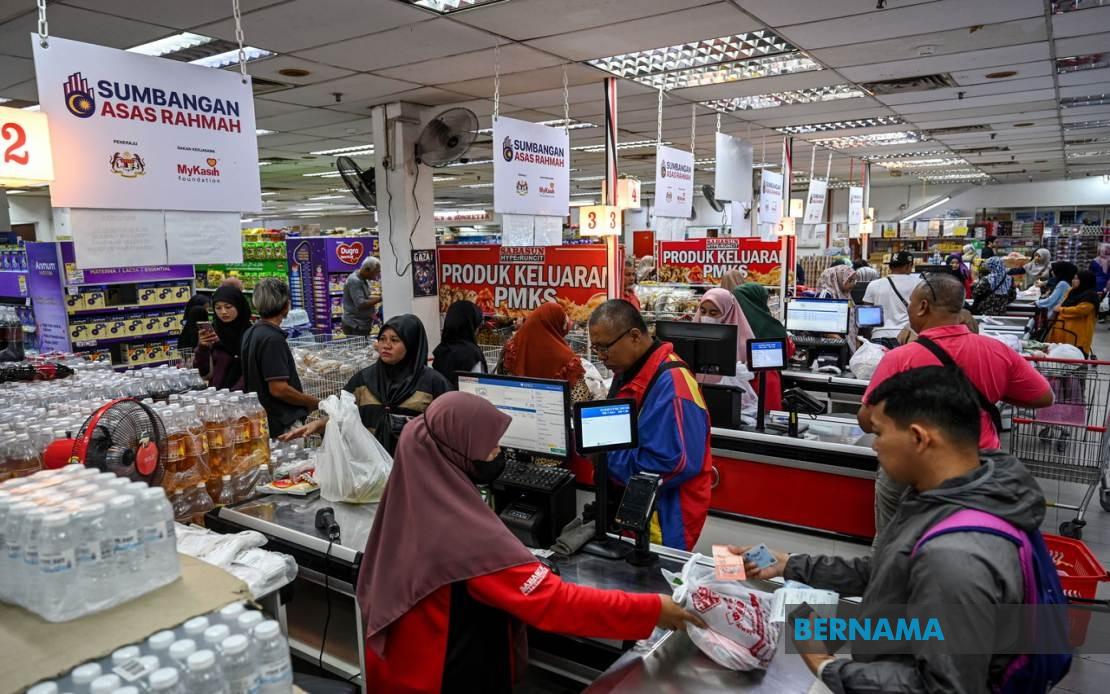
Prime Minister Datuk Seri Anwar Ibrahim has signalled that assistance under two major welfare schemes could see increases in the coming Budget should Malaysia's economic situation improve sufficiently. Speaking during a community engagement programme in Ipoh on July 19, the PM revealed that deliberations with Treasury secretary-general Tan Sri Johan Mahmood Merican had already commenced regarding potential enhancements to the Sumbangan Tunai Rahmah (STR) and Sumbangan Asas Rahmah (SARA) programmes. These twin initiatives represent core components of the MADANI Government's social safety net architecture, and any expansion would directly affect hundreds of thousands of Malaysian households currently receiving monthly disbursements.
The conditional nature of Anwar's announcement reflects the delicate balance policymakers must maintain between welfare expansion and fiscal sustainability. While the government demonstrates commitment to supporting vulnerable populations, officials are carefully calibrating announcements to avoid overcommitting resources ahead of concrete economic improvements. The Treasury's involvement in these discussions underscores the technical complexity surrounding benefit adjustments, as increases must be modelled against revenue projections, existing expenditure commitments, and broader macroeconomic forecasts. Anwar's framing suggests that this remains an aspirational policy objective rather than a definite commitment, though his willingness to discuss the matter publicly signals genuine government consideration of the proposal.
The STR and SARA schemes have become increasingly important safety valves for household income stability amid persistent cost-of-living pressures. These programmes directly transfer cash to eligible low-income households, providing recipients with discretionary spending power during periods of economic uncertainty. For many Malaysian families, particularly those in urban areas where inflation impacts food, transport, and utilities most acutely, these monthly payments represent meaningful income supplements that buffer household budgets against sudden shocks. Any meaningful increase to benefit levels could potentially ease financial stress for approximately two million recipients across both schemes.
Anwar, who simultaneously holds the Finance Minister portfolio, emphasized that budget deliberations will specifically examine how allocation structures can be reconfigured to facilitate assistance improvements. This dual positioning gives the Prime Minister direct influence over fiscal priorities, though it also places him at the intersection of competing demands from various constituencies and policy objectives. The upcoming Budget cycle will prove crucial in determining whether improved economic indicators provide sufficient fiscal space to fund enhancement proposals without compromising other government priorities including infrastructure investment, healthcare modernisation, or education improvements.
Beyond welfare programme expansion, Anwar articulated the government's broader commitment to security personnel wellbeing during the community engagement event at the MADANI KITA Together with the Tambun Community Programme. The Prime Minister specifically highlighted the Malaysian Volunteer Corps Department (RELA), a citizen volunteer force that contributes substantially to national security operations and disaster response capabilities. Acknowledging RELA's multifaceted contributions extending from security maintenance to community welfare services, Anwar indicated that personnel support mechanisms required sustained financial investment. The allocation of RM3 million annually for RELA member welfare reflects government recognition that volunteer services depend upon adequate institutional support frameworks.
The RM3 million RELA welfare allocation, maintained at the same level as the previous year, suggests stability in government commitment rather than significant expansion in this particular domain. However, Anwar's acknowledgement that existing allocations remain insufficient indicates awareness that volunteer force sustainability requires future reassessment. Many RELA members combine volunteer service with other employment or business activities, meaning inadequate welfare support could gradually erode volunteer force capacity by making participation financially unviable for middle and lower-income participants. This structural vulnerability means that welfare programme adequacy for security volunteers remains an ongoing policy concern alongside mainstream welfare expansion.
For Malaysian households and policymakers alike, Anwar's statements carry implications extending beyond immediate cash transfer levels. The government's willingness to contemplate welfare enhancement contingent upon economic improvement signals broader policy direction toward counter-cyclical social spending. Should Malaysia's economy demonstrate sustained growth and improved fiscal metrics over coming quarters, benefit expansion could become politically feasible and economically justified. Conversely, economic headwinds would likely postpone enhancement plans, requiring government communication to manage public expectations around timeline and implementation prospects.
The regional context further illuminates significance of Malaysia's welfare policy trajectory. Several Southeast Asian nations have expanded cash assistance programmes in response to inflationary pressures and economic uncertainty, creating competitive pressures on Malaysian policymakers to maintain programme attractiveness and adequacy. Thailand's agricultural subsidies, Philippines' expanded conditional cash transfers, and Indonesia's expanded food assistance programmes all demonstrate regional momentum toward more robust welfare provision. Malaysia's ability to enhance STR and SARA benefits could strengthen the government's positioning among regional welfare programme comparisons while demonstrating MADANI administration commitment to tangible citizen welfare improvements.
The announcement also carries implications for Malaysia's federal budget flexibility and medium-term fiscal trajectory. Welfare programme expansion, while politically popular, commits recurring resources indefinitely unless programmes are structured with automatic sunset provisions or means-testing revisions. Treasury officials responsible for long-term fiscal planning must therefore carefully evaluate welfare enhancement proposals against debt sustainability frameworks and intergenerational equity considerations. The involvement of Treasury secretary-general Tan Sri Johan Mahmood Merican in preliminary discussions suggests that technical fiscal analysis will substantially inform final policy decisions rather than political considerations alone determining benefit adjustment outcomes.
Moving forward, Malaysian households receiving STR and SARA assistance should anticipate that concrete decisions regarding potential increases will emerge through the formal Budget process rather than through advance announcements. The government's historical approach to welfare programme modifications demonstrates that announcements often precede implementation by several months, allowing Treasury time for detailed impact modelling and implementation planning. Recipients requiring current financial planning should not presume enhancement certainty, though the Prime Minister's public discussion of potential increases does signal government seriousness regarding the proposal within appropriate fiscal constraints.

