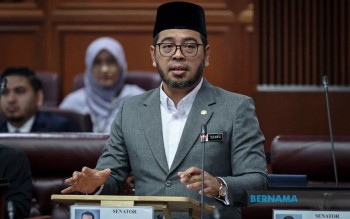
The government has committed more than RM10 billion to rescue Lembaga Tabung Haji (TH), the hajj fund operator, from a critical financial crisis stemming from years of mismanagement and embezzlement. Speaking during a special parliamentary session, Dr Zulkifli Hasan, Minister in the Prime Minister's Department (Religious Affairs), outlined how the unprecedented intervention became necessary to prevent the complete collapse of an institution serving millions of Malaysian pilgrims. The bailout represents a decisive policy response to one of Malaysia's most significant financial scandals involving a government-linked entity.
The severity of TH's predicament came into sharp focus during the fourth quarter of 2018, when the institution's deficit ballooned to exceed RM10 billion—a shortfall between total assets and liabilities so severe that it rendered the organisation technically insolvent. With merely three months to devise a solution before the situation deteriorated beyond recovery, policymakers faced an unenviable choice: either allow TH to collapse, potentially forfeiting billions of ringgit belonging to pilgrims and account holders, or implement an emergency financial restructuring. The depth of this crisis ultimately compelled the Pakatan Harapan Government to intervene with the comprehensive bailout package designed not merely as a temporary financial fix but as a foundation for long-term sustainability and restored public confidence.
Dr Zulkifli emphasised that the government's intervention was explicitly structured as a financial restoration programme rather than an asset acquisition scheme. This distinction carries particular importance given the political sensitivity surrounding TH, which manages funds held in sacred trust by Muslim Malaysians preparing for the hajj pilgrimage. The minister was deliberately addressing misleading narratives that had circulated claiming the government intended to transfer TH's assets to private entities or, more incendiary, to non-Muslim or Chinese-owned companies. Such claims, he noted, originated from irresponsible actors seeking to manufacture religious and ethnic tensions by misrepresenting the true nature and objectives of the bailout.
The clarification regarding asset ownership underscores a crucial governance point frequently lost in public debate. Assets held under TH's stewardship are technically owned by Urusharta Jamaah, a company fully incorporated under the Minister of Finance. This structural arrangement means that TH operates as a fund manager holding assets in trust rather than as the outright proprietor. Understanding this distinction is vital for Malaysian citizens whose retirement savings, hajj contributions, and investment funds are held within the TH system. The government's bailout therefore represents an attempt to preserve the integrity of these holdings while addressing the institutional failures that had allowed mismanagement to flourish unchecked.
The Royal Commission of Inquiry (RCI) report into TH's collapse revealed systematic governance failures, fraud, and financial irregularities that had accumulated across multiple years of inadequate oversight. These findings vindicated concerns that had been raised by various stakeholders regarding TH's investment strategies and internal controls. The report's revelations prompted the government to adopt the bailout strategy as an alternative to allowing the institution to sink into irreversible insolvency. Rather than permitting TH to fail and leaving account holders to absorb catastrophic losses, the state intervention aimed at rehabilitation and restoration of public trust in Malaysia's pilgrimage fund infrastructure.
For Malaysian Muslims who have contributed to TH over decades, the bailout decision represented a pragmatic acknowledgment that institutional collapse would have inflicted far greater damage than the cost of government intervention. Millions of Malaysians depend on TH not merely for hajj financing but for retirement and investment purposes. The decision to inject RM10 billion rather than permit institutional failure reflected a judgment that protecting the interests of ordinary account holders outweighed ideological preferences for minimal government involvement in financial markets. This approach has parallels with international practices where governments have intervened to rescue systemically important financial institutions facing existential crises.
The political dimensions of the TH crisis and its resolution remain complex within Malaysia's contemporary landscape. The Pakatan Harapan Government's decision to publicly defend the bailout and directly address false claims about asset transfers reveals awareness that misinformation about TH threatened not only to undermine policy credibility but potentially to inflame communal sensitivities. By establishing clear factual records about the bailout's purpose, scope, and governance structures, the government sought to prevent conspiracy narratives from gaining traction among the public. This proactive communication strategy acknowledged that financial crises affecting institutions with religious and cultural significance require transparent engagement with stakeholders and the broader society.
Looking forward, the success of TH's restoration depends not solely on the injected capital but on comprehensive institutional reform addressing the governance weaknesses that enabled the crisis. The bailout must be accompanied by enhanced oversight mechanisms, improved investment governance, and personnel changes ensuring that the problems identified by the RCI do not resurface. Without such complementary reforms, the RM10 billion injection risks becoming merely a temporary palliative rather than a genuine solution to systemic dysfunction. Malaysian policymakers and TH's leadership face the ongoing challenge of rebuilding institutional credibility while maintaining the financial stability necessary for the fund to serve its constituents reliably.
The TH case carries broader lessons for Malaysia's approach to managing government-linked entities and ensuring public institutional accountability. The crisis demonstrated that insufficient oversight of large funds managing public assets creates vulnerability to mismanagement and fraud. Future policy frameworks governing similar institutions must incorporate stronger transparency requirements, independent auditing protocols, and clearer separation between operational management and strategic oversight. These reforms would protect not merely TH but the entire ecosystem of government-linked organisations managing public resources, enhancing public confidence in their governance and administration across sectors.

