The Malaysian government is channelling RM10 million into the Special Fishermen Housing Project this year as part of a broader effort to enhance living conditions within the fishing community and strengthen their economic resilience. According to Muhammad Faiz Fadzil, chairman of the Fisheries Development Authority of Malaysia (LKIM), the funding represents a dual approach to immediate relief and longer-term stability. The allocation splits into two distinct initiatives: refurbishing existing homes owned by qualifying fishermen and constructing entirely new residential units for those lacking adequate shelter. This comprehensive strategy reflects official recognition that substandard housing remains a persistent challenge within coastal communities across the country.
The repair component consumes the larger share of this year's budget. More than RM6.8 million has been designated to rehabilitate 344 fishermen's homes in locations nationwide, with LKIM overseeing the execution. Muhammad Faiz indicated that remedial work had already progressed to approximately 80 percent completion, with final delivery anticipated between August and September. These repairs address structural deficiencies, safety concerns, and basic amenities that directly impact household wellbeing. The remaining RM3.1 million supports construction of 36 brand-new dwellings, a slower process that confronts practical obstacles beyond mere financing. Land acquisition difficulties, particularly disputes over inherited properties, have extended timelines beyond initial projections, though officials remain confident the projects will conclude by year's end.
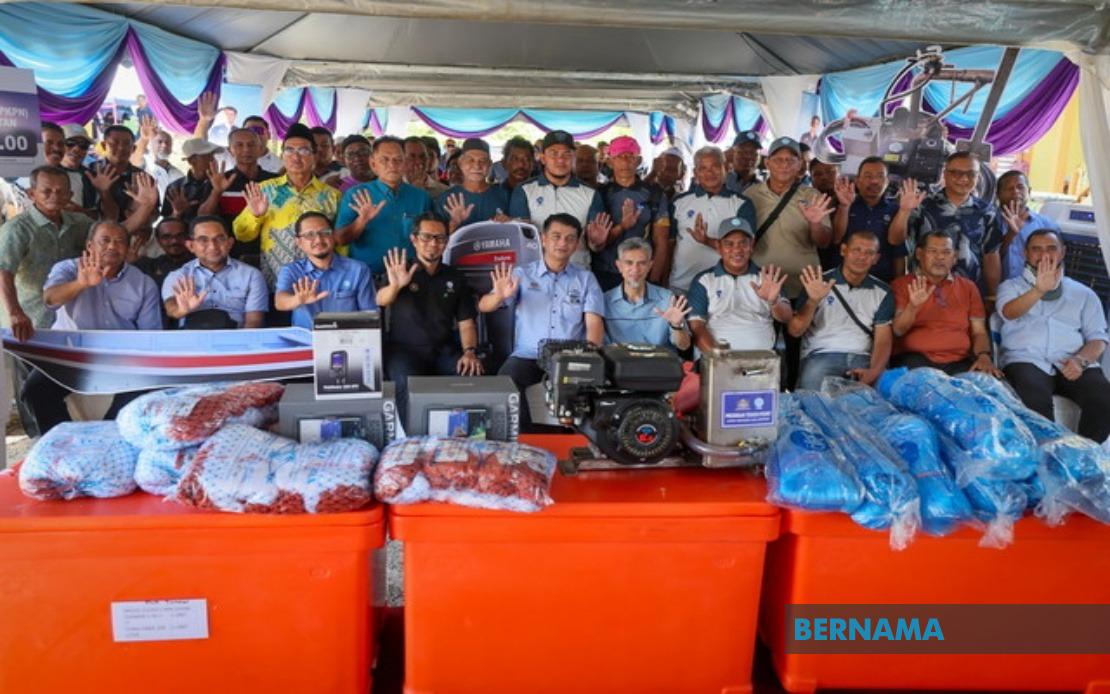
Cost differentials across Malaysian geography reflect regional economic variations and construction expense disparities. The government has set unit construction costs at RM84,000 in Peninsular Malaysia, acknowledging that development expenses in Sabah and Sarawak are substantially higher at RM95,000 per dwelling. This geographical pricing strategy ensures equitable access to housing improvements across diverse Malaysian territories. Repair allocations, meanwhile, reach up to RM20,000 per household, adequate funding for meaningful renovations addressing pressing maintenance issues. Kelantan, a major fishing jurisdiction, received RM388,000 under the current year's programme—resources that LKIM distributed through engagements with local fishing representatives at the Pengkalan Kubor Fish Inspection Complex.
Beyond immediate housing interventions, LKIM has initiated a strategic pivot intended to reduce the fishing sector's vulnerability to volatile market conditions and depleting marine resources. Muhammad Faiz articulated a fundamental concern: conventional fisheries are increasingly strained by resource scarcity, while operational expenses—particularly fuel costs despite continued government subsidies—continue climbing. These dual pressures render traditional fishing economically unsustainable without diversification. Consequently, official policy now actively encourages fishermen to explore aquaculture as an alternative income stream, positioning fish farming alongside conventional catching as a more stable livelihood model. This represents recognition that the sector faces structural challenges demanding adaptation rather than short-term fixes.
The aquaculture transition aligns with ambitious national production targets established through 2030. The government aims for farmed fish to constitute 40 percent of domestic output by that decade's end, substantially elevating aquaculture's role within Malaysia's fisheries economy. Current production derives predominantly from conventional capture fishing; achieving this target mandates significant expansion of farming infrastructure and practitioner participation. Fishermen who embrace aquaculture opportunities position themselves advantageously to benefit from anticipated sectoral growth and government support mechanisms. Officials present this transition less as forced displacement and more as entrepreneurial opportunity—a chance for fishing communities to secure improved incomes through technological adoption and business engagement.
Kelantan's fishermen have received concrete demonstration of this commitment. The LKIM allocated RM400,000 to the Kelantan State Fishermen's Association (PENEKA) specifically for tank-based prawn farming development, establishing practical infrastructure for aquaculture participation. This targeted investment provides hands-on experience and operational foundation for interested fishermen, reducing barriers to sectoral entry. Prawn farming offers faster production cycles and higher value-per-unit compared to many conventional catches, potentially delivering superior financial returns. By anchoring initial aquaculture expansion in an established state-level fishing organisation, authorities employ trusted intermediaries already embedded within fishing communities, facilitating knowledge transfer and reducing adoption friction.
This Kelantan initiative serves as a replicable model for expansion nationwide. Muhammad Faiz signalled that comparable aquaculture projects would extend progressively to other coastal states, systematically building national farming capacity whilst strengthening income diversity within fishing populations. Rather than implementing sudden sectoral transformation, the approach emphasises gradual establishment of complementary economic activities. Multiple states participating in similar programmes creates competitive motivation and shared learning across regions, accelerating overall sectoral transition. Fishermen observing successful peers in neighbouring states grow more inclined toward aquaculture participation, organic adoption reinforced by tangible examples.
The housing and aquaculture initiatives together constitute an integrated development strategy recognising that sustainable livelihoods demand both immediate material security and medium-term economic dynamism. Improved housing conditions stabilise families psychologically and free financial resources previously consumed by deteriorating property maintenance. Simultaneously, aquaculture opportunities promise enhanced earnings, reducing cyclical poverty vulnerability that characterises conventional fishing communities. This two-pronged approach acknowledges that sectoral transformation requires simultaneous attention to living conditions and occupational opportunity. Without housing security, fishermen lack foundation for entrepreneurial risk-taking; without income alternatives, housing improvements alone provide temporary relief rather than permanent advancement.
For Malaysian policymakers, this investment reflects strategic priority accorded fishing communities within the broader development agenda. Coastal populations have historically received subordinate attention compared to urban manufacturing and services sectors, despite representing vital food security contributors and occupying geographically strategic zones. The RM10 million allocation, whilst modest against national expenditure scales, signals official recognition that fishing communities deserve targeted development investment. The commitment to aquaculture transition, moreover, positions Malaysia competitively within regional fish farming expansion, where countries across Southeast Asia increasingly capitalise on proximity to major Asian markets demanding aquaculture products. By mobilising domestic fishing communities toward farmed production, Malaysia leverages existing human capital and coastal infrastructure toward higher-value activities.
Regional considerations enhance significance of Malaysia's fisheries investment strategy. Southeast Asian nations compete intensely for aquaculture market share, with Vietnam, Thailand, and Indonesia substantially advancing farming sectors. Malaysia's capacity to develop comparable capabilities depends partly on fisher participation and skills transfer. The housing improvements serve subsidiary but important function in this context—demonstrating government commitment to fishing communities encourages sector participation and knowledge preservation critical for aquaculture adoption. Fishermen considering transition risk household security; visible government investment in housing reduces perceived transition risks, encouraging sectoral participation. This psychological and material support mechanism, whilst not explicitly articulated in official announcements, underpins the integrated strategy's effectiveness in facilitating sectoral transformation at rural community levels.

