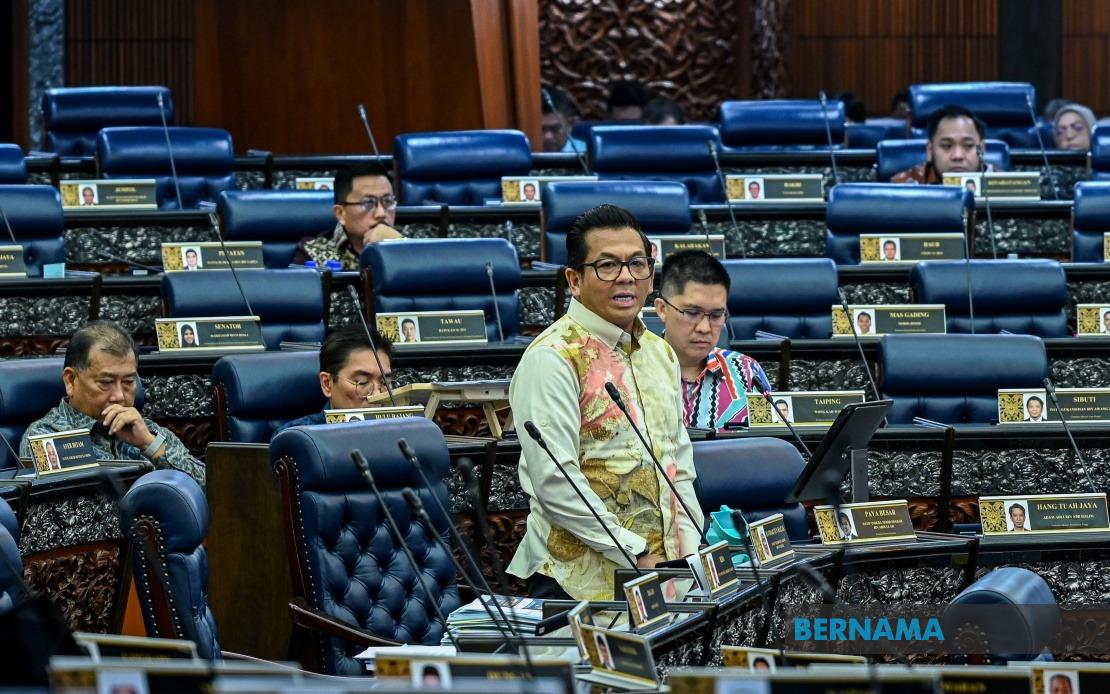
The Malaysian government is turning to comprehensive expenditure data to craft targeted solutions for the widening gap between urban and rural living costs, marking a shift towards evidence-based policymaking in addressing affordability pressures facing households across the nation. Deputy Economy Minister Datuk Mohd Shahar Abdullah outlined this approach during parliamentary question time, explaining how the Basic Living Expenditure (PAKW) framework serves as the foundation for designing interventions tailored to specific regional contexts rather than applying blanket national policies.
The PAKW, developed by the Department of Statistics Malaysia, represents a significant analytical tool that recognizes how household spending patterns vary substantially depending on geography, income levels, and access to goods and services. Rather than treating all Malaysians as having identical cost pressures, the framework acknowledges that a ringgit spent in Kuala Lumpur stretches differently than one spent in a rural area. This nuanced understanding has become increasingly important as inflation and rising prices disproportionately affect different regions, with some communities facing acute affordability challenges while others navigate relatively stable expenses.
Mohd Shahar's parliamentary response revealed stark numerical differences in monthly basic living expenses across states, providing concrete evidence of the regional disparities that policymakers must contend with. The PAKW value for Kuala Lumpur stands at RM5,639 monthly, substantially exceeding the RM4,254 requirement in Kelantan and the RM4,511 figure for Sabah. These figures represent more than abstract statistics; they reflect the reality that urban dwellers face significantly higher housing costs, transportation expenses, and service fees compared to rural counterparts. A 33 percent difference between Kuala Lumpur and Kelantan illustrates how location fundamentally shapes household budgeting decisions and financial vulnerability to economic shocks.
Accessibility to the government's analytical capabilities has been democratized through the myPAKW.dosm.gov.my online calculator, which allows individual Malaysians to input their spending patterns and understand how their household finances align with official benchmarks. This transparency serves multiple purposes: it enables citizens to identify areas where their spending deviates from regional norms, provides policymakers with aggregated insights into real-world spending behavior, and creates a feedback mechanism for assessing policy effectiveness. The tool represents an attempt to move cost-of-living discussions away from abstract political rhetoric towards concrete, measurable household data that residents themselves can verify and monitor.
The government's emphasis on training programmes designed to elevate earning potential across both lower and upper income brackets reflects a philosophy that addresses cost-of-living pressures from the income side rather than solely through price controls or subsidies. By focusing on wage enhancement and skills development, policymakers argue they are building sustainable improvements in purchasing power rather than creating dependency on temporary relief measures. These employment and skills initiatives are embedded within the Five-Year Malaysia Plans, which are revised twice per cycle to accommodate changing economic conditions and labor market dynamics.
The trajectory of the Poverty Line Income indicator demonstrates how official standards for minimum adequacy have evolved in response to inflationary pressures. The national PLI increased to RM2,705 in 2024 from RM980 in 2016, representing a 176 percent jump over eight years. While this adjustment acknowledges rising prices, the magnitude of increase also raises questions about whether previous thresholds adequately captured the cost of living or whether the revisions represent a catch-up to long-standing affordability gaps. For Malaysian policymakers and citizens alike, this metric serves as a benchmark for assessing whether government assistance programmes and wage policies are keeping pace with actual expenses.
The use of PAKW data to guide policy intervention represents recognition that one-size-fits-all approaches fail in a country with significant geographical, demographic, and economic diversity. Urban areas face distinct challenges including higher property costs, transportation expenses in sprawling metropolitan zones, and premium pricing for services, while rural regions grapple with limited access to affordable goods, higher transportation costs for goods delivery, and fewer employment opportunities in higher-wage sectors. Targeted policies acknowledging these differences can allocate resources more efficiently than national programmes that treat all regions identically.
For Southeast Asian context, Malaysia's approach to utilizing statistical frameworks for policy design holds relevance for neighboring countries experiencing similar urban-rural divides. As regional economies continue urbanizing while maintaining significant rural populations, the tension between urban cost pressures and rural affordability challenges will likely intensify across the region. Malaysia's investment in data infrastructure and evidence-based policymaking provides a potential model, though implementation success depends on political will to apply data insights even when they conflict with conventional wisdom or established interests.
The parliamentary engagement on this issue also underscores how cost-of-living concerns transcend partisan divisions, with opposition lawmakers highlighting economist recommendations for specific inflation and pricing solutions. This cross-party interest in affordability challenges reflects broader public anxiety about household finances, particularly in lower and middle-income segments struggling with stagnant wages relative to rising expenses. The government's response emphasizing long-term capacity-building through training and income generation suggests confidence that structural economic improvements will outpace price increases, though critics might argue this approach provides insufficient immediate relief for households already stretched financially.
Implementing insights from PAKW data into actual policy adjustments requires coordination across multiple government agencies responsible for different aspects of cost of living, from housing subsidies to transportation support to food price monitoring. The framework provides the analytical foundation, but translating that analysis into coherent, coordinated interventions presents significant implementation challenges. Ensuring that programmes actually reach the intended beneficiaries in both urban and rural areas, and that interventions are appropriately calibrated to regional differences, demands sustained attention and regular evaluation.
Looking forward, the government's commitment to revising the Five-Year Plans twice per cycle suggests recognition that economic conditions and household needs evolve faster than traditional five-year planning cycles can accommodate. Regular updates to PAKW benchmarks and policy frameworks indicate institutional responsiveness to changing circumstances, though the gap between data collection and policy implementation remains a critical variable determining whether insights translate into improved living standards for ordinary Malaysians navigating persistent affordability pressures.

