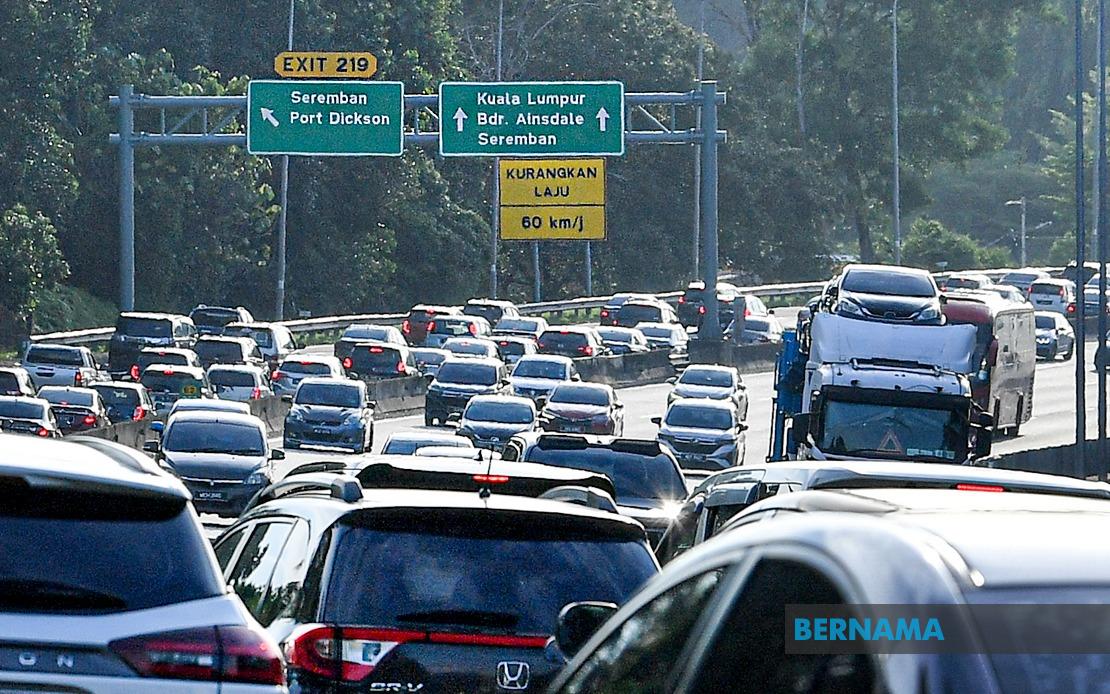
The Malaysian Cabinet has given its backing to a significant overhaul of traffic law that will compel drivers convicted of causing road accidents to pay compensation to injured parties and bereaved families. The decision, announced by Transport Minister Anthony Loke on Friday, represents a fundamental shift in how the country addresses the financial devastation wrought by serious traffic incidents, moving beyond traditional penalties of imprisonment and fines to impose direct restitution obligations on offenders.
The amendment to the Road Transport Act 1987 (Act 333) has drawn strong support from the Prime Minister's Department (Religious Affairs), which views the legislative change as an opportunity to align Malaysia's secular traffic laws with Islamic jurisprudential principles. Dr Zulkifli Hasan, Minister in the Prime Minister's Department (Religious Affairs), stated that his department has been actively examining the application of 'diyat'—the Islamic compensation mechanism—since February 11, working alongside muftis and legal experts to explore how syariah-based principles could be incorporated into Malaysia's civil code.
The theological foundation underlying this policy shift reflects a growing recognition among Malaysian policymakers that traffic violations causing death or serious injury represent more than mere breaches of regulation. By drawing on syariah principles, the government positions road safety enforcement within a moral and spiritual framework that emphasises accountability not just to the state but to victims and their families. This integration of Islamic legal concepts into secular legislation represents a distinctive approach in Southeast Asia, where most countries maintain a clearer separation between religious law and traffic enforcement.
Central to the Cabinet's rationale is the conviction that existing penalties have proven inadequate as both punishment and deterrent, particularly in cases involving aggravated violations such as driving under the influence of alcohol or drugs. Dr Zulkifli observed that offenders should not be permitted to discharge their legal obligations merely through serving prison terms or paying fines to the state. Instead, they must be held financially answerable to the victims and their dependents, ensuring that those left without breadwinners receive material recompense that reflects the severity of the harm inflicted. This approach addresses a critical gap in Malaysian traffic justice: the emotional and financial rehabilitation of victim families often falls entirely to civil litigation, a protracted process that can take years to resolve.
The proposed amendments would empower courts to impose compensation as an additional penalty layered on top of custodial sentences and monetary fines, thereby creating a three-tiered accountability structure. The practical advantage lies in circumventing lengthy civil proceedings, which can burden grieving families with legal costs and prolonged uncertainty. By embedding compensation orders directly into criminal sentencing, the courts can deliver swift restitution without forcing victims to launch separate lawsuits. This streamlining is particularly significant for lower-income families who lack resources for extended litigation.
Federal Territories Mufti Ahmad Fauwaz Fadzil emphasised that the amendment represents far more than a punitive measure; it embodies a holistic vision of justice that considers not only the punishment of wrongdoing but the restoration of victims' wellbeing. Under classical syariah jurisprudence, diyat serves to bridge the gap between retributive justice and restorative obligation, recognising that a victim's family has suffered both material and non-material loss. Ahmad Fauwaz characterised the amendment as consonant with foundational Islamic values that prioritise the preservation of life and the protection of human dignity, suggesting that Malaysia is developing a legal framework that reflects its Islamic constitutional character whilst serving pragmatic justice objectives.
The Malaysian Syarie Lawyers Association (PGSM), represented by president Musa Awang, has pledged to contribute specialist knowledge to the legislative drafting process. Awang highlighted the mounting toll of reckless driving behaviour, including alcohol and drug-impaired operation, as well as organised illegal street racing, which collectively generate a persistent toll of fatalities and grievous injuries across Malaysian roads. The association contends that strict compensation mechanisms serve dual purposes: they provide immediate, tangible justice to affected families while simultaneously conveying a powerful societal message that negligent conduct resulting in loss of life cannot be treated lightly.
From a maqasid syariah perspective—the framework of Islamic jurisprudence that emphasises the objectives underlying religious law—the compensation amendment aligns with established legal principles. Maqasid syariah prioritises five core domains: protection of religion, life, intellect, family, and property. Road safety legislation fundamentally serves the protection of life, the second pillar of Islamic jurisprudential ethics. By introducing compensation mechanisms grounded in syariah reasoning, Malaysia's amendment potentially strengthens public compliance with traffic regulations by embedding them within a broader ethical and spiritual framework that resonates with the nation's Muslim majority.
The timing of this legislative initiative reflects growing frustration with traffic-related fatalities and injuries in Malaysia. Annual road death tolls in the country consistently rank among the highest in the region, driven by a combination of inadequate enforcement, driver behaviour, and vehicle safety standards. The government's pivot toward mandatory compensation addresses a long-recognised problem: existing penalties have manifestly failed to deter dangerous driving. By attaching direct financial consequences to individuals responsible for crashes, policymakers hope to create a personal incentive for safe driving behaviour that complements traditional deterrents.
Implementing mandatory compensation will require careful attention to procedural fairness and victim identification. Courts will need guidelines for assessing appropriate compensation levels across varying circumstances, determining how to calculate the economic value of lost earnings, and deciding whether compensation should extend to non-pecuniary losses such as pain, suffering, and emotional trauma. These determinations will likely evolve through case law precedent, making the early years of the amendment's operation particularly significant for establishing jurisprudential foundations.
For Malaysian road users and families who have experienced traffic tragedies, the amendment signals a potential watershed moment in how the justice system acknowledges and addresses their suffering. Rather than viewing accidents as events concluded through criminal sentencing, the law will now recognise the ongoing burden borne by victim families and create enforceable mechanisms for offender accountability that directly benefit those most affected. This represents a substantial departure from conventional traffic law across the region, where compensation typically requires separate civil action.
The collaboration between the Prime Minister's Department (Religious Affairs), the Federal Territories Mufti Office, and the Malaysian Syarie Lawyers Association demonstrates how Malaysia's institutional framework for managing Islamic law can be mobilised to inform secular legislative reform. This institutional coordination may serve as a model for other Southeast Asian nations with substantial Muslim populations seeking to integrate religious jurisprudential principles with modern statutory requirements in other domains beyond traffic safety.
As the legislative process moves forward, the government faces the substantial task of designing compensation mechanisms that are simultaneously fair to offenders, effective in providing meaningful restitution to victims, and administratively feasible within Malaysia's court system. Success will depend on clear statutory guidelines, judicial training, and ongoing assessment of implementation effectiveness in reducing both accident rates and the financial devastation visited upon bereaved and injured families.

