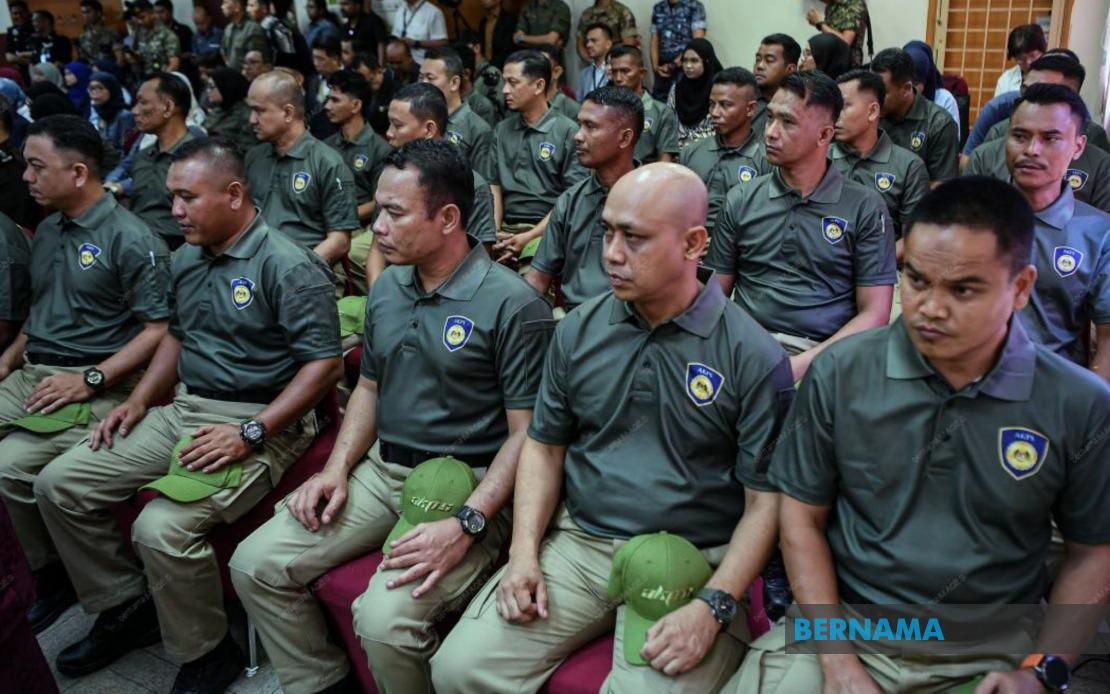
The government has moved to reassure thousands of Border Control and Protection Agency (AKPS) personnel that institutional changes taking effect on July 1 will not diminish their career prospects or financial security. Deputy Home Minister Datuk Seri Dr Shamsul Anuar Nasarah made this commitment during parliamentary proceedings on June 25, addressing widespread concerns about the agency's transition to a new service scheme administered by the Public Service Department (PSD).
The AKPS, established through consolidation of multiple enforcement bodies, represents one of Malaysia's most significant institutional reorganisations in recent years. The agency now bears responsibility for managing border security and facilitating legitimate trade and travel across all 122 national entry points, a role that demands operational stability and personnel continuity. Against this backdrop, the government's assurances carry particular significance, as disruption to border operations could have immediate consequences for regional commerce and tourism.
Under the new arrangements, officers retain substantive protections against disadvantage. Those who decline transfer to the new service scheme may continue working with AKPS without penalty to their advancement within the civil service hierarchy. Their seniority, accumulated leave, and retirement entitlements—fundamental pillars of public sector employment security—remain unaffected regardless of which service scheme governs their tenure. This design reflects recognition that coerced career changes could trigger staffing instability precisely when operational demands are highest.
The mechanics of the transition accommodate individual circumstances with meaningful flexibility. Personnel unhappy with continued AKPS deployment can request reassignment to their original parent agencies, triggering placement by their former heads of service based on organisational vacancies and operational requirements. This approach avoids forcing officers into unwanted posts while preserving their employment within the broader civil service. For those with family commitments, health considerations, or simple preference for their original agencies, such flexibility proves invaluable.
However, the AKPS faces notable staffing challenges that threaten operational capacity. Of 8,403 positions allocated to the agency as of mid-June, only 6,824 positions had been filled, leaving 1,579 vacancies representing nearly 19 percent of the establishment. These gaps, distributed across enforcement and administrative functions at entry points nationwide, create operational bottlenecks. Processing delays at border checkpoints impose costs on traders, tourists, and logistics operations, ultimately affecting Malaysia's competitiveness in regional trade.
Government efforts to close this staffing gap rely on gradual recruitment through cooperation between AKPS, the Home Ministry, and the PSD, alongside the parent agencies from which officers were seconded. This collaborative approach, while sensible in principle, depends on parent agencies releasing skilled personnel despite their own operational needs. Coordination challenges across multiple bureaucratic entities could slow the hiring timeline, leaving critical posts unfilled during peak travel and trade seasons.
Financial incentives accompany AKPS appointments to offset career uncertainty and justify geographical relocation. Officers receive additional annual salary increments (KGT) and a RM200 service incentive, sweeteners designed to attract capable personnel to what many view as a less prestigious posting than traditional civil service positions. Whether these incentives prove sufficient to attract and retain high-calibre staff remains uncertain, particularly as promotion pathways within a newer agency may seem less predictable than within established departments.
The transition timing raises operational questions. Implementing a major service scheme change during peak border activity season—mid-year corresponds to school holidays and increased business travel—creates risks. Even well-executed transitions can temporarily disrupt workflows as personnel learn new administrative procedures and reporting structures. The government has apparently accepted these risks, suggesting confidence in AKPS management capacity, though operational data from the first weeks of implementation will provide the true measure.
For Malaysia's regional standing, border agency stability carries diplomatic weight. Southeast Asian neighbours monitor each other's border management efficiency closely, as does ASEAN as an institution. Perception of Malaysian border operations as disorganised or understaffed could subtly discourage investment and tourism, shifting these flows toward competing destinations. Conversely, demonstrating smooth institutional transition while maintaining service quality reinforces Malaysia's image as a professionally administered nation.
The broader civil service implications extend beyond AKPS. This transition serves as a template for future agency reorganisations, establishing precedent about government willingness to protect existing benefits during institutional restructuring. Failure to honour current commitments would poison relationships between serving personnel and their employers, breeding cynicism that would complicate future reform efforts across the wider public sector. The government's detailed public assurances therefore function as political and institutional capital that can be drawn upon later.
Future challenges will emerge as the transition unfolds. Personnel management tensions inevitable arise when officers navigate dual administrative structures, even temporarily. Training requirements for staff moving between service schemes may consume resources. Supervisory continuity could suffer if too many experienced personnel choose to return to parent agencies. Addressing these operational realities while maintaining the government's guarantee of no adverse consequences will test implementation capacity over coming months.

