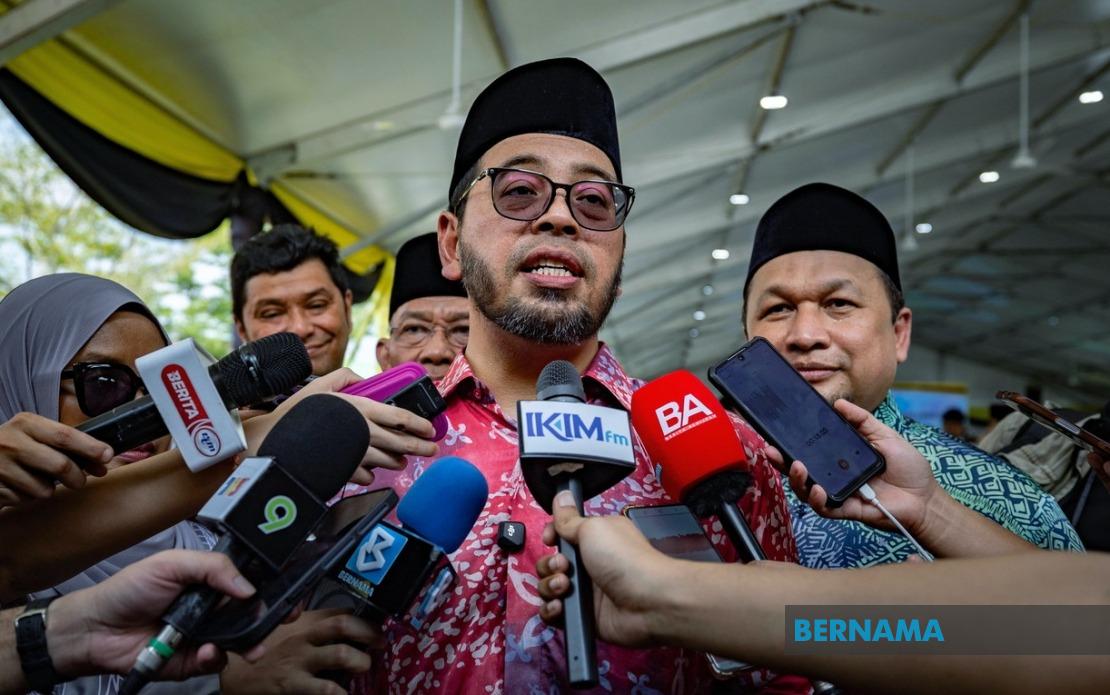
The Malaysian federal government views Islamic educational institutions as essential partners in constructing a nation that prioritises both material advancement and moral development. This commitment was reiterated by Minister Dr Zulkifli Hasan during the 2026 Perak Pondok and Religious Schools Gathering (HIPSA) at Sekolah Agama Bantuan Kerajaan Maahad Al-Ummah in Chemor, where Prime Minister Datuk Seri Anwar Ibrahim officiated the event. The gathering underscores the government's conviction that measuring national success requires looking beyond conventional economic indicators and infrastructure metrics to assess the calibre of human capital and the moral compass guiding development.
The perspective articulated by Dr Zulkifli reflects a deliberate policy shift that recognises the limitations of growth-centric approaches. Rather than treating Islamic educational establishments as peripheral institutions, the administration positions them as foundational to Malaysia's social fabric. This philosophy aligns with the Malaysia MADANI framework, which explicitly centrepieces people's wellbeing and human capital investment as core pillars of governance. By elevating religious schools to strategic partner status, the government signals that religious education—long marginalised in some policy circles—deserves equivalent institutional support and recognition as secular educational channels.
The event itself demonstrated concrete manifestations of this commitment through multiple welfare initiatives. Minister Dr Zulkifli distributed MADANI Aid Baskets to 12 recipients symbolising support for 250 beneficiary families within the local community. Beyond ceremonial gestures, the programme included tangible assistance such as essential food distribution to vulnerable households and financial disbursements to pondok institutions and religious schools across Perak. Student fee sponsorships and support for the Fast Track Sijil Pelajaran Malaysia programme represented investments in educational access and quality, addressing affordability barriers that might otherwise exclude promising students from Islamic institutions.
The gathering drew approximately 3,000 participants, reflecting the scale of Malaysia's Islamic educational ecosystem. Representatives included pondok institution leaders, religious school administrators, KAFA teachers, non-governmental organisation representatives, and community members. This broad attendance demonstrated the interconnected nature of Islamic education delivery in Malaysia, where traditional pondoks, government-aided religious schools, KAFA programmes at mosques, and civil society organisations collectively shape religious instruction across the country. The diversity of participants illustrated how Islamic education functions as a multi-stakeholder enterprise requiring coordinated government support.
At the heart of HIPSA 2026 was an intellectual forum examining religious scholars' and leaders' roles in nation-building. The symposium featured prominent speakers including Kelantan scholar Sheikh Wazir Che Awang Al-Makki, former Perak mufti Datuk Seri Wan Zahidi Wan Teh, and preacher Ustaz Mohamad Saifuddin Abdul Latiff. This intellectual engagement signalled that the government's support for religious education extends beyond infrastructure and financial allocations to include strategic dialogue about how Islamic institutions can contribute to national objectives. The forum provided space for religious scholars to articulate visions of nation-building that integrate Islamic values with contemporary governance challenges—a conversation increasingly relevant in Malaysia's plural society.
The government's positioning of these institutions as strategic partners carries particular significance given Malaysia's demographic and religious composition. As the world's largest Muslim-majority economy in Southeast Asia and home to one of the region's most developed Islamic educational systems, Malaysia's approach influences how other nations conceptualise religious education's role in development. By officially recognising pondoks and madrasahs as strategic rather than supplementary institutions, Malaysia potentially reshapes regional perceptions about integrating religious education into comprehensive national development frameworks.
Fundamentally, the government's stance reflects recognition that Islamic institutions provide critical social functions extending far beyond religious instruction. Pondoks and religious schools serve as community anchors, offering moral guidance, social welfare support, and civic education. In numerous Malaysian communities, particularly in rural areas where state infrastructure remains underdeveloped, these institutions function as de facto social safety nets and repositories of cultural knowledge. By formalising their strategic status, the government acknowledges these broader societal contributions and commits to institutionalising support mechanisms.
The emphasis on collaboration between federal authorities, state governments, State Islamic Religious Departments, and religious councils indicates an administrative apparatus designed to translate policy recognition into sustained institutional support. Rather than treating Islamic education as an autonomous sector requiring minimal government interference, this collaborative framework embeds religious institutions within broader governance structures. This integration potentially enhances resource coordination, quality standards, and strategic alignment while respecting institutional autonomy that religious organisations rightly cherish.
Attendance by Perak Menteri Besar Datuk Seri Saarani Mohamad and Chief Secretary to the Government Tan Sri Shamsul Azri Abu Bakar underscored the event's importance within Malaysia's administrative hierarchy. Their presence signalled that Islamic educational support constitutes a government-wide priority rather than a compartmentalised religious affairs issue. This high-level engagement suggests that religious education is increasingly perceived as inseparable from broader governance agendas encompassing social cohesion, human development, and national stability.
The Malaysia MADANI aspiration underpinning the initiative emphasises people-centred development, representing a conscious pivot toward measuring progress through human flourishing rather than purely quantitative economic metrics. Positioning Islamic institutions as strategic partners operationalises this philosophy by directing resources toward institutions historically positioned as servants of human and spiritual development. The government's willingness to invest in fast-track examination programmes, teacher support, and fee sponsorships demonstrates commitment to removing structural barriers that might prevent capable students from accessing quality Islamic education.
Looking forward, the HIPSA programme's stated objective to strengthen Islamic educational institutions on an ongoing basis suggests this represents not an isolated gesture but a sustained policy commitment. The involvement of Yayasan Dakwah Islamiah Malaysia (YADIM) as programme administrator indicates institutional capacity dedicated to translating policy rhetoric into consistent implementation. For Malaysia's Muslim communities and Islamic scholars, this recognition potentially unlocks new opportunities for institutional development, teacher professional advancement, and pedagogical innovation within a framework of government partnership.
The initiative also carries implications for Malaysia's positioning within Southeast Asia and the global Muslim world. As a moderate Muslim-majority democracy, Malaysia's approach to integrating religious education into national development offers a potential model for other nations navigating similar tensions between secularism and religious identity. By demonstrating that Islamic institutions can be valued strategic partners within secular constitutional frameworks, Malaysia contributes to regional debates about compatible approaches to religious education and governance. This diplomatic dimension adds another layer to what might otherwise appear as purely domestic educational policy.

